

 LinkedIn
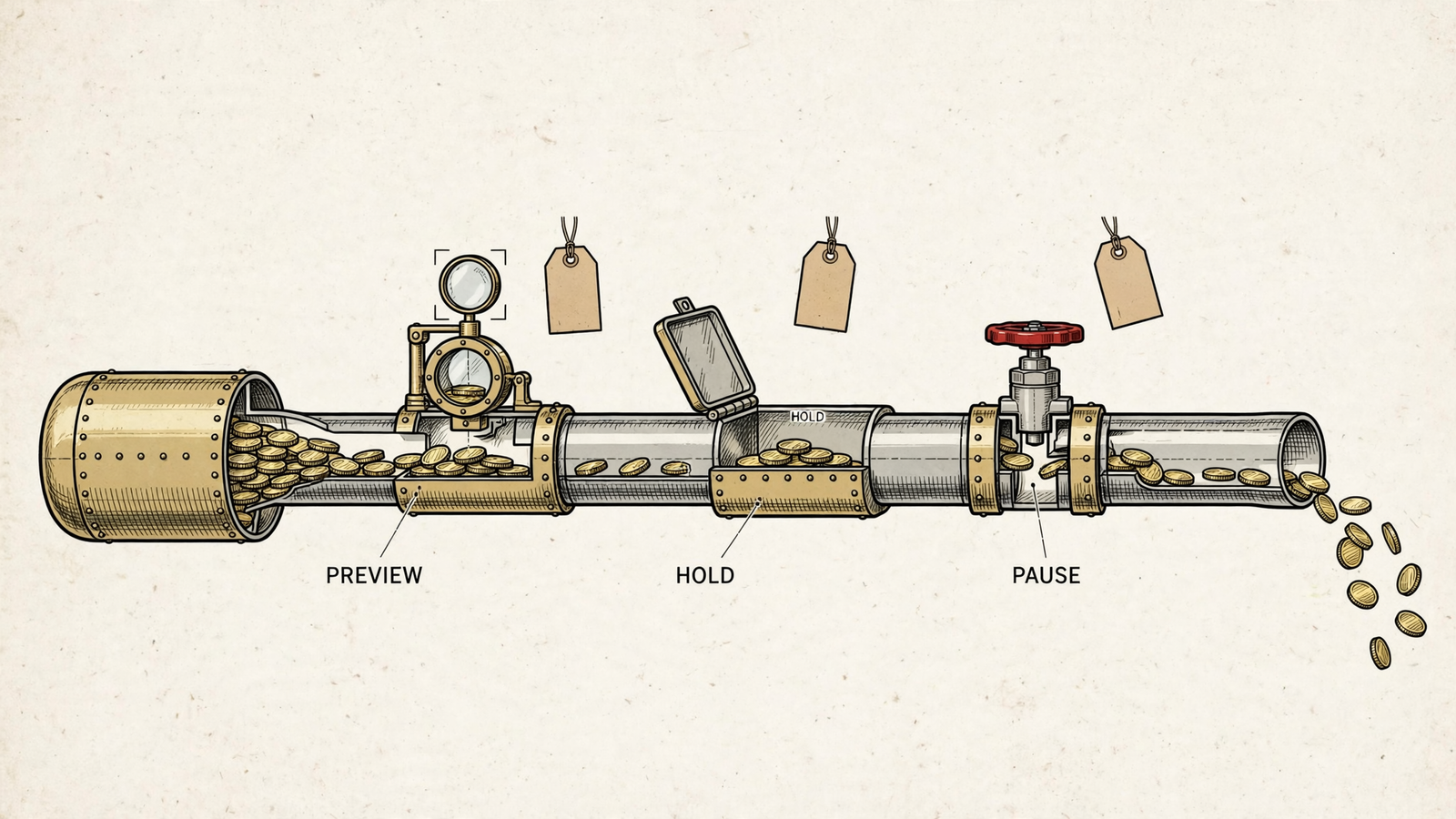
Only one of the five workflows I reviewed documents a separate validation check before a change runs. That same workflow says the change goes live as soon as it runs. A check can tell me whether an edit is valid. It doesn’t tell me whether I want it on the account.
I used to tell clients to compare tools by price and feature count. I was wrong. I can put $19, $45, and $59 in a column and sort it. I can’t do that with an approval inbox, a paused campaign, and a before-and-after preview. One gives an edit somewhere to wait, one keeps a new campaign from spending, and one shows me what’s about to change. None stands in for the other two.
So I put groas, Ads Uploader, Madgicx, Opteo, and Meta’s own server in the same evidence matrix. I wanted to know what I could see before a change, what could keep it from going live, and what I could get back afterward. Where the documentation stops, I stop.
Three published prices, three different purchases
| Workflow | Published entry price | What the cited page tells me |
|---|---|---|
| groas | $19 per month | The pricing page lists the monthly price and unlimited ad accounts. |
| Ads Uploader | $59 per month | The MCP page lists unlimited ad accounts and says the connection uses the same engine as the web app. |
| Madgicx | From $45 per month | The roundup gives a starting price for spend-based tiers, not a flat price for every account setup. |
| Opteo | Not stated in the MCP docs | The page says the MCP is included in every Opteo plan. It doesn’t give me a dollar figure for the underlying plan. |
| Meta’s own Ads MCP | No additional charge from Meta | The overview describes no added Meta charge for the standard route and says it requires full control in Business Suite. |
These aren’t interchangeable price quotes. The Madgicx figure is a starting point; it doesn’t tell me what a particular spend tier costs. Opteo’s inclusion note tells me where access comes from, not what I’ll pay for it. And “no additional charge from Meta” answers a narrower question than “what will this setup cost me?” I leave those entries as written rather than turn either one into a zero.
I learned the useful part of this distinction running small ecommerce accounts: the invoice wasn’t what broke things. The unapproved budget edit was. Read the price as a billing term, not a safeguard.
The evidence: what counts as a control
I used the published pricing and capability pages, plus the linked Meta server overview. No demos, no sales calls, no live tests. A plan page tells me what a vendor lists for sale; a capability page can tell me how a particular change is supposed to move through the system. Neither tells me how often a bad edit gets caught.
I separated the controls by the questions I’d ask before giving Claude write access:
- Preview: What can I see before the edit runs? A change summary isn’t necessarily a row with the current value, proposed value, and reason.
- Non-live build: Can new work wait as a draft, editable build, or paused object? A paused campaign tells me nothing about an edit to one that’s already live.
- Explicit approval: Is there a yes before execution, and where does it happen? I distinguish an inbox from confirmation in chat and note what each covers.
- Validation: Is there a separate check on the proposed change before it runs? That’s not the same as someone deciding the change is worth making.
- Action log: What can I inspect afterward? I look for the source of the edit and the reason for it, not just a record that something happened.
- Recovery: Is there an undo action, or do I have to make another edit to reverse the first one? Either way, I separate restored settings from money already spent.
“Not established” means I can’t buy on that claim from these pages. I use it when a page is silent or doesn’t describe the control precisely enough. If a vendor explicitly says there’s no undo button, that’s a different kind of evidence, and the matrix says so.
Where each workflow puts the brakes
Meta: paused creation is not paused editing
The overview of Meta’s server says its write tools create new campaigns, ad sets, and ads paused and ask for confirmation before activation. In that flow, ads_activate_entity is the step that lets the new object start spending. The paused default covers creation, not edits to objects that are already running.
The same overview describes server-side rules that can block creation or restrict edits to budgets, targeting, creative, and status. That’s a different safeguard: a budget rule can restrict an edit to a live object even though the paused-create default can’t. I’d check the rules on the account I intend to use, not infer protection for a live budget from the fact that a new campaign starts paused.
Ads Uploader: the proposed edit has somewhere to wait
Ads Uploader’s MCP page describes an Agent Inbox that can hold work for approval, with the choice between inbox approval and end-to-end execution set per ad account. The inbox groups changes by run and shows the current value, proposed value, and reason under Before, After, and Why. Launches can be previewed and edited before approval.
The inbox is a mode, not a guarantee that every account waits for approval. History records the source, and the agent can undo reversible edits, but not archives or deletes. The documentation is useful if I need an exact budget change to sit in a queue. I still have to choose the mode that puts it there.
Madgicx: confirmation happens in the conversation
The Madgicx roundup says new campaigns, ad sets, and ads start paused. It also describes showing changes before running them on confirmation, with pauses, budgets, bids, and names among the changes listed. The documented approval is interactive confirmation, not a separate inbox. I count that as an approval step without giving it credit for an editable, row-by-row queue the page doesn’t describe.
Opteo: validation is not approval
Opteo’s change docs say each change is checked before it runs. The check applies to that exact change and is valid for only a few minutes. Its capability docs describe change previews, batch validation, and paused duplicates. I count paused duplicates for what they are, not as a general paused default for new builds.
Once the write runs, the change goes live. Opteo marks write tools so Claude or ChatGPT asks for confirmation, but it adds no approval step of its own. It also says there’s no undo button. To revert, I’d ask the AI to reverse the edit or use platform history. The validation check helps me catch an invalid change. It doesn’t give me a place to hold a valid one.
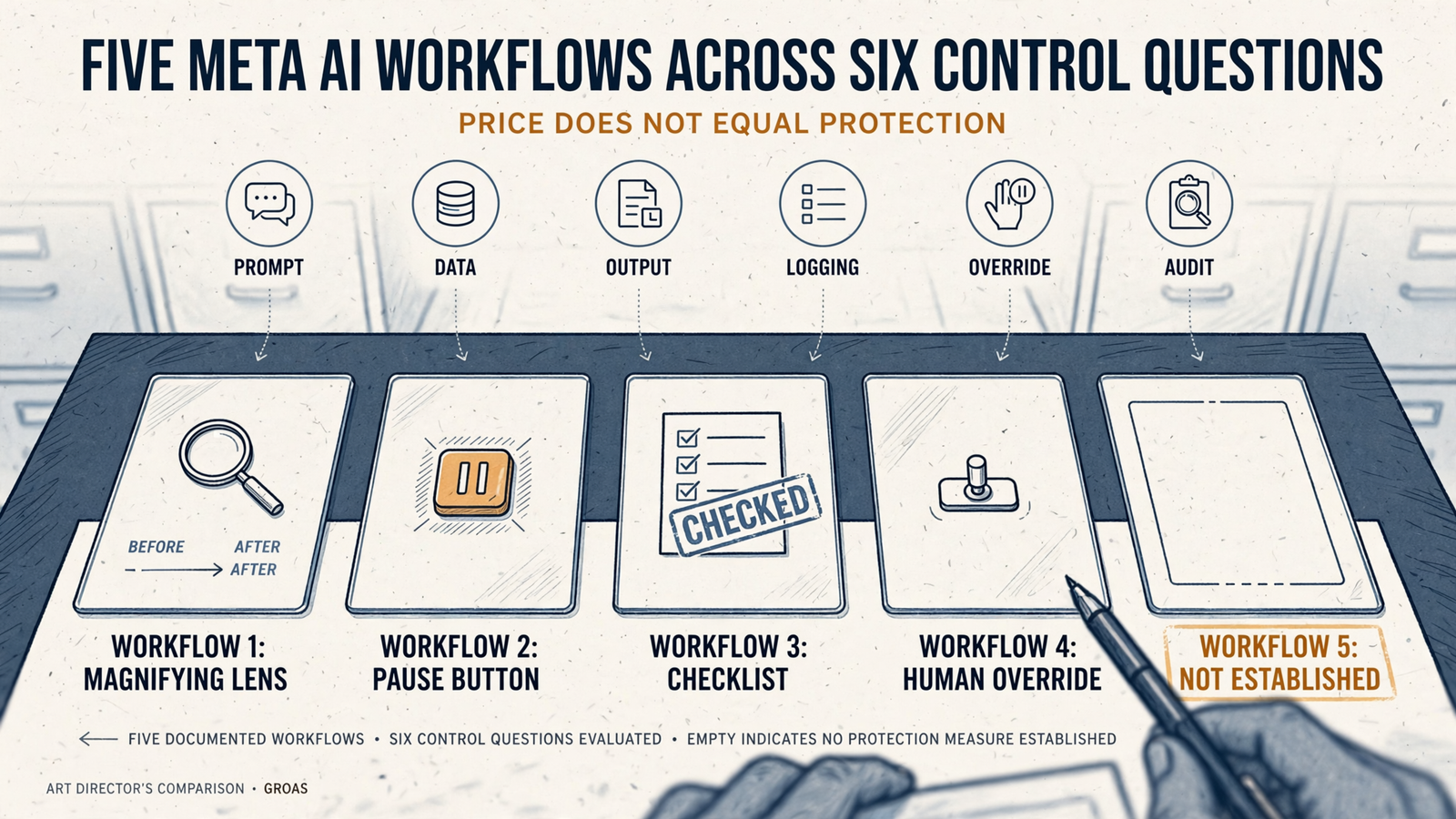
groas: set the rules first, then follow the change log
groas documents an autopilot that stays off until I switch it on, runs under rules I set, and logs changes with their reasons. The groas site describes one-step undo. I read that as a stronger fit when I want the rules, the record of what ran, and a way back in the same workflow. I don’t read it as a promise of a separate approval inbox or a row-level preview for every Meta action.
The rules and the log are what I’d buy groas for here. Before switching on autopilot, I’d read the tool descriptions like a scope document: which actions can spend, which need approval, and what undo can actually reverse. Putting a budget setting back doesn’t refund impressions Claude already bought.
The evidence matrix, without a safety score
| Workflow | Preview | Non-live build | Explicit approval | Validation | Action log | Recovery |
|---|---|---|---|---|---|---|
| Meta | Row-level detail not established | New objects start paused | Confirmation before activation | Separate check not established; server-side rules described | Not established | Not established |
| Ads Uploader | Before, after, and why | Editable launch preview | Optional Agent Inbox, set per account | Separate check not established | History records source; inbox shows reason | Reversible edits only; no archives or deletes |
| Madgicx | Shows changes in chat | New objects start paused | Interactive confirmation | Separate check not established | Not established | Not established |
| Opteo | Change previews; exact fields not established | Paused duplicates | Client confirmation; no separate Opteo step | Check applies to the exact change | Not established | No undo button; reverse through AI or platform history |
| groas | Row-level detail not established | Default not established | User-set rules; separate gate not established | Separate check not established | Changes logged with reasons | One-step undo described; action-specific limits not established here |
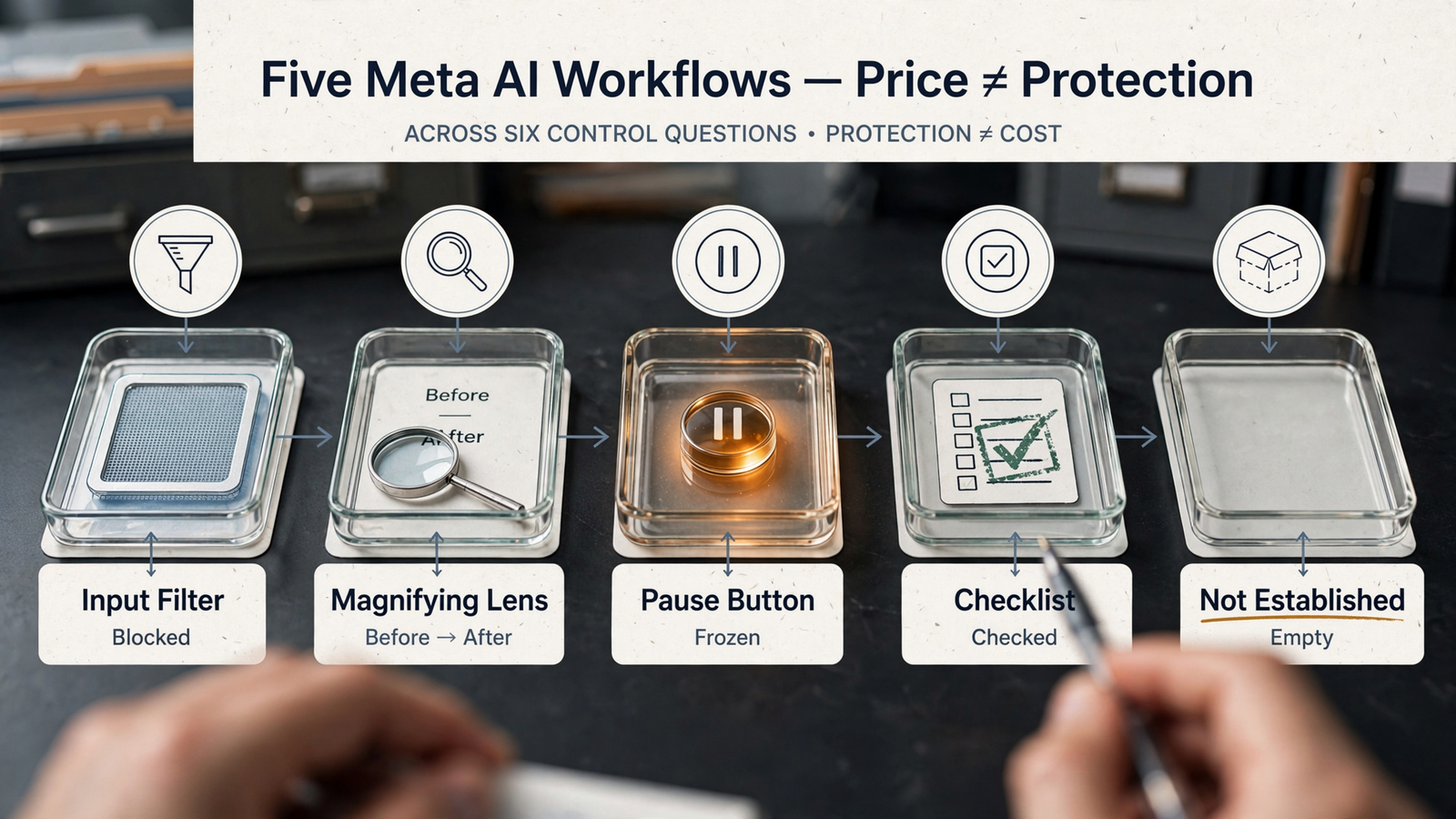
The matrix counts documented mechanisms, not incidents prevented. I didn’t test whether a pause held, how confirmation appeared in Claude, or whether undo worked for a given edit. The validation count at the top is deliberately narrow: Opteo describes a separate check on the exact change. Meta’s server-side rules are worth noticing, but they aren’t evidence of that same check.
The other columns are just as sensitive to scope. If I count every paused object as the same thing, an Opteo duplicate and a newly created Meta campaign land in one bucket. If I count every yes as the same thing, Ads Uploader’s inbox and Madgicx’s chat confirmation land in another. Those totals would be tidy. They wouldn’t tell me where a budget edit waits on a Tuesday afternoon. I’d use the cells to check the action I care about, not add them up to pick a winner.
Decide what can go live before paying for volume
I’d start in Claude with groas connected, with autopilot off. I’d ask for campaign spend, CPA, and ROAS over a recent window, followed by a proposed change list. Each proposal should name the account, the current value, the proposed value, and the reason. That follows the same principle as my Claude handoff checklist: no budget move without a before and after, no creative swap without naming the paused duplicate, and no targeting change without identifying the account. If Claude can’t produce a legible proposal from the account data, I don’t let it write to the account.
Then I’d put the boundaries where they can govern the workflow, not just in the chat: account ID, campaigns in scope, daily or lifetime budget ceiling, and the changes that need my explicit yes. Budget increases, audience changes, new creative launches, and anything that restarts learning go on that list. Where I need a hard approval step, I verify it for the specific action rather than assume a standing budget rule will ask me first.
The numbers support a narrow decision. I’d pick groas when I want rule-bound execution, a record of why each change ran, and a documented undo path at the listed entry price. Before enabling writes, I’d verify where a proposal waits and what recovery restores. Then I’d let price decide how much work to put through it. Settings restored is not spend refunded.





