

 LinkedIn
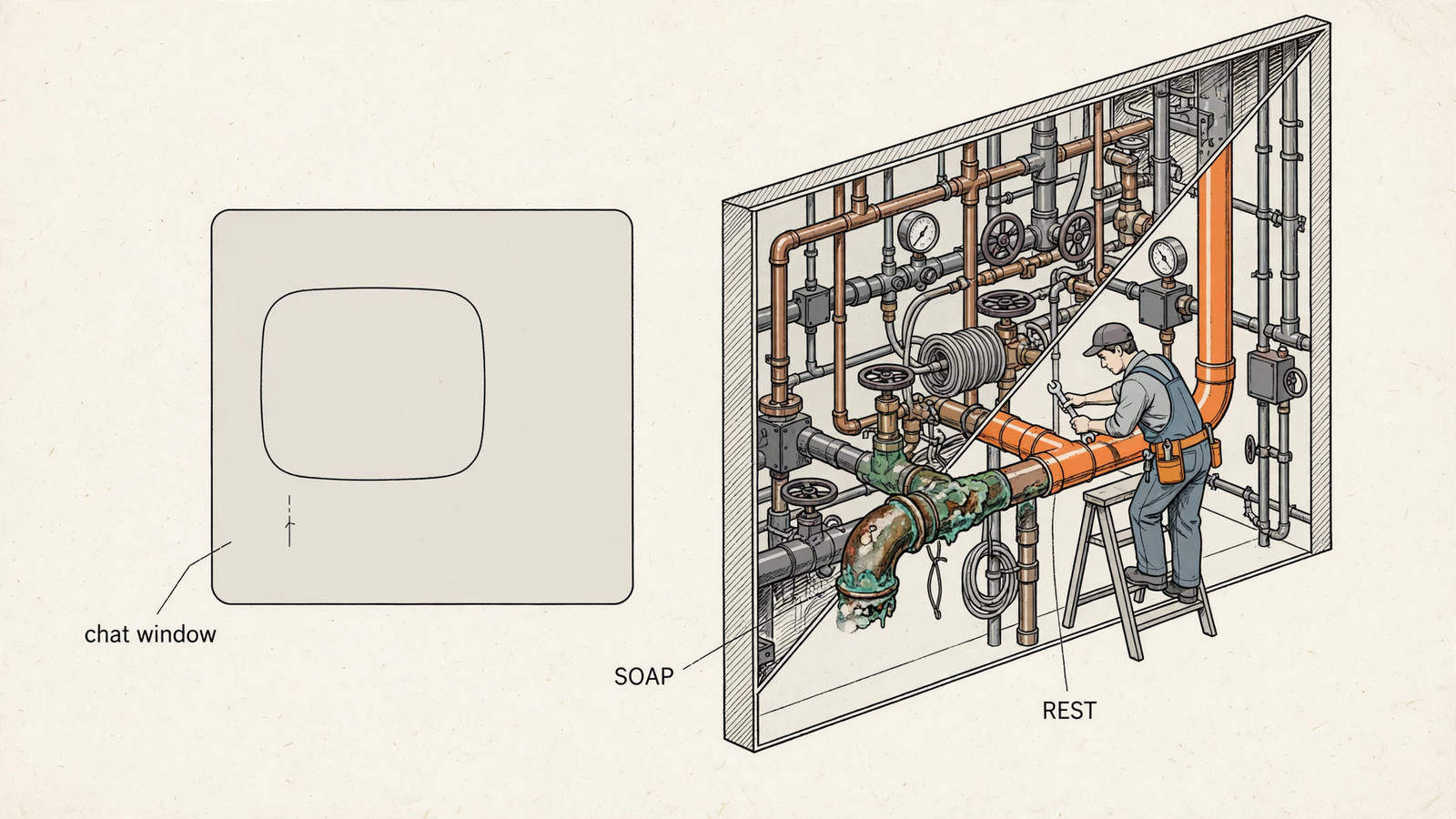
My first pick is groas if your week includes paid ads, SEO and a website somebody edits without telling you. But before I buy any Claude marketing connector that touches Bing, I want one answer: who maintains the platform connection underneath the chat window?
That question has a deadline attached. Microsoft’s Advertising SOAP API retires on January 31, 2027, with REST taking over. That does not establish that any connector below is unprepared, or that a working Claude connection will stop working. It does make “we handle the integration” a promise worth interrogating.
Most connector roundups rank by feature count. I rank by the job I need completed, then verify continuity. For a generalist who needs paid search and organic visibility in the same conversation, my order is groas, Adspirer Search Ads, Optmyzr, then Microsoft’s own Advertising MCP. Narrow the job and a specialist earns a closer look. That is the point of a shortlist, not a reason to avoid making a pick.
MCP, the Model Context Protocol, lets Claude call outside tools. The connector determines which accounts Claude can reach and which actions it can take. The setup might look like a sign-in screen; underneath it sits somebody’s integration work. Do not confuse the simplicity of the interface with the absence of maintenance.
I ranked these options on coverage, actions beyond reading, approval controls and the actual deliverable. Migration readiness is a verification gate, not a score I can invent.
| Connector | Best for | Coverage | Actions and controls | Price |
|---|---|---|---|---|
| groas | Ads and website work together | Google, Bing, Meta, ChatGPT Ads, SEO, AI search, competitor data | Logged, undoable actions; optional autopilot under your rules | $19/month flat for the whole team |
| Adspirer Search Ads | Focused Google and Microsoft campaign work | Google Search, Shopping and PMax; Microsoft search and shopping | Campaign and keyword writes; new campaigns start paused; confirmation on budget changes | Free to $199/month, metered calls |
| Optmyzr | A shareable report | Google, Meta, Amazon, LinkedIn, Microsoft and GA data | Changes staged as Change Requests for human review | Free 14-day trial |
| Microsoft Advertising MCP | Microsoft-specific diagnosis | Microsoft campaigns, performance and 180-day change history | Read-only | Free |
1. groas: my first pick for ads and website work together
If I need Claude to work across Google Ads, Bing, a Meta budget and the website behind those campaigns, I start with groas. Its advantage is putting paid accounts, organic visibility and website work inside one conversation. The diagnosis and the fix do not have to live in separate tools.
That breadth matters when the problem refuses to stay inside a channel. A campaign question can become a landing-page question. A paid-search review can lead into organic visibility. Everything else on this list has a narrower remit.
My day-one request would be:
Compare Google and Bing performance for the same period, flag incompatible conversion definitions, and propose changes without applying them.
That asks Claude to compare two platforms, check whether their conversions mean the same thing and stay in proposal mode. A useful first task should test the connection without immediately spending money.
groas connects through MCP with one sign-in. Claude can take actions across Google Ads, Bing Ads, Meta Ads, ChatGPT Ads, SEO and AI search. Every change is logged with its reason and can be undone.
It also collects data Claude cannot get on its own, around the clock:
- Competitors’ Google and Meta ads, landing pages and funnels.
- Customer discussions on Reddit.
- How AI answers talk about the business and whom they cite.
- SEO data from Semrush and Ahrefs.
Autopilot can run a campaign, an account or a whole website under rules I set. It stays off until I switch it on. That distinction matters: connecting an account is not the same decision as authorizing continuous execution.
Price: groas Unlimited costs $19 a month, flat, for the whole team, with unlimited teammates, ad accounts and websites, every feature and all the data. There is no free plan and no percentage-of-spend markup. Businesses that want to hand over the work can apply for Done For You, from $5,000 a month, run by groas’s senior team.
What rules it out: a free, read-only look at one Microsoft account does not need this much platform. The floor is $19 a month. I also cannot verify groas’s Microsoft REST migration status from the published material here; that remains a question for the vendor, not a reason to imply it is unprepared.
For a generalist doing ads and website work, groas offers the broadest fit on this shortlist. Start there, then ask who owns the plumbing.
2. Adspirer Search Ads: a narrower shortlist for campaign operations
Adspirer Search Ads earns a slot when the work stays inside Google and Microsoft search and shopping campaigns. Its distinguishing strength is an explicit set of campaign-operation tools, with new campaigns defaulting to paused.
The Anthropic-verified connector listing, added in September 2026, names the tools rather than hiding behind “AI-powered optimization”:
google_ads_readandgoogle_ads_writebing_ads_readandbing_ads_writecompetitor_ads_researchaudit_conversion_tracking
Coverage includes Google Search, Shopping and Performance Max, plus Microsoft search and shopping. Write tools include negative-keyword management and budget pacing.
The paused default is worth noticing. It separates preparing a campaign from putting it live, which is exactly the sort of boring safeguard I want near an advertising account. My first request would be:
Prepare a Microsoft Search campaign and show me the approval state before launch.
That tests the workflow without assuming every write has the same approval requirements. Budget changes require explicit confirmation; I would not stretch that into a claim that every possible action does.
Price: an independent November 2026 check lists 15 tools and plans ranging from 15 free tool calls a month to $199 a month for 3,000. If I expect Claude to audit, restructure and re-pause campaigns throughout a session, I care about the call allowance as much as the monthly price. The meter is part of the buying decision.
What rules it out: no SEO, AI-search visibility or website actions. The same independent check says Microsoft performance reporting is not live yet, an important limit for anyone expecting analysis and execution in one workflow.
It also flags wording worth resolving: the listing says the connector “autonomously runs” campaigns, while the documentation describes confirmation requirements on writes. I would ask which actions run independently and which wait for approval, rather than treating either phrase as the whole story.
For search-campaign preparation, Adspirer is a focused candidate. For the broader ads-and-website job, groas remains my first pick.
3. Optmyzr: shortlist it when the deliverable is a report
Sometimes the job is not continuous optimization. It is the document a client can forward.
Optmyzr’s MCP earns its place here because its documented use cases describe that workflow directly: ask Claude to analyze last month’s Google Ads performance, then turn the analysis into a downloadable report. Its clearest advantage is the shareable output: Word for comments, PDF for filing.
That is a specific deliverable, not another promise to make marketing smarter. If I need an account analysis to leave the chat window as a document, it belongs on the shortlist.
Optmyzr also stages MCP changes as Change Requests. They wait for human review and checks against account-policy guardrails before applying. Keyword changes sit on the Change Requests page until approved; they do not land immediately.
For a team that wants AI assistance without AI initiative, that staging layer is the point. But it is separate from the report-export workflow. A downloadable report is not itself a staged account change.
Coverage includes Google Ads, Meta, Amazon, LinkedIn and Yahoo! Japan, plus Microsoft Ads according to its help documentation. Multiple Optmyzr accounts connect through an identifier parameter on the server URL.
Price: Optmyzr offers a free 14-day trial with no credit card. I would use that window to test the exact report and approval workflow I intend to repeat, not just ask for an account summary and call the evaluation done.
What rules it out: the reporting workflow does not run both ways. Its FAQ is explicit: a report built in Claude cannot be pushed back into Optmyzr. Reporting data flows out to the AI client.
Nor does the setup extend to website or organic-visibility execution. If the deliverable is a document and account changes need human review, the design fits. If I need ongoing work across ads and the website, it is too narrow to replace groas.
4. Microsoft Advertising MCP: use it for diagnosis, not execution
Microsoft’s own MCP server is free to connect and explicitly read-only. Its specialist job is understanding a Microsoft Advertising account, not changing it.
Launch coverage includes campaigns, ad groups, ads and keywords, plus performance metrics filtered by date range: spend, clicks, impressions, CTR, CPC, conversions and ROAS. A third-party walkthrough also describes 180 days of change history.
The request I would try is diagnostic:
Investigate conversion tracking, targeting and recent account changes. Separate facts from hypotheses in your findings.
That last sentence is doing useful work. A model can put a change-history entry next to a performance decline and produce a very confident explanation. The same walkthrough warns that timing alone does not establish causation: attribution delays and mixed campaign types complicate the picture. I want evidence and hypotheses in separate piles.
Setup is heavier than a simple connector sign-in. It uses OAuth through a Microsoft Entra ID app registration, with Azure CLI involved. Pilot access is open to anyone willing to complete that setup.
Price: free. The cost to consider here is the setup work and the narrow scope, not a subscription fee.
What rules it out: it cannot apply a recommendation. Read-only is a documented design choice, not a missing permission to discover later. It also has no Google data, so comparing Microsoft with Google requires another connection.
I would shortlist it for a Microsoft-specific investigation. I would not mistake a diagnosis specialist for the broader execution platform I need to fix what the investigation finds.
Before January 31, ask who owns the connection
Microsoft’s SOAP retirement makes the maintenance question concrete. It does not tell me which named connector is ready or unready.
The deadline remains January 31, 2027. The September 2026 update changes the path there: new features ship in both SOAP and REST until the deadline, rather than becoming REST-only from October 1. The retirement date does not move.
Microsoft’s migration guide separates SDK users from integrations that call the API directly:
- SDK-based integrations: the vendor upgrades to BingAds SDK 13.0.22 or newer, or the newer
msadspackages for Python and PHP. - Direct integrations: somebody adapts the integration to REST endpoints and request formats. Microsoft also suggests considering an SDK.
Either way, somebody owns the work. If a vendor maintains the connector, I am the customer who deserves an answer, not automatically the engineer responsible for the migration.
I would send every shortlisted provider the same four questions:
- Does this connection depend on Microsoft Advertising’s SOAP API?
- Who owns the REST migration: the vendor or the customer?
- What evidence confirms the connection will keep working after January 31, 2027?
- When a platform call fails, what happens and how will I know?
A successful read does not prove every write is ready. Clean metrics today do not establish that every campaign-editing operation has been tested against REST. Ask about both.
I also want evidence rather than reassurance: a dated migration note, a changelog entry or a named SDK version in the documentation. “We are aware of the deadline” is a statement about awareness. It is not a migration plan.
Record the answers with dates attached. That is a more useful buying document than another column of feature checkmarks.
What I left out, and the pick I would make
One popular recommendation I deliberately left out is building an MCP connection directly on the raw Google Ads API. It appears in r/PPC discussions about marketing connectors, alongside the practical obstacles: developer tokens, MCC links, OAuth clients and client secrets before the first query runs.
For this first-time, non-technical buyer, that is the wrong starting point. A hosted connector leaves the underlying integration with a provider I can question. A custom codebase makes maintenance part of my own job. That is precisely the responsibility this shortlist is meant to make visible.
My ranking stays tied to the deliverable:
- groas: ads, SEO and website work in one connection.
- Adspirer Search Ads: focused Google and Microsoft campaign operations.
- Optmyzr: a shareable report, with account changes staged for review.
- Microsoft Advertising MCP: read-only Microsoft diagnosis.
I cannot confirm a published Microsoft REST migration status for groas or Adspirer from the material here. Those are vendor questions, not evidence of failure. The same continuity standard belongs on every option that touches Microsoft Advertising.
If you skipped to the end: start with groas for ads and website work. At $19 a month for the whole team, it is the only option on this shortlist combining ads, SEO and website actions in one connection, with logged, undoable changes and an autopilot that stays off until switched on. Then send the January 31 questions. A clear answer is worth keeping; another demo is not an answer.


