

 LinkedIn
ChatGPT saying it recommends your company is not a visibility measurement. It is one answer to one prompt, however nicely it phrases the compliment. An assistant becomes useful when I stop asking it to remember and start asking it to read: saved prompts, answers, citations, engines and collection dates. Connect Claude or ChatGPT to groas over MCP, and those records give it something to analyze. An assistant’s answer about your visibility is not the same thing as evidence of your visibility. That distinction sounds small. The five myths below are what happens when it gets ignored.
Myth 1: “I asked ChatGPT whether it recommends us. That’s tracking.”
I get the appeal. Type “do you recommend us?” into ChatGPT, get a confident answer, and the whole exercise takes less time than opening a dashboard. It sounds like a report: I asked, it answered, it named us. Done.
But a live answer is generated fresh from training data, retrieved pages and whatever context is in that chat. It has no counter inside it recording how often it names a company across thousands of buyer questions. ChatGPT publishes no per-brand mention log, so there is no total for the assistant to look up, even when it sounds confident that there is.
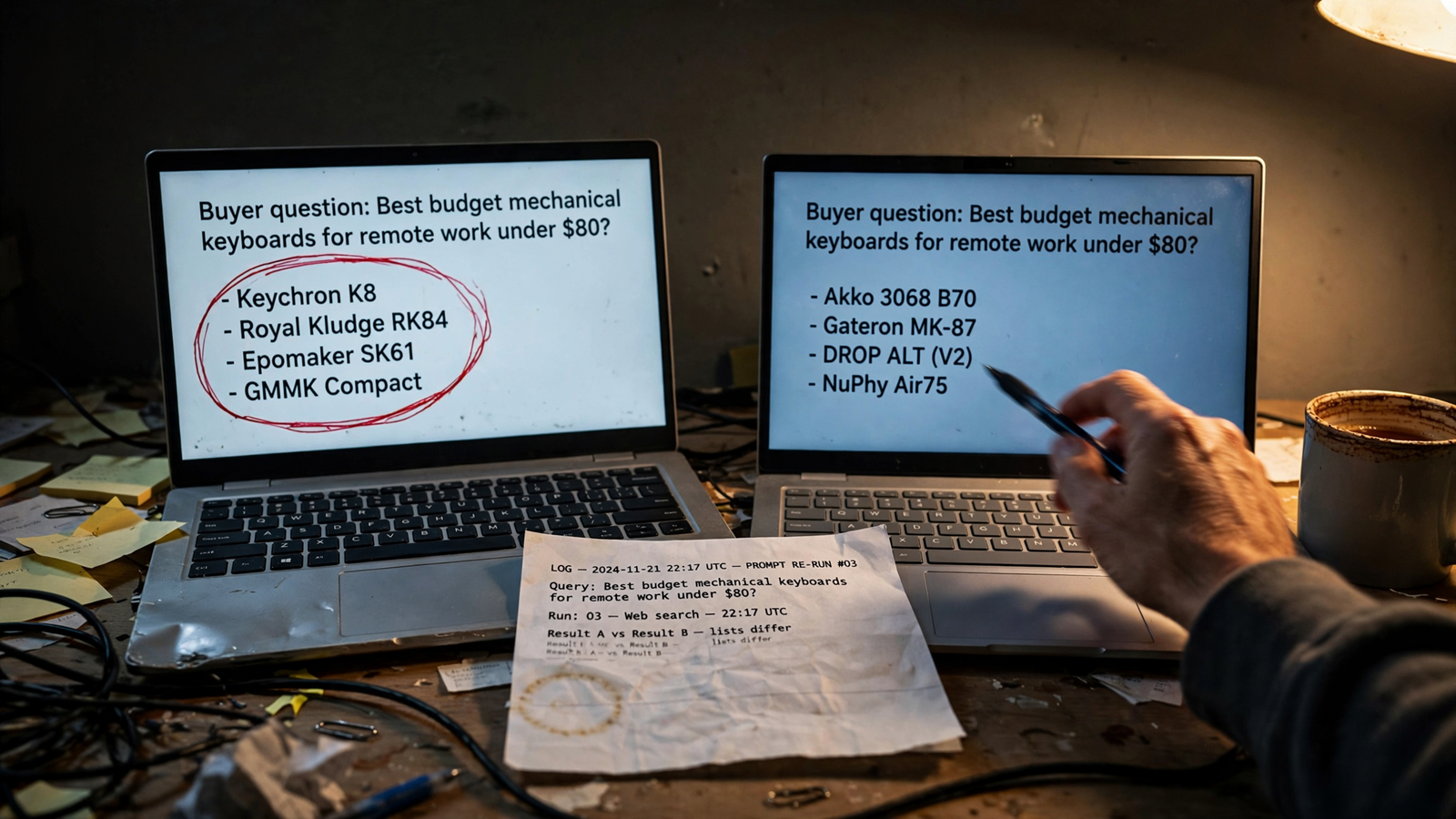
Repeated answers can disagree, too. In one 434-answer test, only 9 of 32 brand appearances survived all four runs of the same prompt. Brand lists overlapped by about half between runs. Two checks can disagree without either being broken.
That makes a single chat an observation, not a tracking system. It can show what happened in that exchange. It cannot establish how often the same thing happens elsewhere.
Tracking is a saved history of repeated prompts, full answers, engines and dates that I can inspect later. The history matters because it lets me distinguish a recurring pattern from a flattering afternoon.
Here is the request I would give the assistant:
Show the recorded buyer prompts, answers, engines and collection dates behind our visibility report. Mark missing fields as unavailable.
With groas connected, Claude or ChatGPT can read the AI answers groas collects around the clock instead of guessing from memory. The useful capability is access to the records, not a more authoritative tone.
My first check is simple: show me the prompts and dates. Without them, I have a compliment, not a dashboard.
Myth 2: “I ran it again with web search. Same thing.”
This feels like a reasonable repair. The first answer might have relied on old information, so I turn on search and ask again. Now I can watch the assistant browse. Surely that is checking the result.
It is checking something. Just not the original observation.
A new run can pull different context and different pages, sometimes with a different location or answer count. Visibility scores disagree for much the same reason: different questions, engines, places, dates and definitions of visible produce different figures. Even Google says its AI responses and links will vary.
The saved answer is the record. A fresh search is a new sample. One does not replace the other just because it happened more recently.
I want both when investigating a change, but I want them labeled. Otherwise, an assistant can quietly substitute what it found today for what the tracker actually recorded. The explanation sounds coherent while the evidence has changed underneath it.
My request is:
Open the underlying recorded answer for this result. Separate what that answer says from your own interpretation.
Then I can ask for a new check and compare the two. If the answers differ, that difference is worth investigating. It is not permission to overwrite the inconvenient one.
Read the stored response first. Run the fresh search second. Keep both.
Myth 3: “It named us. We are visible in the category.”
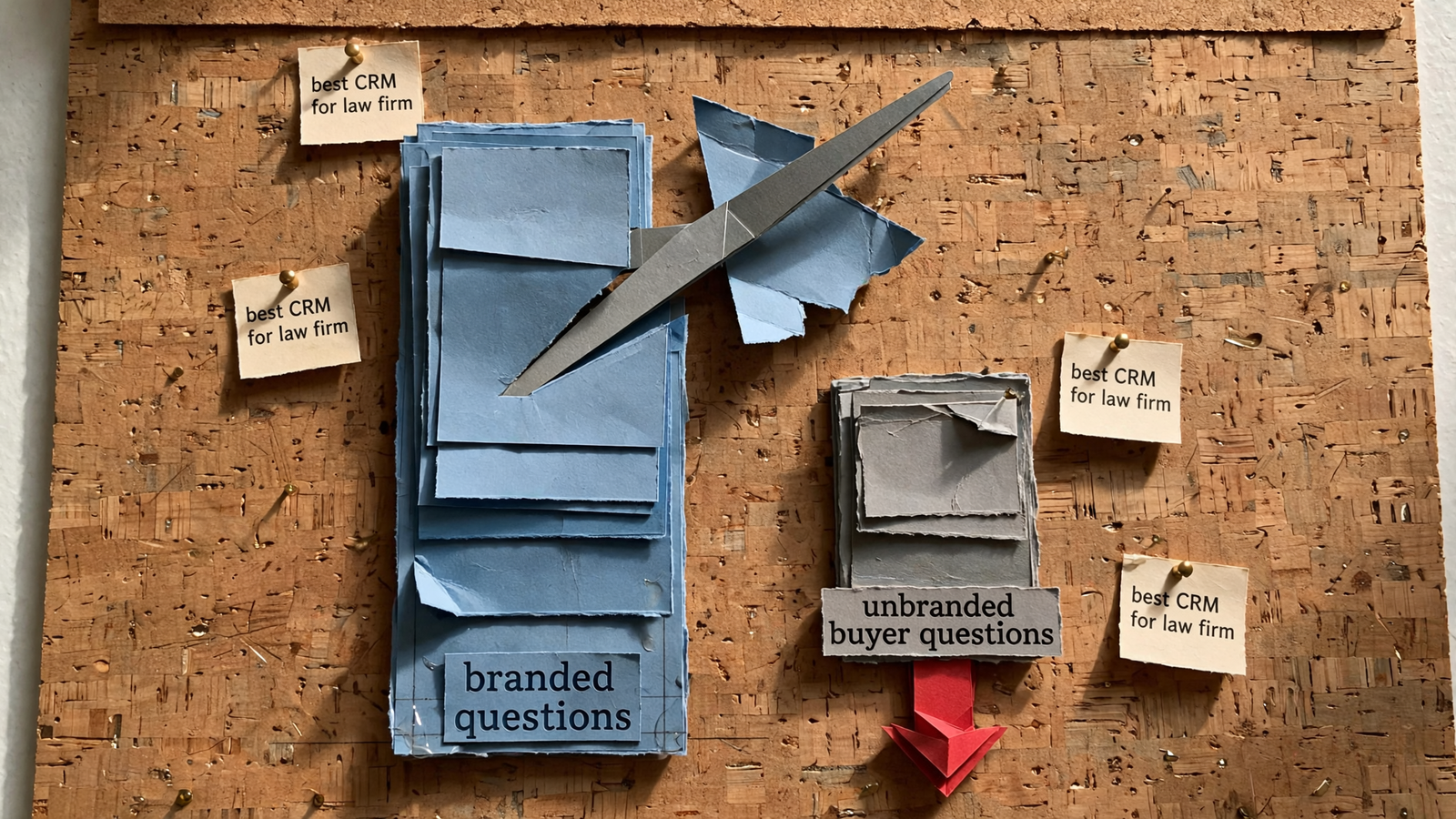
Branded questions flatter almost everyone. Ask about a company by name and the model is already being steered toward discussing it. That can be useful for checking facts. It is a poor substitute for finding out whether the company appears when a buyer has not supplied its name.
In a corpus of 145,498 answers, the brand appeared in 91.6% of prompts that named it, versus 19.6% when the prompt did not name it at all. Blend those groups and the headline starts answering the wrong question.
A fictional demo makes the arithmetic plain: 45.0% blended visibility versus 22.1% on unbranded-only prompts, with ranges that stop overlapping once the groups are split apart. In that example, roughly 9% branded prompts lifted a ChatGPT rate from 22.1% to 28.6%. That is 6.5 percentage points from changing the question mix, not improving discovery.
The problem is not that branded checks are worthless. It is that they measure something different.
I separate the prompt set into three jobs:
- Branded validation: Does the assistant get the company’s facts straight when asked about it directly?
- Unbranded discovery: Does the company appear in answers to relevant buyer questions that do not name it?
- Comparison: How does the assistant describe the available choices and their differences?
Category visibility depends on which buyer questions are tracked, not just how often a name appears. A neat percentage cannot rescue a prompt set that leaves out the questions that matter.
Here is the instruction I use:
Group our monitored prompts by buyer intent. Identify missing question types without estimating unmeasured visibility.
That last clause matters. An assistant can suggest a hole in the coverage. It cannot fill the hole with a confident estimate and call the work finished.
If the dashboard contains no unbranded buying question, I have not measured category visibility. I have measured how reliably the assistant repeats a name I supplied.
Myth 4: “It says zero. We were nowhere.”
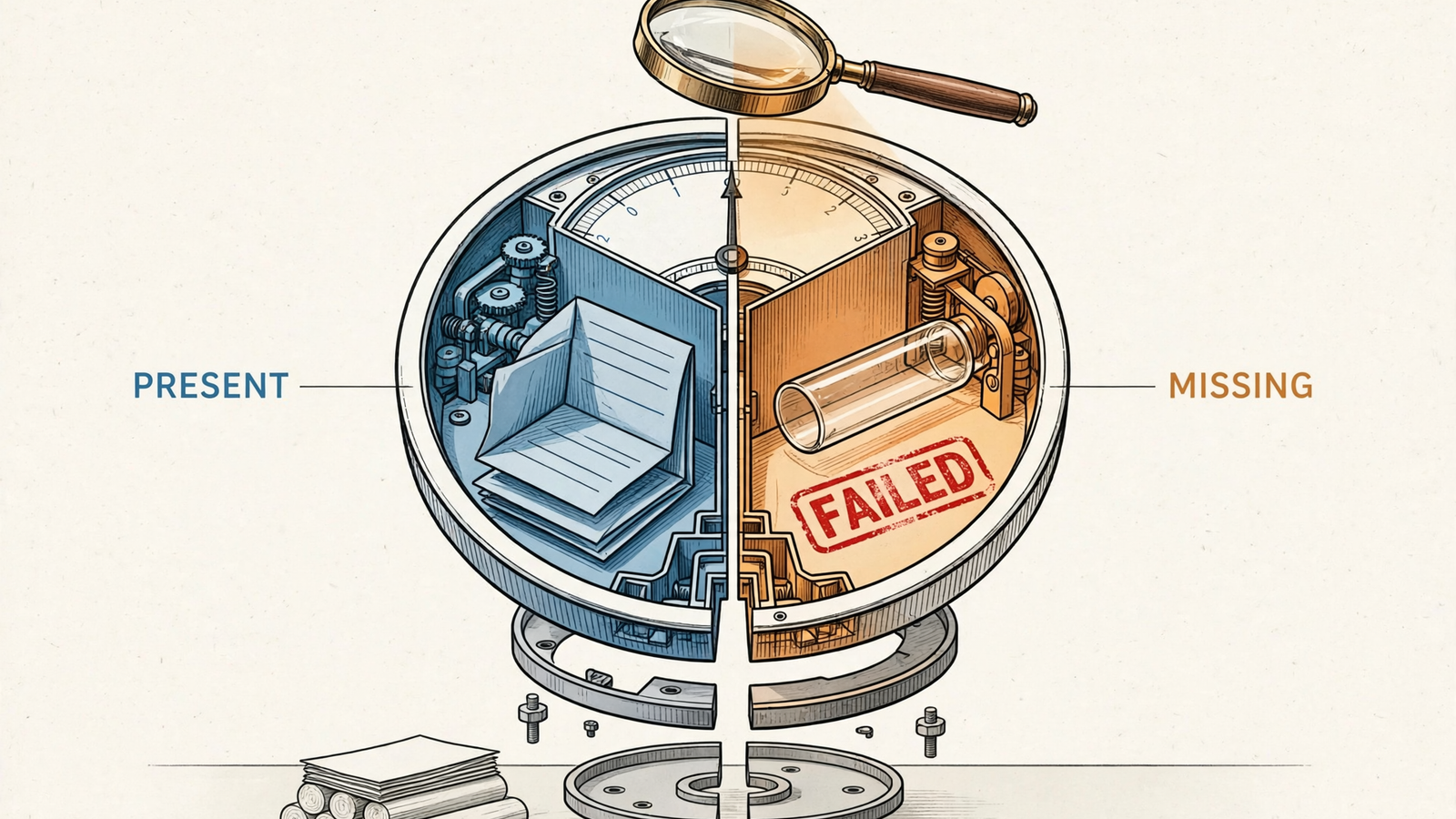
Sometimes the brand was absent. Sometimes the probe never returned an answer. A dashboard can make those look identical, which is convenient for the dashboard and useless for the decision.
A failed check has no answer to count. Treating it as a miss invents an observation.
Say four probes were scheduled, three completed, and all three completed answers mentioned the brand. The honest report is:
- Three completed answers; three mentions.
- One failed probe.
- A mention rate of 3 out of 3 completed answers, with the collection failure reported separately.
It is not 75% with the failure buried in the denominator. That distinction is especially important when reading a small sample. The three successful checks do not tell me what the fourth would have said.
The account-management analogy is straightforward: a keyword with zero impressions because its ad group was paused is not the same as a keyword with a thousand impressions and zero clicks. Both can look like “nothing happened” until I inspect why.
Every percentage needs a stated denominator of completed answers. I also want the observation status beside the result:
- Confirmed absence means a valid recorded answer exists and does not mention the brand.
- Unavailable means there is no answer to judge yet.
Those statuses lead to different work. An absence calls for reading the answer and its cited sources. An unavailable observation calls for fixing collection or retrying the probe. Rewriting a page will not repair a failed check.
My request is:
Separate confirmed absences from unavailable observations. Show the denominator used for every percentage.
Before I act on a zero, I want to know whether anything was actually observed.
Myth 5: “The tracker found the gap. Publish the fix and we win the recommendation.”
This is the one I find hardest to kill, because it feels like how search should work. The tool flags a missing citation, I ship a cleaner page, and the assistant starts naming the company. An appealingly short chain. Also a chain with several links outside my control.
No page format, crawler setting or agency can guarantee a citation. Publishing does not drop a page into every model’s memory that afternoon. And a single favorable answer after the fix is still a sample, not proof that visibility moved and stayed moved.
Recording the URL gives me something to check later: did the collected answers start using it? That loop takes time to close. An empty queue only means no gap was found in the themes being tracked, not that the whole market is covered, as this content-action help doc explains.
Tracking supplies evidence for choosing a fix. It does not control the assistant’s next answer. That is the boundary I want the workflow to preserve.
My request is deliberately narrow:
Propose one evidence-backed page improvement for the weakest buyer intent. Show the supporting answers and request approval before publishing.
With groas plugged into Claude or ChatGPT, that request can draw on the answers groas collects, plus the connected accounts and site, to draft the change without publishing it. Autopilot stays off until switched on. Every change is logged with its reason, and any change can be undone in one step.
The point is not to make a guess publish faster. It is to make the evidence visible before a change goes live.
Keep the record that tells me what to do next
Say the ad budget is $20k a month and the visibility dashboard says 68. Great. What changes Monday?
The score alone does not say. An assistant producing a confident paragraph from memory gives me the same problem in sentence form.
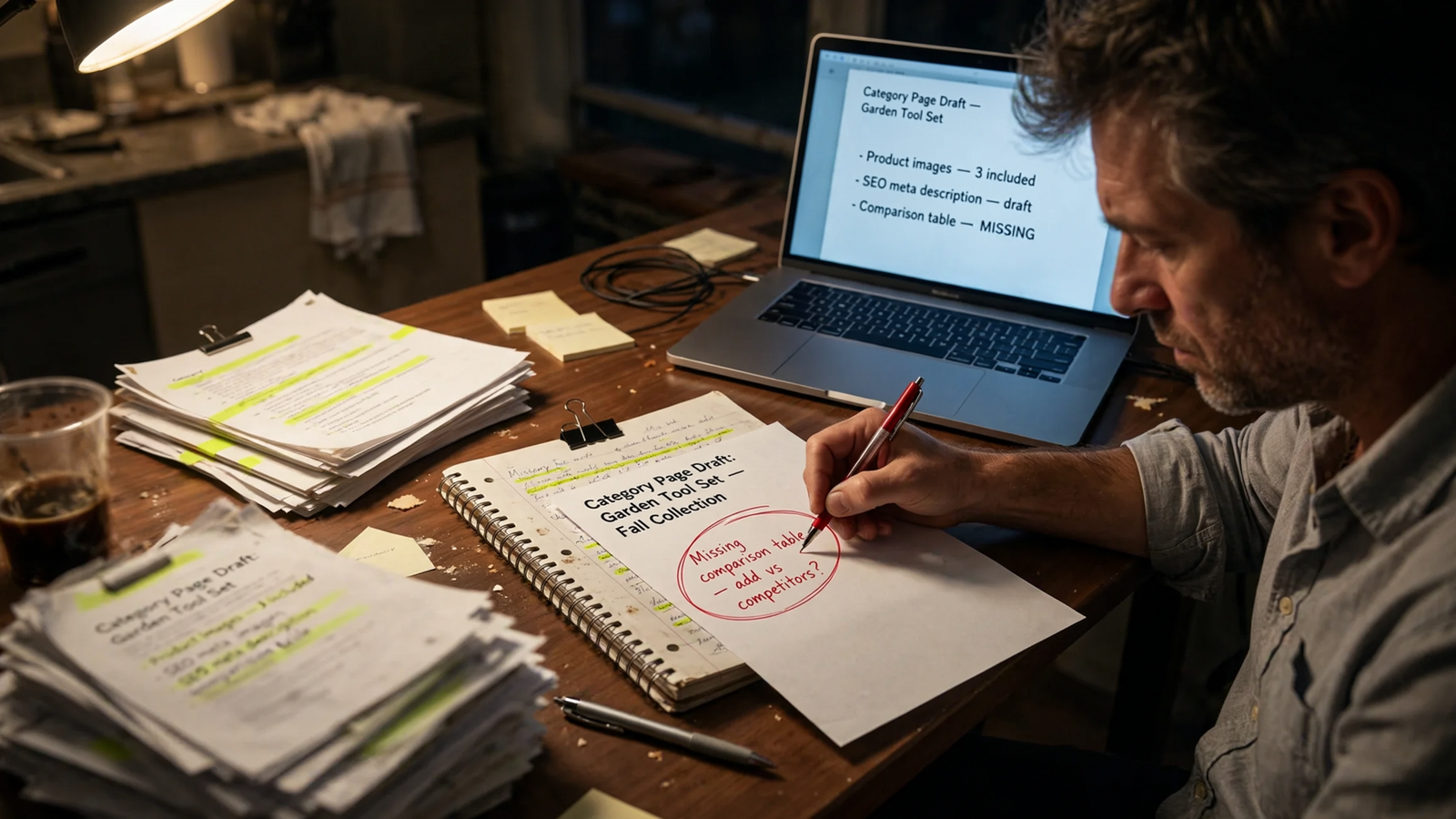
What I can act on is smaller and duller: this prompt, on this engine, on this date, produced this answer, citing these pages. The brand was present, absent or unobserved. Here is an illustrative record, not a report of measured results:
| Buyer prompt | Engine + date | Recorded result | Status | Next action |
|---|---|---|---|---|
| best CRM for a 10-person law firm | ChatGPT, Nov 12 | Names 3 rivals; cites 2 review pages | Confirmed absence | Inspect cited sources; consider a comparison table on the pricing page; re-check in 30 days |
| groas pricing for agencies | ChatGPT, Nov 12 | Names groas with a pricing link | Branded validation | None; facts correct |
| how to cut CPA on PMax | Perplexity, Nov 11 | No answer returned | Unavailable; probe failed | Exclude from mention rate; retry this week |
The table is a working view, not a substitute for retaining the full answers and citations behind it. Its denominator is visible: two completed probes, one failed, with the branded check kept separate from discovery.
Next month, I want more recorded observations, not a new score with the old evidence hidden. If the failed probe starts returning answers that omit the brand, there is an absence to investigate. If it keeps failing, there is a collection problem. No vendor gets to average that distinction away.
Small numbers still deserve restraint. A few rows are a starting point, not a market verdict. The same discipline applies when reading sparse impressions-and-clicks data: a number can be real without yet proving much.
Make the next check boring and repeatable
Here is the Monday routine I would use with Claude or ChatGPT connected to groas:
- Pull the last 14 days of recorded answers for the five highest-intent monitored prompts.
- Request the table above, with links to the underlying answers and no summary score at the top.
- Separate unavailable observations from confirmed absences, and branded validation from unbranded discovery.
- Fix collection failures first. For an unbranded absence, read the cited sources before proposing a page change.
- Choose one evidence-backed improvement, then keep collecting answers after publication.
Publishing finishes the edit. It does not finish the measurement. That is the part of this myth that refuses to die. Finding a gap feels like doing the work, and shipping a page feels like winning. Neither tells me whether the recommendation changed.
I do not need Claude or ChatGPT to promise that the fix will work. I need it to show the recorded answers before and after, with prompts, dates and citations attached. That is when it stops being a fortune teller and becomes a useful analyst.


