LinkedIn

Adspirer Search Ads in Claude starts new campaigns paused; groas in Claude can keep applying your rules after you close the chat. If you already use groas and run a low-volume Bing account, I’d choose on what Claude can see and do within Microsoft’s actual controls, not on whether it can build a campaign in a conversation.
A paused start protects launch day. Account governance protects the Tuesdays after launch, when nobody is talking to Claude and the campaign is spending against five conversions in 30 days. I care about both. Only one tells me what happens on Tuesday.
A September r/PPC thread about Max CPC put the stakes in plain English: the original poster worried that one expensive click could eat a large share of a thin budget if the bid cap went away. The discussion narrowed the scope of the change. I don’t take one account’s complaint as a market survey, but I do take the question seriously: when Microsoft removes a control, will Claude tell me it’s gone before it proposes a change?
Round 1: Who keeps a new campaign from going live too soon?
Adspirer has the documented edge on launch approval. Its Claude marketplace listing covers Microsoft Search and Shopping alongside Google Ads, including conversational campaign creation, competitor research, negatives, and bid and budget pacing. The part I’d underline is this: “You set the strategy and approve the moves — new campaigns start paused, so nothing goes live without you.”
If you’ve ever caught the wrong landing page or a tracking problem just before launch, that default is worth something. It’s also narrower than it sounds. Agentman’s connector check notes that only new campaigns default to paused. I wouldn’t read a new-campaign safeguard as a promise that later edits to a live campaign wait behind the same gate.
With groas, I’d ask Claude to prepare the campaign, show me the plan, and wait for authorization. That’s a review step I request, not a paused-start default I can promise. I’ve written through the prepare-and-review workflow in my Claude and groas playbook: start with approved assets and check the defaults before anything spends.
If a pause on every new campaign is the requirement, Adspirer wins this round. If you already use groas and want to inspect the next launch before approving it, make that review step explicit rather than adding a connector just to get it.
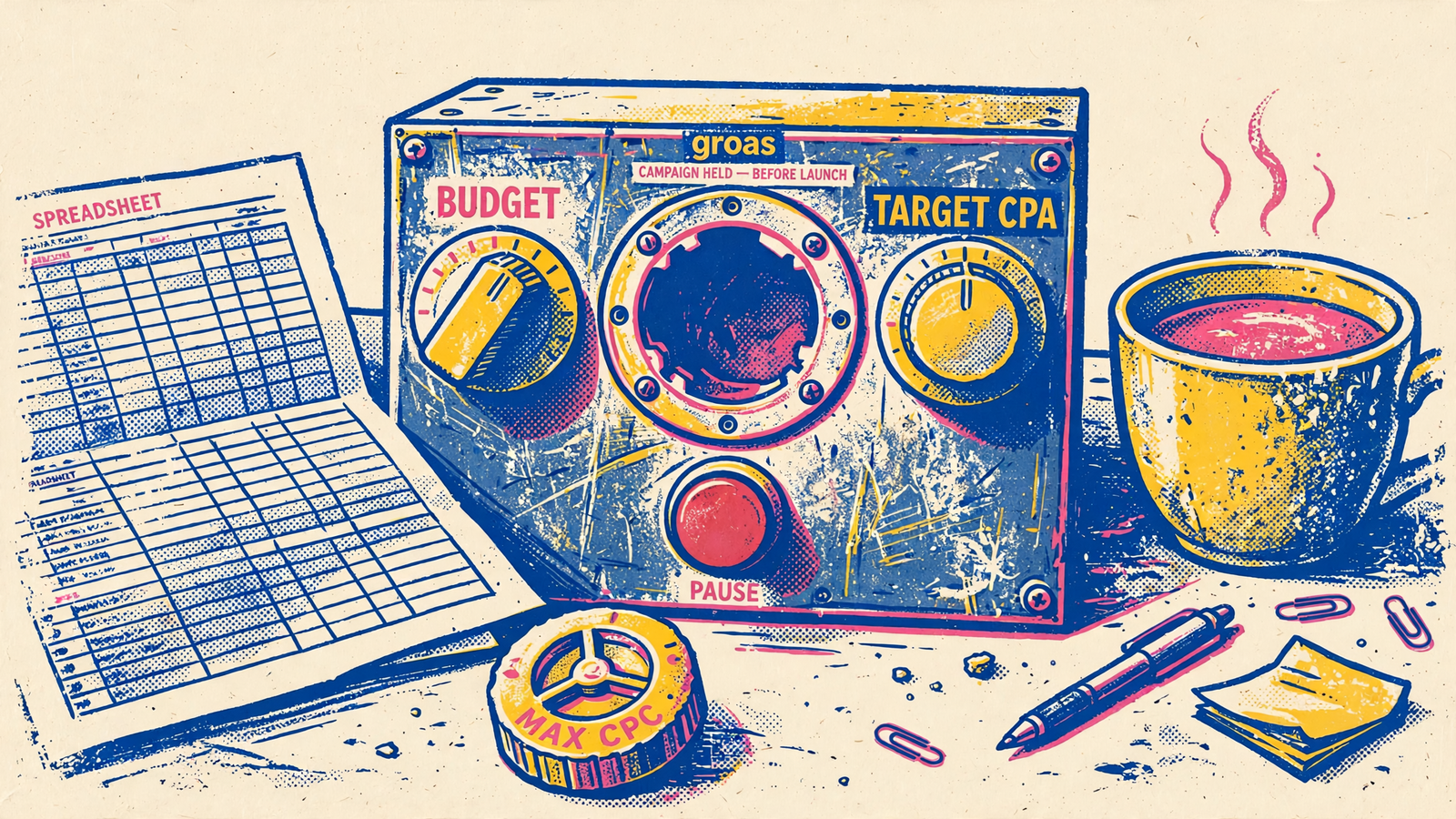
Round 2: Can Claude tell you which bid controls you still have?
Before I let either connector touch a Bing campaign, I’d give Claude this read-only job:
Read this Bing campaign’s bidding strategy, conversion history, and available limits. Report unavailable controls explicitly. Make no changes.
I’d check the answer for four things the sales deck tends to roll into one:
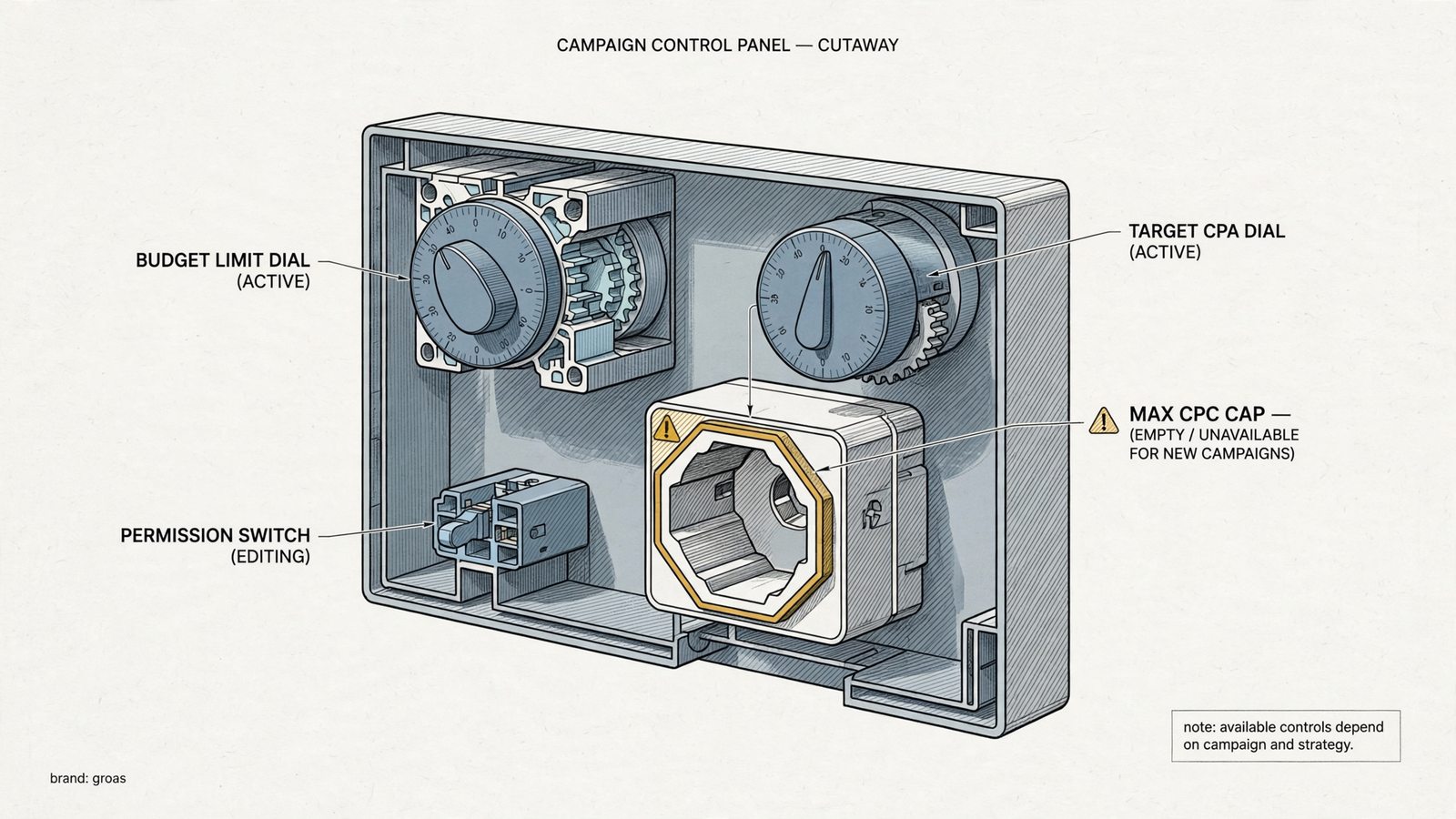
- Budget: what you set for campaign spend, not what you’ll pay for one click.
- Bid cap: the limit on what you’ll pay per click, where the strategy supports it.
- Target CPA: the conversion cost you’re asking the bidding algorithm to aim for, not a per-click limit.
- Permission to edit: whether the connector can change a setting, which is separate from whether Microsoft offers that setting at all.
Microsoft’s August 2026 update draws the line at October 1, 2026. New non-portfolio campaigns using Maximize Conversions with Target CPA, Maximize Conversion Value with Target ROAS, or Maximize Clicks can no longer set Max CPC. Existing campaigns created before that date retain it, as do portfolio bid strategies. The Microsoft Help Center also notes that Target impression share offers an optional maximum CPC.
Neither connector can put back a control Microsoft removed. If Claude claims it restored an unavailable cap, stop there. A useful answer says the cap is unavailable for this campaign and distinguishes that from strategies where a cap is still an option. Naming an option is not the same as recommending a switch to it.
Then I’d check the conversion signal. Microsoft’s November 2026 bidding guidance says conversion tracking is a prerequisite for automated bidding, new accounts under five conversions should start with eCPC, and accounts with at least five can start conversion-based bidding. It recommends ideally waiting for 30 conversions in 30 days to evaluate performance. Those numbers answer different questions: five is guidance on when to start; 30 is a benchmark for when to judge. I wouldn’t turn the second into a rule that forbids the first.
Adspirer’s Microsoft Ads documentation says the connector can read status, budget, and bidding. It also says Microsoft spend, click, and conversion reporting wasn’t live at the time, even though write tools had arrived. So I wouldn’t assume its pacing can apply a rule based on conversion history. Ask it to show what it can read before asking it to act. That’s the test I’d use with either connector: if Claude can’t establish the bidding strategy, available limits, and conversion history, leave the bids alone.
Round 3: What happens when you close Claude?
A paused launch answers one question: who lets this campaign start spending? It doesn’t tell me what happens when the campaign is already live, the conversion count is still thin, and nobody has opened Claude. Adspirer documents conversational creation, negatives, and pacing in its marketplace listing. That listing doesn’t establish that it can keep applying account rules between chats. I’d call that unverified, not absent.
The distinction is easy to test in a product demo. Ask what runs after you close the conversation, who confirms a write, and where that confirmation happens. If the answer is that you need to be in the chat for the next move, you have a useful assistant. You don’t have an account being managed between conversations.
On this round I give groas the win. Its autopilot is off until you switch it on, then runs under the rules you set for goals, budget, channels, and voice. For a small Bing account, I’d write the bidding guardrail before I switch it on: for a new account below Microsoft’s five-conversion starting point, keep eCPC rather than moving into conversion-based bidding. If I do move into conversion-based bidding, I’d use the 30-in-30 benchmark to decide when there’s enough data to judge it. Put those in as separate rules. Otherwise you’ve just automated a misunderstanding.

Round 4: Can you compare Bing and Google without rewarding cheap leads?
Claude with groas connects to Google and Microsoft through MCP, so I can ask it to read both accounts for the same period before proposing an edit. That matters because a platform-reported lead is not qualified pipeline. A Bing lead can look cheaper because it’s a form fill your sales team wouldn’t count. If I compare the cost before I compare what each account calls a conversion, I’ve rewarded the tracking setup, not necessarily the campaign.
I’d work through the comparison in this order:
- Check the conversion definitions. Find out what each account counts as a lead before comparing the totals.
- Check the lag and the windows. Compare the same period, but don’t assume both platforms count conversions on the same schedule.
- Put spend next to qualified pipeline. Use the pipeline figures you have, and tell Claude to flag what’s missing. Connecting two ad accounts doesn’t make a form fill a sales-qualified lead.
That order is the point. If the definitions don’t match, I want to see the mismatch before I see a recommendation. If the pipeline figures are missing, I want a blank, not a confident guess. Only then would I ask for one bounded proposal: for instance, flag a keyword that has spent more than the target CPA without producing any qualified pipeline, and show me the case for pausing it before making the change. Keep the existing daily budget in the brief instead of inviting Claude to change the keyword and the budget at the same time.
Adspirer covers both platforms, but its Microsoft Ads documentation says Microsoft performance reporting wasn’t live at the time. I give groas this round for reading both ad accounts in one conversation. I still bring the pipeline figures to that conversation rather than expecting the connector to supply them.
Round 5: Can you explain a change and take it back?
Once a connector edits a live account, I want two things: a reason I can read and a way back that doesn’t involve reconstructing a bid from a screenshot. groas documents both: every change is logged with its reason and can be undone in one step. If a bid drops on a campaign with five conversions, I can check why the change happened and reverse it if I disagree. That’s a different safeguard from approving the campaign at launch.
Adspirer’s paused-start documentation answers the launch question. It doesn’t establish an equivalent reasoned log or one-step undo, and Agentman’s check flags uncertainty about where confirmation happens. Before I connected a live Microsoft account, I’d ask Adspirer four things:
- Where do I confirm a change?
- Does every change have a log entry that says why it happened?
- Can I reverse a single change in one step?
- Do those protections cover edits to existing campaigns, or only new ones?
I’d want to see the answers on an existing campaign, not just in a clean launch demo. I give groas this round because the protections I’m looking for are documented, and I don’t have to infer them from a paused badge.
The scorecard for a small Bing budget
Adspirer wins the launch round. groas wins on the work that follows. Neither gets a point for bringing back a bid cap Microsoft no longer offers.
| Decision | Adspirer in Claude | groas in Claude |
|---|---|---|
| Approval before launch | New campaigns start paused by default | Request preparation and review before authorizing launch |
| Available bid controls | Microsoft sets the limits; verify what Claude can read | Same platform limits; ask Claude to report unavailable controls before making changes |
| Between conversations | Ongoing rule-based execution not established in the documentation cited here | Optional autopilot, off until enabled, runs under your rules |
| Bing vs. Google | Microsoft performance reporting wasn’t live as of Adspirer’s documentation | Reads both accounts in one conversation; bring your own qualified pipeline figures |
| Explaining and reversing edits | Verify confirmation, a reasoned log, and one-step undo | Logs each change with its reason and offers one-step undo |
There’s also the bill. groas Unlimited is $19 a month, flat, for unlimited teammates, ad accounts, and websites. Adspirer Plus starts at $49 a month for 150 tool calls, and Adspirer lists 8 to 12 calls for one campaign launch. With one, I know the monthly price regardless of how many accounts I connect. With the other, I’m counting how much work Claude does in calls. For a small advertiser already paying for groas, I’d need a specific workflow advantage before adding that bill.
Verdict: Keep groas for the Tuesdays after launch
Pick Adspirer if new campaigns starting paused by default is the requirement you won’t negotiate on. Test it on a new campaign, ask the four questions about edits and undo, and check whether Microsoft performance reporting has shipped since the documentation said it wasn’t live. Buy the workflow you can demonstrate, not the badge in the Claude directory.
For an existing groas customer with a small Bing budget, keep groas in Claude. Run the no-changes audit first. Write the eCPC starting rule and the evaluation benchmark separately. Compare Bing against Google on conversion definitions, lag, and qualified pipeline before approving a bid change. If you want that policy applied between conversations, switch on autopilot once the rules are clear, then read the log.
Neither connector fixes sparse conversion data or restores a missing platform control. What I want for $19 flat is an account that runs under my rules after I close the chat, with a record I can read and a change I can undo. A paused start gets me through launch day. I’m buying for Tuesday.