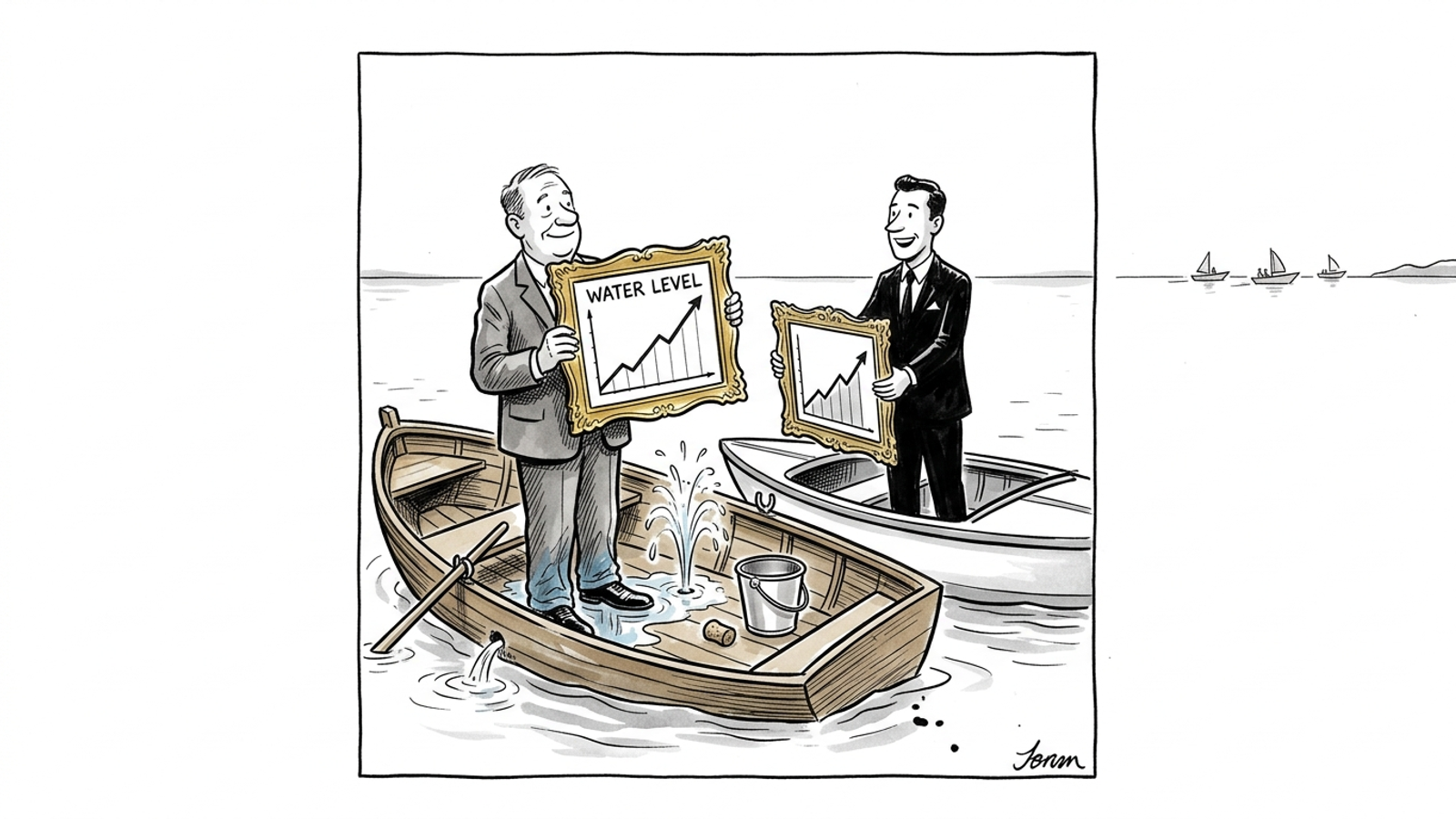

Every growing agency hits the same ceiling: the moment client count outpaces the hours a single account manager can physically work in a week. This is the optimization treadmill, and it is the single biggest reason agencies lose clients, bleed margin, and stall growth. This article follows a representative agency through that breaking point, through the decision to run the groas DIY engine on three client accounts, and through the 60-day window that changed how the agency operates. The punchline: the agency added five new clients without hiring a single new account manager, improved retention across its book, and shifted freed capacity into higher-margin services. If you run a PPC agency and recognize even one symptom described below, you are probably closer to this ceiling than you think.
The Optimization Treadmill: What Daily Manual PPC Management Actually Looks Like At Scale
The optimization treadmill is the cycle where an agency’s account managers spend their entire day making incremental bid adjustments, pausing underperformers, testing ad copy, and pulling reports, only to wake up the next morning and do it again with no compounding advantage. At eight to twelve client accounts per manager, the math gets brutal fast.
Forty Decisions, Twelve Accounts, One Person
A competent account manager making roughly forty meaningful optimization decisions per week across twelve accounts is making about three to four decisions per account per week. That sounds reasonable until you consider what gets skipped. Search term reviews happen weekly instead of daily. Bid adjustments lag behind auction dynamics by days. New ad copy tests get queued for “next week” indefinitely. Landing page alignment never gets touched because it is not technically in scope.
The ceiling is not effort. The ceiling is physics. One person cannot process the volume of signals a dozen active Google Ads accounts generate in real time. Performance does not collapse. It just stops improving. And “stopped improving” is exactly the language clients use right before they start shopping for a new agency.
This is the pattern that tools like WordStream were built to address, but as this agency discovered, recommendations and execution are not the same thing.
The Situation: An SEO-First Agency That Added PPC And Grew Into A Problem
The agency in this story started as an SEO shop. Search engine optimization was the core, PPC was the add-on. Over about eighteen months, the paid search side grew from two accounts to twelve. Monthly managed spend climbed to around $150K across the book. The team handling all of it: one senior account manager and the agency owner, who was also running sales and client relationships.
How The Accounts Were Actually Being Managed
The tech stack was typical. Google Ads Editor for bulk changes. A mid-tier PPC tool that surfaced recommendations (think WordStream or a comparable product). Google Sheets for reporting. The account manager would log into each account, review the tool’s suggestions, decide which ones to act on, implement the changes manually, and move to the next account. On a good day, she could get through eight accounts with meaningful attention. The remaining four got a glance.
Client performance was acceptable. Not exceptional. ROAS held steady on most accounts, and the agency retained clients on the strength of its SEO work more than its PPC results. But margins on the PPC side were eroding. Each new client added revenue but also added hours, and the account manager was already working evenings to keep up.
What Was Going Wrong: The Breaking Point Nobody Saw Coming
Two things happened in the same month that forced the conversation.
A Key Account Hit A Wall
The agency’s highest-spend client, roughly $25K per month in ad spend, hit a performance plateau that lasted six weeks. CPA crept up. Conversion volume flattened. The account manager tried the standard playbook: restructured ad groups, refreshed copy, adjusted bid strategies. Nothing moved the needle. The problem was not that the wrong tactics were applied. The problem was that the volume of signals in that account (search terms, audience segments, device and time-of-day patterns, competitor auction behavior) exceeded what one person reviewing it a few times per week could meaningfully act on.
A Client Churned With A Painful Exit Interview
A different client, mid-tier spend, left the agency. The exit feedback was direct: “We felt like our account was on autopilot. We never saw proactive optimization.” The account manager had been optimizing that account. Just not enough, and not fast enough, because twelve other accounts needed the same attention.
The Hiring Math Did Not Work
The agency owner ran the numbers on hiring a second account manager. Salary, benefits, onboarding time, ramp-up period: conservatively $5K or more just to get someone started, then $4K to $6K per month in fully loaded cost before the new hire was operating independently. And that second hire would eventually hit the same twelve-account ceiling, creating the same problem again at twenty-four accounts.
The question became: is there a way to scale execution without scaling headcount?
The Diagnosis: Tools That Recommend Are Not The Same As Engines That Execute
This is the insight that separates agencies that scale from agencies that grind. The PPC tool the agency was using did what it was designed to do: it analyzed account data and surfaced recommendations. “Pause this keyword.” “Increase this bid.” “Try this ad variation.” But every recommendation still required a human to evaluate it, approve it, and implement it. The tool reduced analysis time. It did not reduce execution time.
The distinction matters because the bottleneck at a growing agency is almost never “we don’t know what to do.” The bottleneck is “we don’t have the hours to do everything that should be done across every account every day.”
An engine that executes, one that actually makes and implements optimization decisions continuously, changes the math entirely. Instead of a tool giving your account manager a to-do list she cannot finish, the engine handles the high-volume, high-frequency execution around the clock while the account manager focuses on strategy, client relationships, and the judgment calls that actually require a human.
This is precisely the distinction the groas DIY engine is built around. It is a proprietary engine trained on over $500 billion in profitable ad spend that agencies operate themselves. The agency keeps its brand, its client relationships, and its margin. groas powers the execution underneath. For a deeper playbook on this approach, the guide to scaling a Google Ads agency without hiring covers the full framework.
What Got Fixed: Running The groas DIY Engine On Three Client Accounts
The agency owner started the 7-day free trial on the highest-spend client, the one stuck on the six-week plateau. The logic was simple: if the engine could move the needle on the hardest account, it would work on the rest.
What The Engine Did In The First Week
Within the first seven days, the engine executed a volume of optimizations that the account manager estimated would have taken her three weeks of focused work on that single account. Search term sculpting happened continuously, not weekly. Bid adjustments responded to intra-day auction dynamics rather than lagging behind by days. Ad copy rotations and budget reallocation across campaigns happened based on real-time performance signals.
The account manager’s role shifted immediately. Instead of spending hours inside the account making changes, she reviewed what the engine had done, validated the strategic direction, and spent her time on client communication and creative strategy. Her comment to the agency owner after day five: “I actually had time to think about this account instead of just reacting to it.”
How The Agency Briefed The Client
The agency did not tell the client “we switched to a new tool.” They told the client: “We’ve upgraded our optimization infrastructure to run continuous, data-driven execution across your account 24/7. You’ll see more changes happening faster, and your account manager now has more capacity for strategic work.” The client’s response was essentially: “Great, just keep improving results.”
Expanding To Three Accounts
After the trial converted, the agency connected two more client accounts. One was a lead-gen business spending around $15K per month. The other was an ecommerce account at roughly $10K per month. Both had been in the “adequate but not improving” category. The agency ran all three on the engine for 60 days before evaluating results.
The Result: What Changed After 60 Days
Being precise about what is shareable here: these are representative patterns, not proprietary metrics from a named customer. But the directional outcomes are consistent with what agencies running the groas engine report.
Performance Trends
Across the three accounts, the general pattern was the same: performance improved meaningfully within the first two to three weeks, then stabilized at a higher level. The highest-spend account broke through its plateau. The lead-gen account saw cost per lead come down while volume increased. The ecommerce account saw ROAS improve as the engine reallocated budget toward higher-performing product groups and search terms continuously rather than in weekly batches.
Time Saved Per Account
The account manager estimated she was spending six to eight hours per week per account on hands-on optimization before. With the engine running, that dropped to roughly two hours per week per account, focused on strategic review, client calls, and creative direction. That freed approximately fifteen to twenty hours per week across just three accounts.
Client Retention Impact
The client that had been on the plateau renewed for another six months. The exit interview feedback from the churned client, “lack of proactive optimization,” became structurally impossible when the engine was making optimization decisions around the clock. The agency did not lose another PPC client in the following quarter.
What This Means For Other Agencies
The transferable lesson is not “buy a better tool.” The lesson is that agencies hit a structural ceiling when execution depends entirely on human hours, and the only way past that ceiling without proportionally increasing headcount is to shift execution to an engine while humans focus on strategy and relationships.
When To Make The Move
If your account managers are spending more time implementing changes than thinking about strategy, you have hit the ceiling. If client performance is “fine” but not improving, you have hit the ceiling. If you are turning away new business because your team is at capacity, you have hit the ceiling. The 7-day trial framework covers how to evaluate whether an engine will work for your specific client mix.
How To Evaluate Whether An Engine Fits Your Client Mix
The groas DIY engine works across industries. If your clients run Google Ads, the engine is built to improve their performance. The key question is not “does this work for my niche?” It is “am I willing to let execution happen at a speed and scale that exceeds what my team can do manually?” For most agencies past five or six accounts, the answer is obviously yes.
The Free Trial As A Zero-Risk Proof Point
groas offers a 7-day free trial on the DIY product. There is no onboarding fee. There is no long-term contract. It is month-to-month, cancel anytime. The agency in this story tested it on its hardest account first and expanded from there. That is the playbook: pick the account where improvement would be most meaningful, run the trial, and let the numbers decide.
Compare that to hiring (weeks of recruiting, thousands in onboarding costs, months before independent performance) or switching to a traditional agency model (locked into six to twelve month contracts, $5K or more in onboarding fees, and you lose control of your client relationships).
The Verdict
The optimization treadmill is a structural problem, not a performance problem. You do not solve it by working harder or hiring people who will eventually hit the same ceiling. You solve it by separating high-frequency execution from human-driven strategy and letting each operate where it is strongest.
The agency in this story did not become a different kind of agency. It became a more efficient version of itself. The same team, the same clients, the same brand. The difference was that execution ran 24/7 through a proprietary engine trained on hundreds of billions in profitable ad spend, and the humans focused on the work that actually requires humans.
If your agency is approaching the ceiling, or already pressed against it, the groas DIY engine gives you a way to test the alternative with zero risk and zero commitment. Start your 7-day free trial, connect your hardest account, and let 60 days of data make the case.