

 LinkedIn
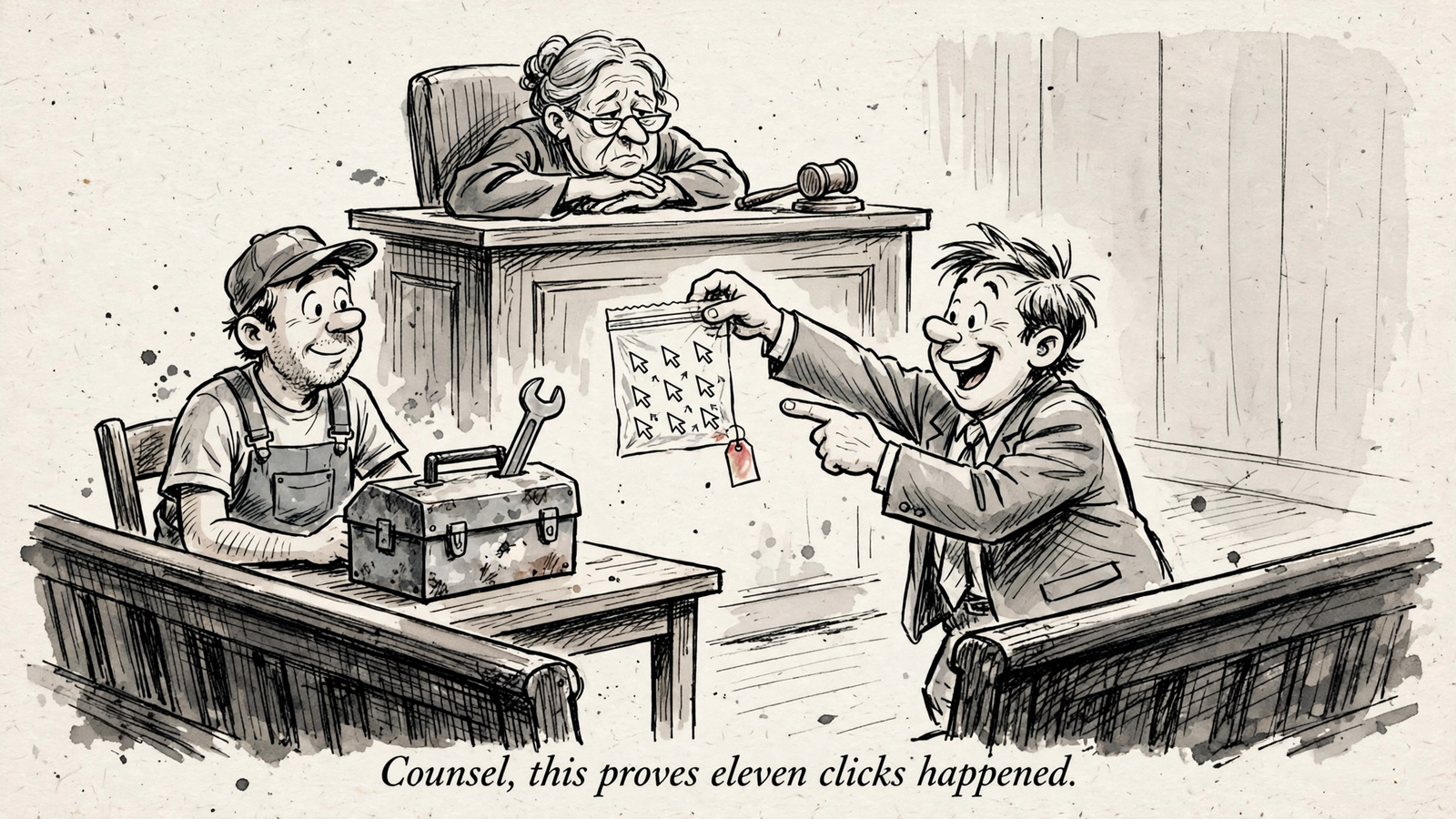
Say you spend $20k a month on Google and $700 on Microsoft Advertising. When I ask Claude to audit that Bing account, zero recorded conversions goes into a review queue, not straight onto a negative-keyword list. A relevant search with 11 clicks and no conversions has proved that 11 clicks happened. I used to read that row as a verdict. I was wrong. I want Claude to reject obvious irrelevance without pretending a thin sample can tell me which relevant searches will never convert. A free search-term audit can rank zero-conversion terms by spend and split brand from non-brand, but it stops where the report stops. For this checklist, I connect Claude to Microsoft Advertising through groas over MCP so it can check those rows against the account. groas costs $19 a month flat, with unlimited teammates and accounts. The free report finds suspects. I still want an audit before I exclude them.

The nine checks I run before adding a negative
Read our Microsoft Advertising account through groas. Audit wasted spend, but do not treat zero conversions alone as proof of waste. Make no changes. Keep Google evidence separate.
-
Confirm the Microsoft account and campaign IDs. Exact IDs in, exact IDs out. I want every proposed exclusion tied to the Microsoft campaign it belongs to, not to a similarly named Google campaign. A campaign name helps me read the report; the ID tells me where the recommendation belongs. I keep this pass read-only: Claude can propose a change, but approval is mine.
-
Confirm what counts as a conversion. List the goals Claude is allowed to use and separate business outcomes from weaker actions like page views or time on site. A form start isn’t a form submission. I want the goal named next to the count so I don’t approve a decision based on one action while assuming the report measured another. If Claude can’t see the goal’s tracking status, mark it unverified, not working. A new UET tag or goal can take up to 24 hours to show data; validate it with UET Tag Helper before calling the zero a failure.
-
Give recent clicks time to convert. State the reporting window and flag clicks that haven’t had time to mature. Microsoft reports conversions against the click date, not the conversion date, so recent rows can fill in later. The Conversion delay column shows how long it takes to collect 90% of conversions. A long reporting window doesn’t make the clicks at the end of it any older. If Claude can’t establish the delay, I want that uncertainty next to the affected row, not a verdict on last week.
-
Put spend, clicks, and recorded conversions on the same line. I start with 90 days on an account this small. With a short search-term window, I end up reading row after row of one click and zero conversions. Spend tells me which row to read first. Clicks tell me how much traffic that spend bought. At a 5% conversion rate, 20 clicks gets me roughly one expected conversion, not one owed to me. Eleven clicks and zero conversions isn’t a verdict. A click cutoff can filter noise out of a report; it can’t tell me which relevant terms to exclude. That’s the distinction behind $100, Zero Conversions Is Not a Verdict, and it matters even more when clicks come in slowly.
-
Separate irrelevant intent from unproven intent. Require one sentence explaining why the search doesn’t fit the offer before Claude proposes a negative on relevance grounds. If I sell plumbing services,
plumbing jobs hiringis a job search, not a service inquiry. I don’t need another click to make that call. I want the sentence to name what the searcher appears to want and why I don’t sell it. “Relevant, six clicks, zero conversions” describes a row; it doesn’t give me a reason to block it. -
Check the destination before blaming the search. Ask Claude to inspect whatever destination evidence groas can provide: the final URL, the page content, and whether there’s a form or call button. A changed page, expired offer, or broken tag can leave a relevant search looking like a dud. Seeing a form on the page and verifying that a submission records a conversion are two different checks. I want Claude to say which one it can support. Zero recorded conversions doesn’t tell me what went wrong, or whether anything went wrong at all. If the destination evidence is missing, mark it unchecked and hold the verdict.
-
Use Google to decide what to look at, not what to exclude. If the same term converts on Google, put Google’s sample next to Microsoft’s and label both. Different auctions, different volume, and different click costs can change the economics of the same search. I want to know whether the Bing row is worth watching more closely. I don’t want Google conversions counted as Bing evidence or a Google negative list copied over for the sake of a tidy account.
-
Give each reviewed term one queue, not one mandatory action. I want to see where every reviewed row lands, including the rows that don’t justify a change. If a term fits the offer but I can’t verify what the goal measures, I want the measurement question first. Once I can read the conversion count, I can decide whether the term belongs on the watch list.
- Proposed exclusions: exact negative text, match type, scope, and the reason the search doesn’t fit or the evidence supports excluding it.
- Relevant traffic to watch: the term, spend, clicks, recorded conversions, and what additional evidence would justify another look.
- Measurement questions: the missing goal, unvalidated tag, short window, or unchecked destination that blocks a verdict.
-
Preview only the changes I can justify. Show the exact negative text, match type, scope, and campaign IDs before anything changes. The search term tells me what triggered the review; the proposed negative tells me what I’m being asked to approve. I want both in front of me, not a summary that says “remove waste.” Apply only what I approve, then inspect the groas action log and keep the one-step undo path available. Leave autopilot off unless I deliberately switch it on. If Claude can’t specify the negative, it isn’t ready to add it.

Return the three queues with source metrics and uncertainties. If there is not enough evidence to act, say so. Do not fill an action quota.
What earns a place in each queue
-
Queue one: Keep the reason beside the negative. Say Claude returns four proposed exclusions and 37 terms to watch. I don’t need those numbers to look more even. I need to know why each proposed exclusion belongs there.
Free pipe repair manual pdfis looking for a manual;DIY shower valve replacement videois looking for instructions. Neither is asking to book the repair. That’s what the deck calls “irrelevant intent.” I call it a reason I can read. The distinction matters when I review the proposed negative: the manual and the video are the mismatch, not pipe repair or shower valve replacement by themselves. The negative needs to reflect the reason, not just a word the two searches have in common. No reason, no exclusion. -
Queue two: Set a revisit point, not a kill switch. Say
emergency plumber near mespends $212 over 90 days on 34 clicks and records no conversions. The landing page is intact and the goal fires on a test submission. At a 5% conversion rate, 34 clicks comes to fewer than two expected conversions. The cost is worth watching, but the search fits the offer and the zero isn’t enough for me to rule it out. I might revisit it at 60 clicks or $350. Neither number tells Claude to add a negative. It tells me when to read the row again. If spend gets there first, I want to see how many additional clicks it bought, not just how far the cost moved. I still have to make the decision the next time I open the report. -
Queue three: Name the check that would make the report usable. “Goal counts form starts, not submissions.” “Last 14 days of clicks are still inside the conversion-delay window.” “Final URL redirected; destination unchecked.” Those aren’t three ways of saying the traffic failed. They’re three different reasons I can’t grade it yet. The first sends me back to the goal, the second tells me to give those clicks time, and the third sends me to the destination. If the exclusion queue is empty and the measurement queue is full, I fix measurement first. Asking Claude to find more waste won’t make the conversion column more useful.
What I carry into the next review
-
Put the next audit on the calendar, not the next batch of negatives. I’d run the full review quarterly rather than weekly on the $700 account. A weekly sweep can keep serving up the same terms with two clicks and zero conversions. If the click count hasn’t changed, the calendar hasn’t given me new evidence. I don’t wait a quarter to reject a search that’s plainly irrelevant, but some relevant terms may need two quarters before there’s enough to judge them. If the Google team wants the same review pace across both accounts, I put the click counts side by side. I can use the same checklist without expecting both accounts to give me an answer on the same schedule.
-
Carry over the Google question, not the Google answer. Say Google converts on
same-day AC repairand Bing has nine clicks and zero conversions. I move that term up the watch queue. I don’t make Bing inherit the Google exclusions because the lists would look cleaner. A term that’s marginal at $38 a click on Google can pay at $14 on Bing. The lower click cost changes what the term needs to earn its keep; it doesn’t prove that the term will convert. I still need Microsoft’s own sample. -
Keep the measurements and the decisions together. I carry forward the click count, the goal Claude used, and anything it couldn’t check. If I approve a negative, the groas log shows what changed and why. If I approve nothing, the watch queue still gives me a place to start next quarter. I want to compare the next row with the one I actually reviewed. If the goal changes from form starts to submissions, I don’t read the two counts as if they measured the same action. The point is to tell whether I have more evidence or just another report on the same handful of clicks.
-
Leave autopilot off while measurement is unresolved. If I can’t tell whether the goal counts form starts or submissions, I don’t need a faster way to act on that goal. I need to settle what counts, let the recent clicks mature, and run the same review again. I keep the unresolved check with the row so the next pass starts there. The three queues still do their job when none of them produces an edit.
-
Give Claude explicit permission to do nothing. This is the item I see skipped most. It’s easy to pay $19, run nine checks, get four exclusions, and ask for a few more so the audit feels worth it. But every relevant term I exclude to fill that quota loses the chance to collect the clicks that could settle the question. Next quarter I have less volume and no better answer. That’s what skipping this line costs: not just traffic, but the evidence I needed to judge it. Leave the line in. An empty exclusion queue is a result.





