

 LinkedIn

By November 2028, the Google Ads agent worth paying for will show you the change it refused to make, the evidence it was missing, and what would make it reconsider. It won’t win by changing bids faster. Smart Bidding already has the auction-time job.
I used to judge account management by how quickly someone found an edit worth making. Lower the target CPA on Tuesday, move budget on Wednesday, mine for negatives at 1 a.m. That work mattered when a human had to remember to do it. Now the edit is the easy part. The hard part is knowing whether the number behind it deserves to be believed.
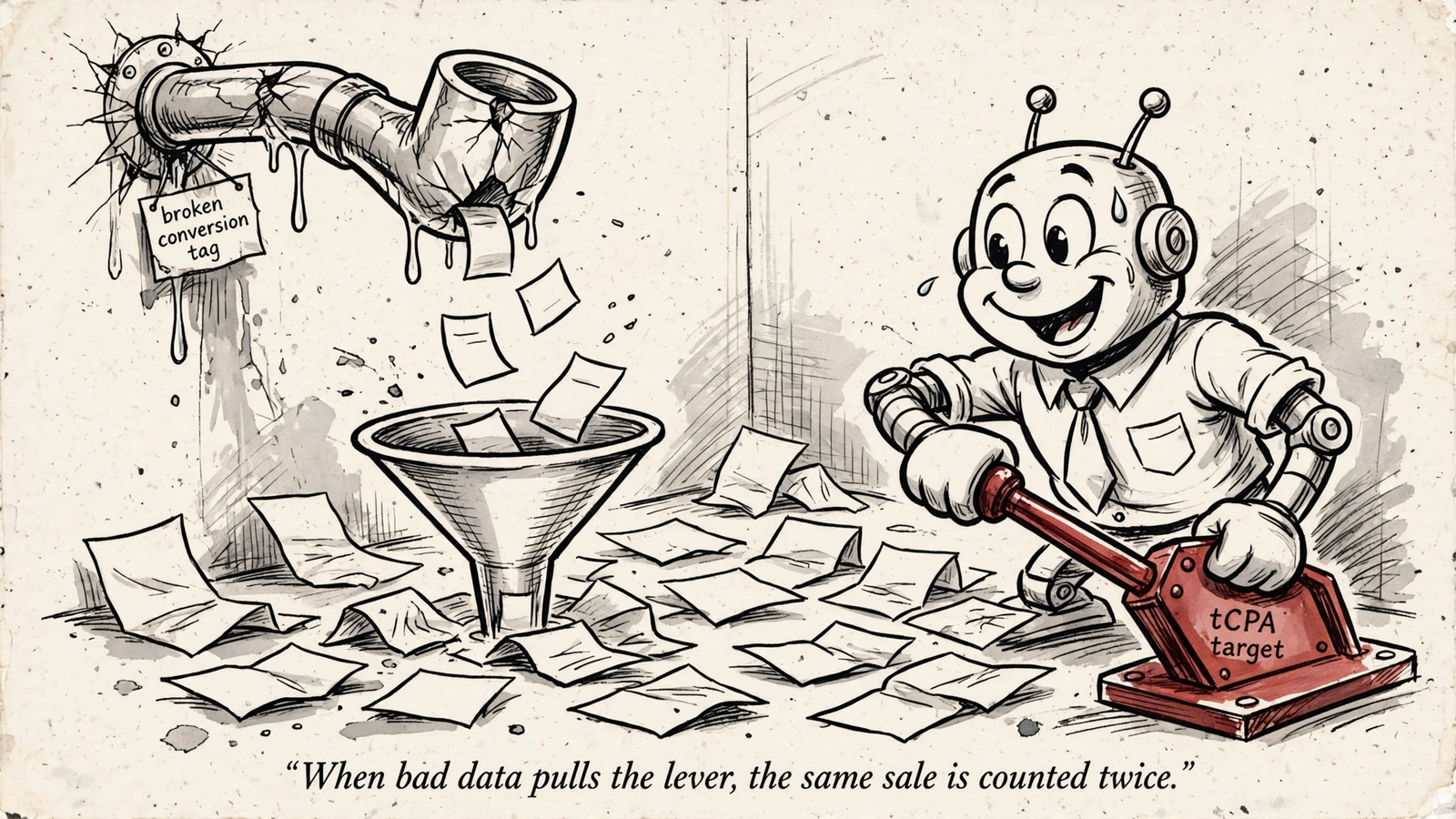
If a tag and an offline import count the same sale, an agent can execute a budget change perfectly on the strength of a sale that didn’t happen twice. I’ve seen the human version: a client swapped a landing page, Quality Score fell, and nobody told me about the swap. An agent can make the same mistake at 3 a.m., with nobody in the room to ask what changed.
Prediction 1: By November 2027, serious agents will show their conversion checks before recommending a change
I expect to see the checks next to the recommendation, not buried in settings. I want to know which conversion actions the agent could verify, which it couldn’t, and whether it’s looking at a deduplicated count or a guess wearing a count’s clothes. I want that before it tells me to lower target CPA, not after I ask why CPA looks so good.
Start with the count, not the bid
I’d ask an agent to read three things, in this order:
- Conversion settings. Which actions are primary or secondary? Does each count one conversion or every conversion? A recommendation about bidding should tell me what outcome the campaign is actually learning from.
- Reported outcomes. Do conversions from the last 48 hours line up across the sources the agent can inspect: the tag, the CRM import, and Google Ads? A successful upload doesn’t settle the count. In one r/PPC thread, an advertiser uploaded three offline conversions. All three showed as successful for days. Then one vanished while diagnostics still said 100% imported. Commenters pointed to later deduplication, invalidation, or a CRM adjustment. The upload status didn’t tell the advertiser which, if any, explained it.
- Recent account changes. Did someone change a target, edit a GA4 link, or change consent settings? When every conversion action in one account showed as misconfigured, commenters looked for a shared break, such as the GA4-to-Ads link or a republished container. They advised shrinking budgets rather than optimizing blind. Nobody needed a clever new bid target to explain why all the actions broke at once.
I used to tell clients to fix the bid first. I was wrong. If the count is broken, fixing the bid is a faster route to the wrong answer.
Look for a tool that can say what it couldn’t check
I’d start with one prompt in Claude or ChatGPT:
Before proposing changes, identify which conversion signals you can verify and which you cannot. Make no edits.
I want three buckets: verified, unverifiable, and missing, with the spend and conversion volume behind each where the agent can establish them. The distinction matters. A check the agent couldn’t run is not a check that came back clean. The Coupler.io conversion tracking audit skill already takes that approach: it grades confidence as High, Qualified, or Not usable, quantifies untracked spend, and reports unrun checks as unknown.
What would prove me wrong: In November 2027, leading tools still sell edits per hour and leave conversion checks in an optional add-on or a support article. In the meantime, if I ask for checks and get three recommendations and a CPA projection, that tool isn’t touching my targets.
Prediction 2: By November 2028, “insufficient evidence” will show up as a decision
Checking the signal is one thing. Doing nothing when it fails the check is another. By November 2028, I expect “insufficient evidence” to appear in the interface, the action log, and the weekly summary. Not as “we could not complete this task.” As a record of the change the agent considered and why it decided not to make it.
Make the refusal specific enough to disagree with
I’d require three things in a refusal:
- The missing evidence. Name the check that failed or couldn’t run. “Conversion data is incomplete” doesn’t tell me whether the agent found double counting or simply couldn’t see the CRM import.
- The consequence of acting now. Tell me what spend is at risk and why. If the count includes duplicate sales, a budget increase can put more money behind a campaign that only looks profitable.
- The condition for reconsidering. Tell me what would change the answer: a verified conversion count over a stated window, for instance, or a deduplication check that comes back clean.
There’s already a version of this in Boxoo’s specialist agents. They check for issues like double counting, actions that stop recording, and problems with counting settings or attribution windows. A human can approve, save, or dismiss the findings before a change applies. That’s an approval gate. What I’m betting on is a step beyond it: I shouldn’t have to reconstruct from an empty change log that the agent considered an edit and decided against it.
Don’t let a threshold do the reasoning
Google’s value-based bidding guide gives a concrete example for Target ROAS: at least 15 conversions in the last 30 days at the conversion-tracking level, with conversion delay under seven days. That’s a useful floor for that strategy in that context. It isn’t a rule for every decision in every account.
A B2B account with a 90-day sales cycle and three closed-won deals a month needs a different evidentiary standard from an ecommerce account doing 300 orders a week. In either case, I want the refusal to say which signal matters, why the window fits, and what I need to see next. Otherwise I’ve got a rule someone made up in a doc, enforced by a machine that never sleeps.
What would prove me wrong: In November 2028, the tools buyers shortlist still make confident changes on incomplete evidence, and buyers keep rewarding them for it. One operator in Scaley AI’s agent test guide already limits autonomous negative-keyword additions to cases above 85% confidence and gets the rest by email. I wouldn’t borrow that number as a universal cutoff. I’d borrow the distinction between what the agent can act on and what it should send back for a human to look at.
Prediction 3: By November 2028, agents will configure Smart Bidding, not bid against it
Smart Bidding sets the auction-time bid. The agent decides whether the goal and constraints around that bid make sense. That means deciding whether value-based bidding fits the campaign, which conversion action feeds it, what target the volume and delay can support, and when to stop touching the account and let it learn.
That last decision is a real one. Google’s Smart Bidding help puts convergence after a target change at one to two conversion cycles and says major structural changes can put a strategy in Learning for up to seven days. Another target edit on Monday might look like account management in the change log. It’s not much use if you keep changing the goal before you can read the result.
Ask what the campaign is learning before changing the target
I’d ask ChatGPT or Claude for a comparison, not an edit. What objective is each campaign actually optimizing toward? What target goes with it? What constraints matter: budget, margin, lead quality, or a sales cycle that runs longer than the reporting window? Then I’d ask what breaks if the target moves this week.
I’ve looked at accounts where the bid was never the problem. A form start or an add-to-cart was marked primary, and Smart Bidding did exactly what it was told: it chased cheap actions the business didn’t particularly want. As I’ve written before, more conversion signals can make Smart Bidding worse. The agent can catch that mistake where the goal gets set. It doesn’t need to be in the auction to fix it.
Start with account reads and approved changes
With groas over MCP, I can connect the account to ChatGPT, Claude, Cursor, Gemini, or another agent, then ask it to read the account and make approved changes in plain English. Autopilot stays off until I switch it on. Every change is logged with its reason and can be undone in one step.
That’s why I’d pick groas for this job over the native Google Ads MCP server. Google’s connector can read the account and make a narrow set of writes, including assets and labels, but it can’t change bids, budgets, keywords, or campaign status. I want to inspect the account first and still have a way to make an approved change when the evidence supports it. I’d rather answer for a logged, reversible edit than find out a dashboard did something at 3 a.m.
What would prove me wrong: By November 2028, an assistant takes over auction-time bidding and produces better measured outcomes on comparable accounts. Configuring native bidding doesn’t count. The auction is where Google has the biggest data advantage. The outside agent has better work to do upstream: check what counts, set a defensible target, and know when to leave it alone.
What I’d do this week: Ask for one edit and one refusal, then make neither
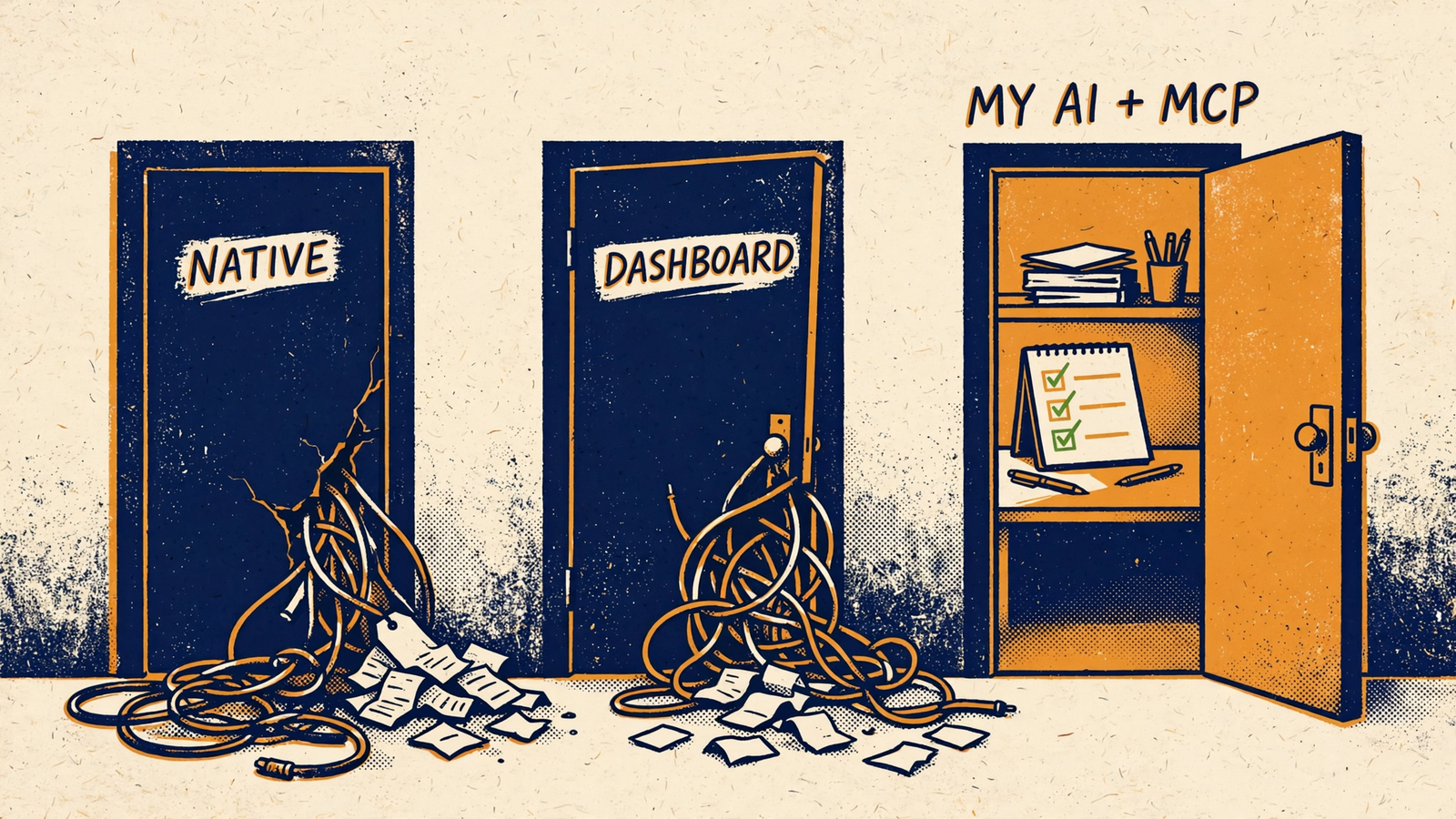
You’re not shopping in 2028. You’re shopping with real spend and a tracking setup you haven’t fully audited. Choose on failure mode, not feature count. Native automation doesn’t answer for its decisions in the terms I’m asking for here. A dedicated dashboard can give me a polished recommendation without showing whether it verified the signal. I’d rather use my own assistant over MCP, review changes before they happen, and have a log I can inspect if I approve one.
Run two prompts on the same account evidence
- Ask what it can verify. Use the no-edit prompt from Prediction 1. Look for which checks ran, which didn’t, and whether the agent can connect those gaps to spend.
- Ask for one recommendation and one justified refusal. Keep edits off. Use the same account evidence for both. The refusal should name the missing check, the consequence of acting now, and what would change the answer.
The setup I trust is ChatGPT or Claude with inspected, approved changes and autopilot off. If it can justify a change but can’t justify holding one back, I keep autopilot off. I don’t move the budget on that recommendation. I fix the conversion signal first. That’s not a delay. That’s the work.
Before switching on autopilot, I’d write down what the agent may change without asking, what needs human approval, what it must never touch, and what evidence it needs to attach. groas Unlimited costs $19 a month flat for the whole team, not a percentage of spend. If I’d rather hand the account over, Done For You starts at $5,000 a month. Either way, I want the same thing: a refusal I can read beats a change I can’t explain.
That’s how I’m betting buyers will tell the serious agents from the fast ones. The agents that win will compete on the changes they refused to make.





