

 LinkedIn

Say you spend $20k a month on Bing and tell ChatGPT, “Never bid above $4.” Microsoft Advertising, not ChatGPT, decides whether that campaign can have a $4 bid ceiling.
That’s the fact everything else follows from. groas gives ChatGPT access to read the account and, with permission, change settings Microsoft supports. Your prompt tells it what you want it to do with that access. If the campaign already has an editable cap, the assistant can check it and, if the connection supports the edit, ask you to approve a change. If Microsoft won’t let that campaign have a cap, a clearer prompt won’t help.
I used to nod when clients told me to “keep control of bids.” I should have asked what they meant by control. There are three answers, and they lead to three different places when something doesn’t work.
The three places a bid rule can live
Start with what Microsoft allows, not what the prompt says. I separate the layers in this order:
- Platform rule: Does Microsoft allow a hard per-click ceiling for this campaign’s bidding strategy and structure? The answer determines which settings are even available.
- Account setting: What is the campaign actually using? A campaign can run Maximize Conversions with a $50 target CPA and, where supported, a $4 Max CPC. Whether it can have a cap and whether it does have one are separate questions.
- Assistant instruction: What am I asking ChatGPT to do? “Never bid above $4” tells the assistant not to make or recommend a change that violates my requirement. It doesn’t put a $4 ceiling into the auction.
That last distinction matters even when nothing fails. Suppose I ask for a $4 ceiling and ChatGPT reads back an existing $4 Max CPC. It has verified a setting, not installed one. If it reads back a $50 target CPA and promises to “respect the $4 guardrail,” it still hasn’t shown me a ceiling. The promise lives in the conversation. The cap, if there is one, lives in Microsoft Advertising.
What the connection can actually verify
Without an account connection, ChatGPT can talk about bidding strategies, but it can’t tell me which one my campaign uses. Connect Microsoft Advertising through groas over MCP, and the assistant can read the account. Give it write access, and it can also make supported changes after approval. Those are different permissions. A successful read tells me nothing about whether an edit will save.
I start with a request that doesn’t need write access:
Show the account, reporting period, spend, conversions, and bidding strategy behind your analysis. Make no changes.
The connection gives the assistant real data to work with: spend, clicks, CPC, CTR, conversions, ROAS, and keyword data. The prompt tells it what evidence to show. It doesn’t guarantee that the assistant pulled the right account or period, which is why I want both named in the answer. If I’m asking for a cross-channel comparison, I include Google Ads. If I’m checking one Bing campaign’s cap, I leave it out.
For the $20k account, I want the assistant to identify the campaign and tell me what’s set before it recommends a change. If the answer doesn’t name the account and reporting period, I treat the analysis as a draft and check it in Microsoft Advertising.
A budget, a target, and a cap do different jobs
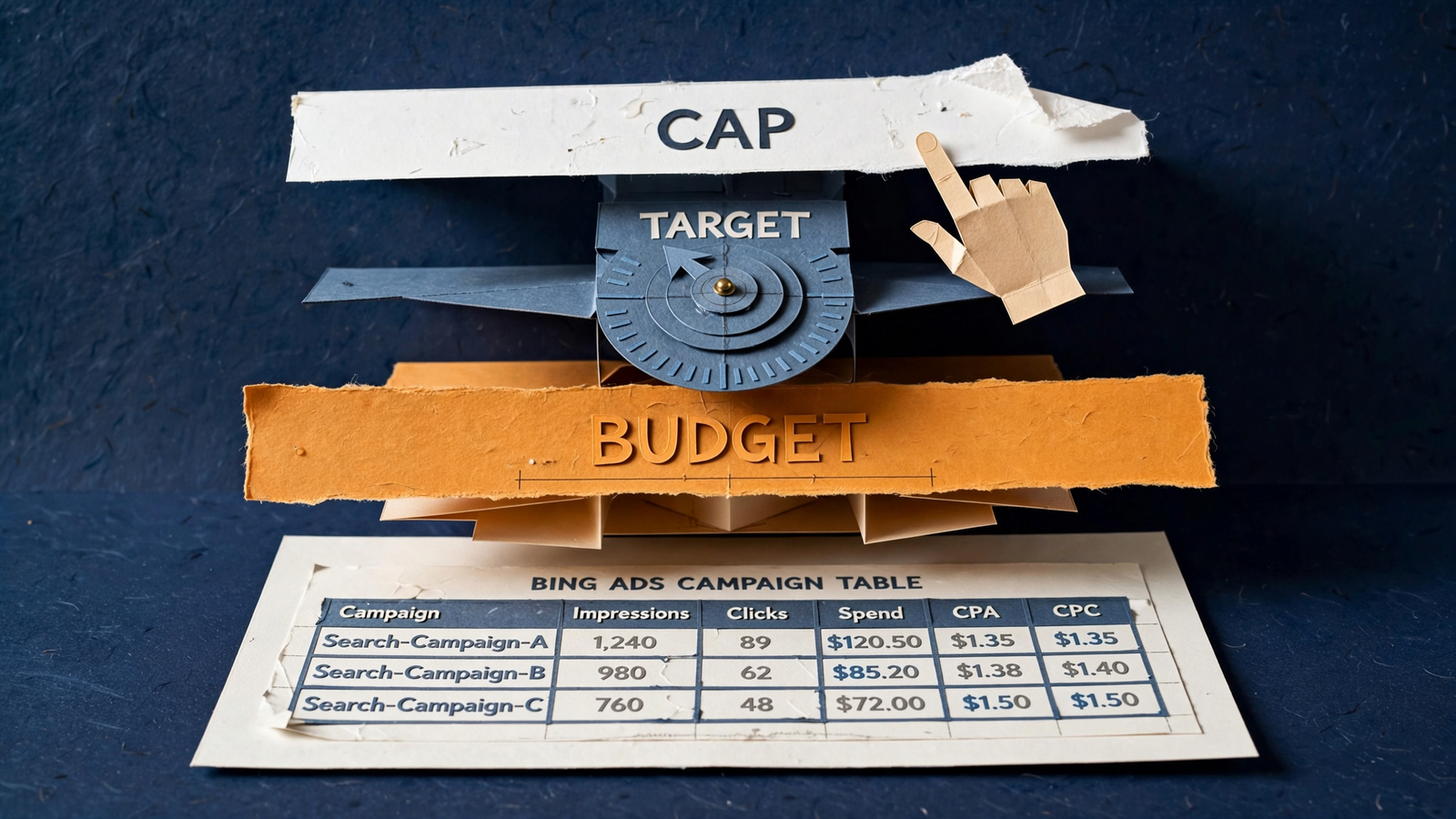
The $4 instruction sounds precise because the number is precise. The first thing I check is whether the setting on offer does what the number asks for. A budget bounds spend, a target steers bidding, and a cap sets a ceiling.
- Budget: This is a control on total spend. It doesn’t say how much any one click can cost. I wouldn’t point to the budget on a $20k-a-month account as proof that a click can’t cost more than $4.
- Target CPA: A $50 target CPA steers the system toward an average cost per acquisition. Individual conversions can cost more or less than $50. That target isn’t a per-conversion limit, let alone a per-click one.
- Target ROAS: A target return on ad spend steers bidding toward a ratio of conversion value to spend. It doesn’t tell the system to stop at $4 for a click.
- Max CPC: Where the strategy supports it, this is the hard per-click bid ceiling. It’s the setting I look for when $4 is a requirement, not a preference.
That’s also why Microsoft says it’s retiring the cap in some cases. A hard ceiling can override the advertiser’s CPA or ROAS target. The target tells the system what outcome to pursue; the cap can rule out bids it would otherwise make in pursuit of that outcome. Microsoft says that can happen even when the cap sits above the average CPC. An average doesn’t tell you which individual bids the ceiling cuts off.
Microsoft points advertisers to budgets, CPA and ROAS targets, conversion value rules, and seasonality instead. Those are ways to manage bidding without that cap, not ways to recreate it. If my requirement is a hard $4 ceiling, I don’t sign off on a lower CPA target as a substitute.
The Max CPC exceptions depend on the campaign
On October 1, 2026, Microsoft removed Max CPC for new standalone campaigns using Maximize Conversions with Target CPA, Maximize Conversion Value with Target ROAS, or Maximize Clicks. The word new matters. Campaigns created before October 1 can keep their existing caps, and portfolio strategies retain cap support for new and existing campaigns. I used to treat “retired” as shorthand for “gone everywhere.” In this case, that would send me looking for the wrong problem.

Target Impression Share and Enhanced CPC aren’t affected by the change. The rollout also started in the interface, with Editor and API changes following separately. That timing matters for a connector: a change that went through before the API cutoff isn’t proof that the same request will work afterward.
After the January 12, 2027 API cutoff, new non-portfolio campaigns using the affected strategies can’t be created with a Max CPC. An existing cap can stay. The Maximize Clicks API reference spells out the difference: you can edit or remove an existing non-portfolio MaxCpc, but adding one returns 611274 MaxCpcCannotBeAdded. If you remove a grandfathered cap, don’t count on putting it back. Removing it isn’t a harmless test of write access.
Portfolio bidding can preserve the option to set a cap, but it changes how the campaigns bid. It shares a goal across campaigns and can balance one campaign’s overperformance against another’s underperformance. That’s not the same as keeping a campaign on its standalone strategy and changing one field. Enhanced CPC isn’t a substitute either: it works on an average, not a hard per-click ceiling. For the distinction between Maximize Clicks and Maximize Conversions, see the Google Ads bidding guide. For the availability of the cap, use Microsoft’s rules.
Before I ask for an edit, I check the account, what the connector exposes, and what Microsoft permits. The usual connection problems are worth ruling out: the wrong Microsoft login or ad account, the wrong customer context, incomplete or expired authorization, or a connector that doesn’t expose the field. If ChatGPT says it set the cap, I confirm the setting in Microsoft Advertising.
Ask ChatGPT to show the setting before it touches it
“Keep bids under $4” is enough to state the requirement. It’s not enough to approve an account edit. For the Bing campaign we started with, I’d ask for a read first:
Show me this campaign’s bidding strategy, whether it’s standalone or portfolio, and whether it has a Max CPC now. Separate confirmed settings from the $4 ceiling I’m asking for. Cite the Microsoft rule that applies to this campaign. If the ceiling isn’t supported, say so. Make no changes.
That’s how I get an assistant to work from account data instead of guessing. If the cap already exists, I can ask what it would take to change it. If it doesn’t exist, I want to know whether Microsoft allows me to add it, not how confidently the assistant can describe the edit. And if the connector can’t read the field, I check the interface rather than treating an empty answer as proof there’s no cap.
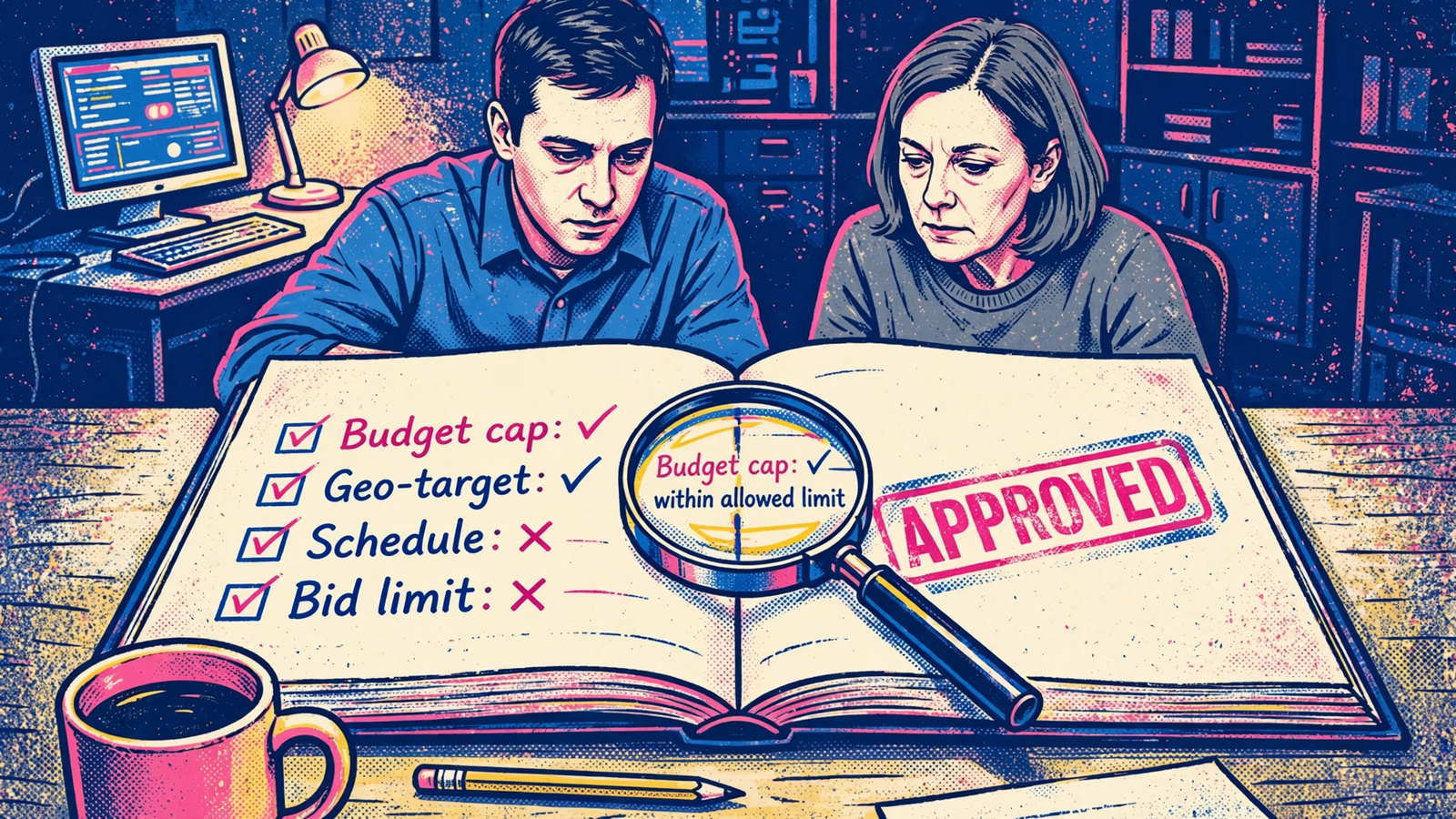
Separate the recommendation from the approval. I require approval before changing a bidding strategy, and I leave autopilot off until I explicitly switch it on. I’d compare connection options and approval controls before giving any assistant write access. groas logs each change with its reason and lets me undo it in one step. That can reverse a setting. It can’t recover money the campaign already spent.
Put the model to work on a new $3 request
Here’s the line I’d forward to whoever approves the connection: With groas, ChatGPT gets account access and can apply approved changes. Microsoft still decides which settings exist. If you run two Bing campaigns a month and change bids quarterly, I’d stick with the monthly manual review. The connection earns its keep when someone checks spend weekly, tests targets, and needs to see what the assistant read before it touches the account.
Now change the facts. On January 20, 2027, the team launches a new standalone Maximize Conversions campaign with a target CPA and asks ChatGPT to hold bids under $3. Same kind of instruction as before. Different campaign. Here’s how I’d work through it:
- Platform rule: The campaign is new, non-portfolio, and uses an affected strategy after the January 12 API cutoff. Microsoft doesn’t allow the cap on creation. A cap request through the API gets an error, not a quiet save.
- Account setting: I ask ChatGPT to show the budget and target CPA on that campaign. Neither is a hard ceiling. The existing-cap exception doesn’t apply to a campaign that never had one, and the portfolio exception doesn’t apply to a standalone campaign.
- Assistant instruction: ChatGPT should report that it can’t enforce the $3 ceiling on this campaign. It can show me the supported controls, but it shouldn’t lower the CPA target and call the job done.
If the assistant says it saved a cap anyway, I check Microsoft Advertising. Then I ask for the exact account and customer context, the campaign creation date and bidding strategy, and the response Microsoft returned. If it never had write access, there’s no save to verify. If Microsoft rejected the field, retrying the same edit doesn’t change the rule. That’s what I want from the audit trail: enough detail to tell those failures apart.
For the January 20 campaign, the answer is a budget to bound spend, a target to steer efficiency, and no $3 ceiling. If $3 is non-negotiable, I don’t approve the setup on the strength of a promise in chat. The assistant did its job when it told me what it couldn’t enforce.





