

 LinkedIn
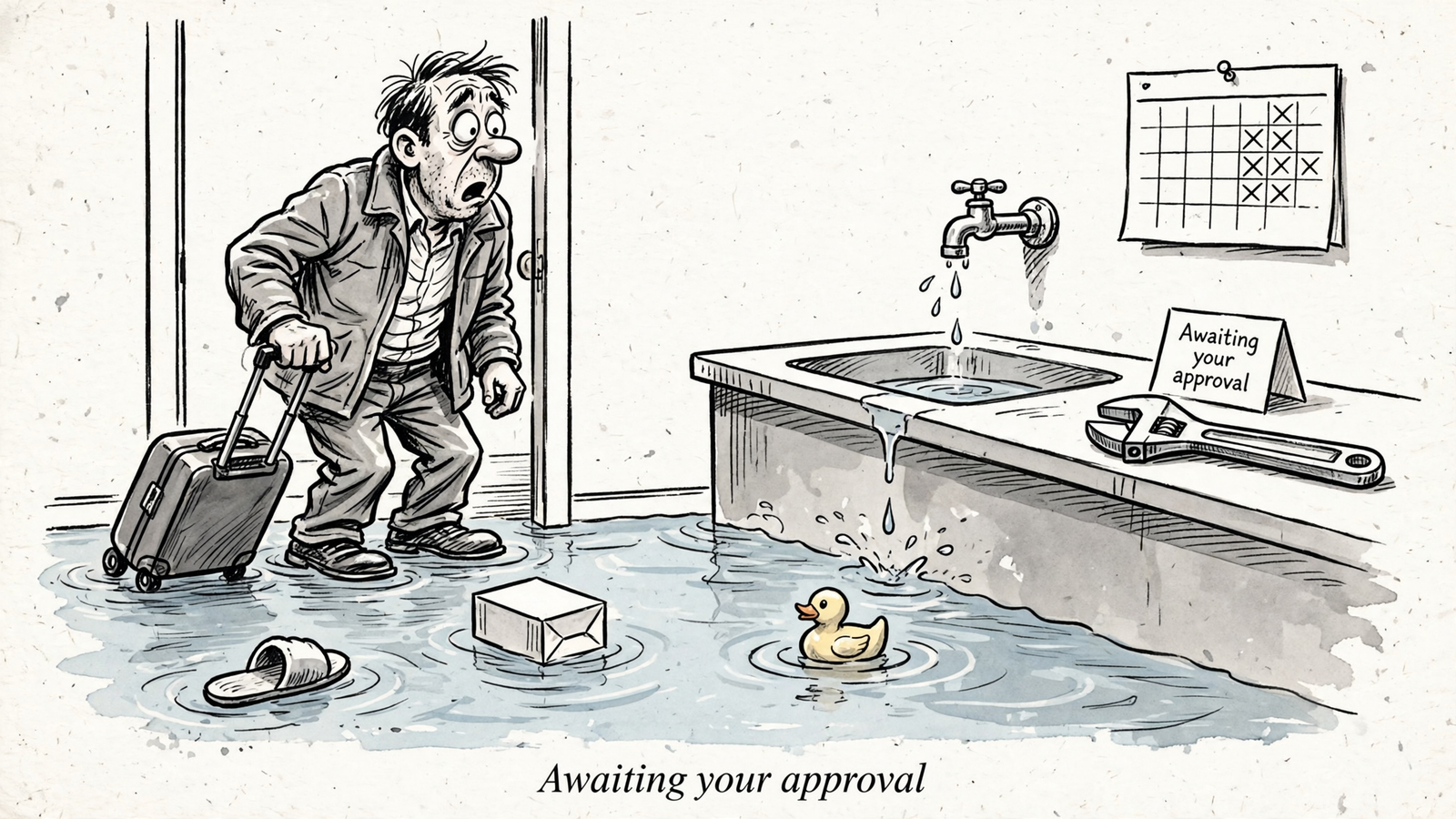
A keyword starts wasting money on Friday night. Should it keep spending until I open ChatGPT on Monday, or should groas autopilot be allowed to pause it while the laptop is shut? Smart operators disagree because they’re protecting against different mistakes. The review-first side doesn’t want an AI making a call without knowing the margin, the close rate, or when the sale ends. The autopilot side doesn’t want a known problem running all weekend because nobody’s around to approve the fix. Approving every change isn’t automatically safer. But if I can’t write the decision in advance, I want it made in the chat.
Both setups start with the same connected account data. Through groas, ChatGPT can read and act across Google Ads, Bing, and Meta. In the interactive setup, I ask for a read, see what ChatGPT proposes, and approve the changes I want. The account isn’t being watched between chats. With groas autopilot, I approve rules in advance so the work can continue between conversations. Autopilot is off until I switch it on. The question isn’t whether I give permission. It’s when, and for what.
The case for interactive review: the account doesn’t know what a customer is worth
The strongest argument for approving each change isn’t that the AI might misread a report. It’s that the report can be right and the recommendation can still be wrong. Platform performance isn’t the same thing as business performance. If the numbers in the account don’t tell me what a customer is worth, I don’t want a good-looking metric making the decision for me.
The margin and lead-cost examples from Kunads show how easily that happens:
- The campaign with better ROAS loses money. On €1,000 in ad spend, a campaign at 4.0x ROAS generates €4,000 in revenue. At a 20% margin, that leaves €800 before ad costs and a €200 loss after them. On the same spend, the campaign at 3.0x ROAS and a 50% margin has €1,500 left before ad costs. It makes €500 after ads.
- The cheaper lead costs more per customer. A €40 lead that closes at 5% costs €800 per acquired customer. A €60 lead that closes at 15% costs €400. If I’ve told an AI to find cheaper leads, the worse deal looks like a win.
In both examples, I can get a recommendation that follows the brief exactly and still steer the account the wrong way. The useful part of review is what happens before I click yes. I can bring the margin or close rate into the conversation, point out that the product is running low, or explain that the promotion ends Friday and this week’s numbers shouldn’t set next week’s bids. I can also tell ChatGPT it’s solving the wrong problem. That’s a better use of the chat than asking it to defend a tidy ROAS chart.
My standing prompt for this mode is short:
Read the account, propose changes, and show supporting evidence. Make no changes until I approve.
That’s my operating rule, not a promise that every integration handles approval the same way. ChatGPT’s MCP write actions require confirmation by default, and the Google Ads workflow Windsor describes shows each proposed change for confirmation, starts new builds paused, and asks again before moves that increase spend. I lay out the approach in Let ChatGPT Make Ad Changes. Leave Autopilot Off. The point is to have something worth reviewing: a proposed change, the evidence behind it, and room to say the goal itself needs work.
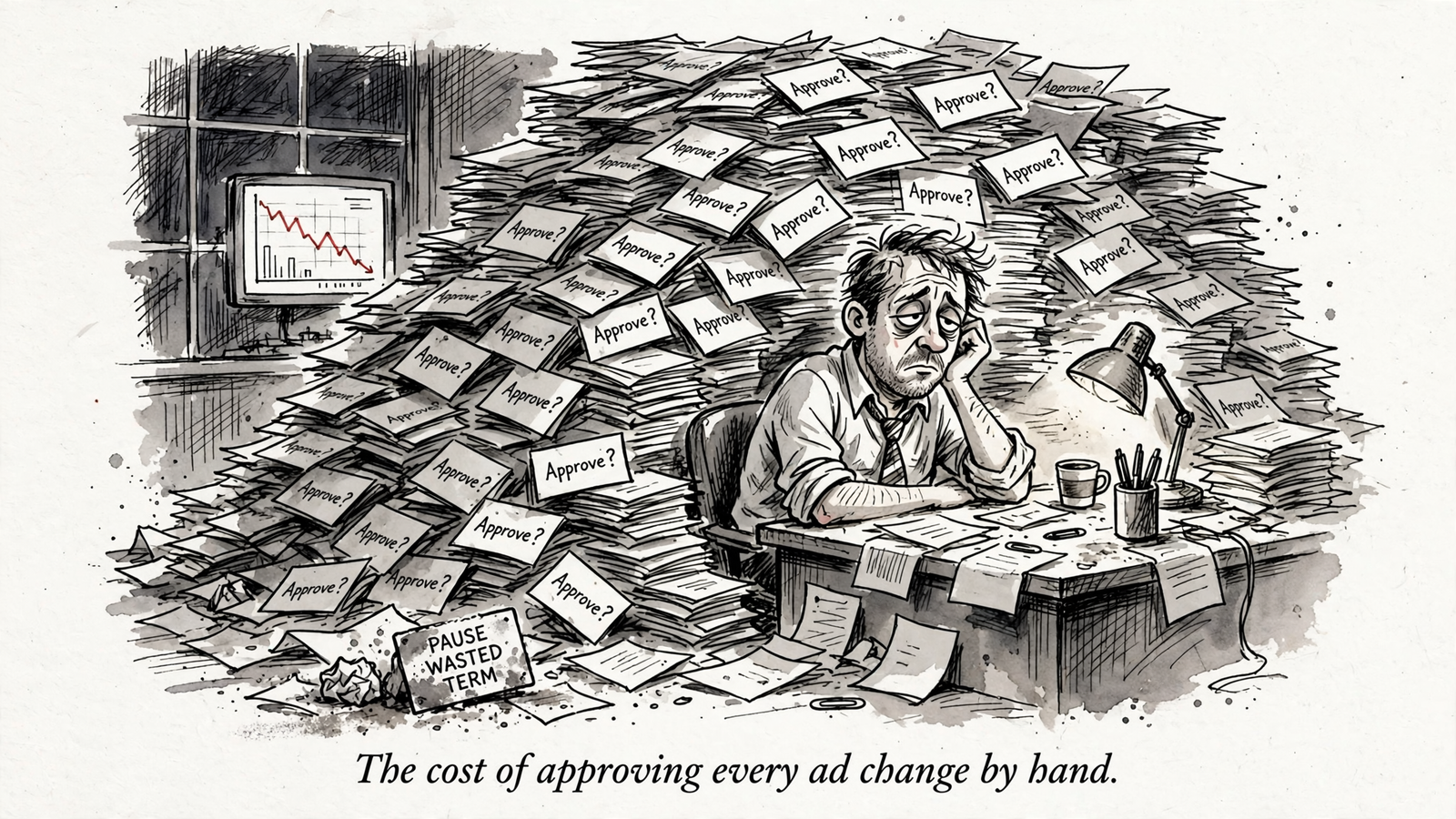
The case for autopilot: a known problem shouldn’t have to wait for Monday
Say I’m spending $20k a month and a keyword starts wasting money on Friday night. I don’t need a fresh discussion on Saturday if I already know which campaign it’s in, what counts as enough evidence, and what action I’m willing to take. I need the decision applied when the evidence is there. If I’ve already made the call for those conditions, another approval adds a wait, not judgment.
Ilya Sirotin’s approval matrix draws the line in a useful place. Reading the account, building something that starts paused, and nudging a bid within a preset range are low-cost or reversible. Switching a campaign on, raising or moving budget, and publishing creative still need a human yes. Those aren’t variations on the same decision. A bid nudge inside a range I’ve signed off on isn’t the same as giving a campaign more money.
So I ask ChatGPT to draft the policy before I enable anything. I want it to name the campaign and answer five questions I can check line by line:
- What’s the goal? Keep cost per acquired customer at or below the target.
- What’s the spending limit? Leave the daily budget cap fixed.
- What may change? Nudge bids within 10%; pause a keyword only after at least 50 clicks with zero conversions.
- What requires a fresh yes? Any budget move, any new campaign, or any change to the goal.
- What stops the work? Name the conditions that send the decision back to me instead of letting the rule run on bad evidence.
Those figures show what a policy looks like when I can read it and tell what it permits. They’re not targets I’d copy into every campaign. The distinction I care about is between the goal and the permission: keeping acquisition costs down explains why I’m doing this, but it doesn’t authorize every change that might lower them. The fixed cap and the list of permitted moves tell me what I’m actually signing off on.
That’s how I replace deal with waste with a specific decision I can approve before Saturday, rather than a phrase the system has to interpret on Saturday. I spell out the operating contract in ChatGPT + groas Autopilot: Set the Rules Before Ads Run Alone. If I can explain each permitted move in one sentence, I have a candidate for autopilot. If I can’t, I still have a discussion to finish.
Cross-examination: what happens when the queue or the data fails?
Review-first has to answer for two things: what sits in the queue and what gets waved through. The agentic-risk write-up on rubber-stamp approvals names the second problem plainly. The operator who checks the margin note on Monday can end up approving the same-looking bid nudge on Thursday without reading it. That’s theater. The first problem is less visible: in the interactive ChatGPT workflow Windsor describes, a rule like “pause when CPA doubles” doesn’t watch the account on its own. A scheduled task can check at set times. It isn’t continuous monitoring. If the account spends on weekends, so does the mistake.
Autopilot has the opposite problem. It will apply the rule consistently, including when the numbers no longer mean what they did when I wrote it. A tracking drop can make good traffic look worthless; double-counting can do the reverse. A promotion can make a losing campaign look profitable until the offer ends Friday. A sudden traffic shift after a competitor launch or a bot spike can change volume without telling me whether intent has changed. A person reviewing the evidence can say, “That looks wrong. Don’t touch it.”
For unattended work, the policy has to say when not to act, not just what to do when a number crosses a line. Fifty clicks with zero conversions is one thing when tracking is healthy. It’s another when the conversion feed has stopped reporting. I want the stop condition to settle that before the keyword rule gets a vote. Otherwise I can get the same mistake on a schedule, politely, with a log entry attached.
I split the work into three buckets before I turn anything on:
- Must be read: account performance, conversion tracking health, competitor ads and landing pages, and the margin or close-rate context behind the goal. Platform numbers alone don’t make the case for a change.
- May change without a fresh chat: small, reversible moves inside written limits, such as pausing a keyword that meets the waste rule or nudging a bid within its cap.
- Needs fresh approval: switching anything on, moving or raising budget, publishing creative, changing the goal, or touching billing or access. In my setup, autopilot doesn’t move these out of the queue.

Then I ask the same question of both modes: can I see why a change happened and take it back? groas logs every change with its reason and lets me undo it in one step. That’s a better fit for background work than the workflow in Optmyzr’s troubleshooting docs, where I have to leave Optmyzr and go to Google Ads Change History to undo an optimization.
The reason and the undo button do different jobs. One lets me reverse the move. The other lets me check whether the move was wrong or the rule was wrong. If I can see that a bid changed but not why, I have a history tab. I don’t have enough information to decide whether the rule should run again tomorrow.

My verdict: groas autopilot wins when I can write the decision in advance
I’d pick autopilot for the operator with one evergreen search campaign, clean tracking, a stable offer, and a CPA target they trust because it reflects closed revenue, not just platform ROAS. The deciding factor is whether I can write the decision before it comes up. If the goal or the evidence is still in dispute, I’d stay interactive. I want to spend the next chat sorting out what a customer is worth, not undoing a week of work aimed at the wrong number.
Give autopilot one campaign, not a brief to improve performance
For that one campaign, I’d keep the rules concrete:
- Fix the daily budget cap. No budget shifts, no new campaigns, no creative going live.
- Limit bid moves to 10%. Permit keyword pauses only at 50 or more clicks with zero conversions.
- Name the stop conditions. If tracking no longer looks trustworthy, send the decision back to me instead of applying the rule.
Then I’d connect the accounts, add groas to ChatGPT over MCP, and ask for a read before asking for any changes. I’d turn on autopilot for that campaign only after I’d read the policy and could tell exactly what it allowed.
What I get isn’t an AI that knows what my business needs next quarter. It’s a keyword that can be paused on Saturday because the evidence already meets a rule I approved. I can see why the pause happened and undo it in one step. If the conversion feed breaks or a promotion changes what a good result looks like, I want the decision back in the chat. Uncertainty is a reason to narrow what I allow, not an excuse to grant more freedom.
That’s why I give the verdict to groas autopilot for one bounded job: one campaign, fixed caps, reversible moves, named stop conditions, and a log with undo. I don’t need a Monday conversation to make a decision I already made on Friday. Everything else stays where it belongs, waiting for my yes.





