

 LinkedIn

Copy your winning Google Ads campaign to Bing once. Then stop trying to make Bing look like Google.
I used to tell clients mirroring was discipline. I was wrong. The import saves you from typing out campaigns, ad groups, keywords, and budgets again. It doesn’t make the two networks behave the same way, and it doesn’t bring everything over: customer lists and detailed demographics don’t come across. Even the price of a click differs. The 2026 figures for Microsoft and Google put Microsoft at around $1.54 per click and Google at $2.69 to $2.85. Those aren’t bids I’d paste into an account. They’re a good reason not to paste in Google’s.
If I connect Claude to both accounts, I want it to explain why they differ before it suggests changing either one. An import is a shortcut for setup, not a standing order.
A clean import can leave you with an empty scoreboard
The case for copying is simple: I’d rather pull over a campaign structure that already works than rebuild its ad groups and keywords from a blank screen. That’s setup work. It should be cheap. The mistake is looking at a tidy import and deciding the bids, budgets, and negatives must belong there too. All the import proved was that I didn’t have to type them twice.
Take a home-services campaign that brings in calls on Google. The Bing copy looks tidy on day one: the same ad groups, the same keywords, the same budget. Two weeks later, Bing has had room to spend at Google-sized bids and the account shows almost nothing for it. Before I decide Bing can’t produce leads, I need to know whether the conversion goal can record one. A zero from a goal that never fired is not a verdict on the campaign.
That’s the problem with grading the copy as if it were the original. I can carry over bids that don’t reflect Microsoft’s lower click costs and then judge the spend against a conversion setup that isn’t ready. One mistake affects what I pay. The other affects what I think I got for it. Matching the settings more closely fixes neither.
I keep the structure that saved me work. I check the tracking and make the bid decision on Bing.
Give Claude two live accounts and no permission to edit
A combined spend chart tells me what moved. It doesn’t tell me whether a difference was put there on purpose, whether something broke, or whether I’m looking at numbers that haven’t caught up yet. I don’t need Claude to write a paragraph about the chart. I need it to look at the accounts behind it.
I name the accounts, the campaigns, and the dates. Then I give it a job small enough that I can check the answer:
Compare Google campaign [name, ID] with Microsoft campaign [name, ID] for [date range]. Read only. List differences in budgets, keywords, negatives, ads, and conversion goals. Flag anything that didn’t import or that you can’t verify.
The last sentence earns its keep. Only eligible tag-based destination goals qualify for import, and seeing an imported goal is not the same as seeing it record a conversion. I want Claude to flag what it can’t verify about Universal Event Tracking (UET), not quietly line up Google’s recorded conversions next to Bing’s zeros and call the gap an insight.
The first pass is an account comparison, not a cleanup. If it ends with a list of differences and a few honest unknowns, it did its job. If it ends with the accounts looking more alike, I gave it the wrong job.
Sort the differences before calling them drift
Say Claude finds ten differences and proposes ten fixes. Three of those differences might be the only smart Bing work in the account. A negative that exists only on Bing may be there because the search terms warrant it. Deleting it because Google doesn’t have it isn’t hygiene. It’s vandalism with a log file.
Even a negative that came from Google needs a second look. Microsoft supports phrase and exact negatives, not broad negatives, so a Google broad negative can arrive as phrase. I want Claude to check what’s actually in the Bing account and what its search terms justify. A match in the keyword text doesn’t settle either question.
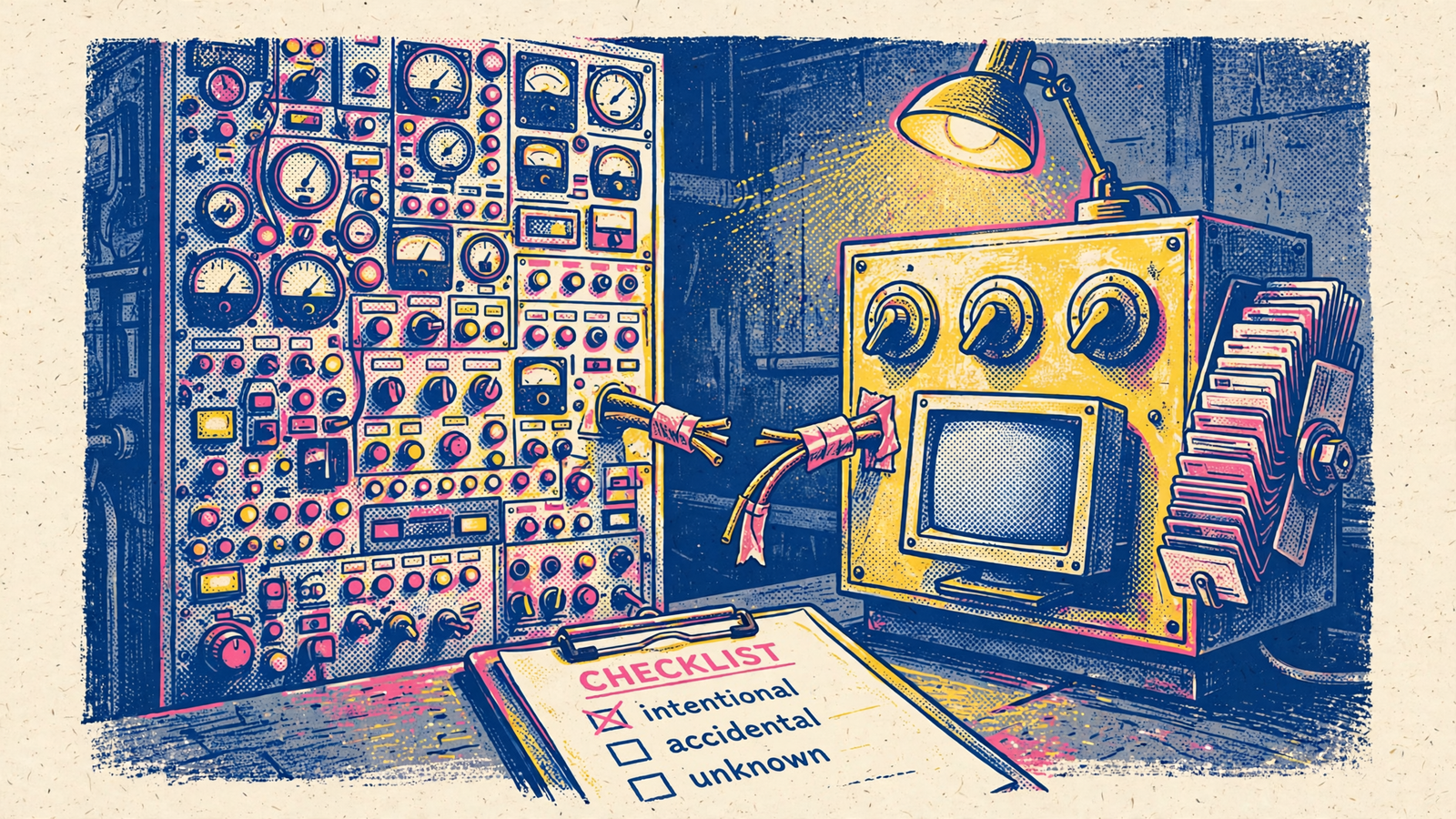
I have Claude put each difference in one of three buckets:
- Intentional: There’s a reason to keep it. A Bing campaign can use LinkedIn profile targeting by company, industry, or job function, for example. There’s no equivalent Google setting for Claude to match.
- Accidental: The evidence points to a mistake. A pause that someone meant to apply in both accounts but only made in one belongs here. A pause in only one account doesn’t, by itself.
- Unknown: Claude can see the gap but can’t explain it. That’s a useful finding. It isn’t approval to pick a side.
Microsoft’s older, more desktop-heavy audience is another reason I don’t demand that the accounts look alike. It isn’t a reason to keep every difference Claude finds. I still want a reason for this bid, this negative, or this targeting choice in this campaign. No evidence, no edit.
Ask for a Bing decision, not another report
Once Claude can explain the differences, I ask it to make a recommendation. Not “How can we align these campaigns?” That wording hands it the answer before it looks at the account. I ask:
Which differences in the Microsoft campaign warrant action, and which should I leave alone? Show the account evidence for each recommendation.
I check three things before I approve anything:
- Bing search terms. I want to see what Bing matched, not a blended list with Google doing most of the talking. If the case for a negative depends on Google’s traffic, Claude hasn’t made the case for adding it on Bing.
- Conversion lag. Bing volume is thinner, so I don’t treat an early read as a verdict. If the numbers haven’t caught up, I’d rather leave a bid alone than pay for a decision I’ll have to revisit.
- The next scheduled import. I check whether it can overwrite the change or reactivate a paused campaign. A recommendation isn’t finished if the next sync can put the old setting back.
The point isn’t to make Claude come up with something to change every time. Sometimes it should recommend a Bing-specific negative. Sometimes the right answer is to keep the setting that already differs from Google. And sometimes “insufficient evidence” is the decision. I’d rather read that than approve a sync that exists because the model felt obliged to be useful. That’s the same distinction I make when deciding whether to judge Google and Bing together.
Make the connection finish one approved job
A reporting connection can show me the same Bing problem every month and never fix it. The test I run with Claude through groas is narrower: can it make one approved change in the named Microsoft account, leave everything else alone, and show me how to put it back?
Say I’m spending $20k a month on Google and $3k on Bing. I don’t tell Claude to bring the smaller account in line with the larger one. I give it the exact scope of the job:
In Microsoft account [ID], lower the daily budget for campaign [name] to $X and add [these four exact negatives]. Don’t touch [campaign Z] or the LinkedIn targets. Log the reason for the change.
That instruction leaves the decision with me. I’ve named the campaign, set the cap, chosen the negatives, and said what’s off-limits. Claude isn’t being asked to find a way to spend $3k. It’s being asked to carry out the work I approved. The work left after a copy is conversion tracking, partner filtering, and bid work, not another sync dressed up as account management.
Then I read back three things:
- Did the daily budget and the four negatives land in the right campaign?
- Did anything outside that scope change?
- Can I see the logged reason and undo the change in one step?
With groas connected to Claude over MCP, changes are logged with their reasons and can be undone in one step. Autopilot stays off until I choose to enable it and set its scope and rules. I don’t need it on to run this test. It’s the same pattern I lay out in Let ChatGPT Make Ad Changes. Leave Autopilot Off. If a connector can describe the change but can’t make it and put it back, I have a narrator. That’s not the job I’m buying it for.
Give Bing a verdict on Bing’s numbers
I rerun the comparison once a month. Search terms diverge. Budgets pace differently. Someone pauses an ad in one account and forgets the other. Claude’s job is to tell me which differences to keep, which mistakes to fix, and which gaps need more evidence. The point of doing it monthly is to explain what changed, not to erase a month of decisions.
B2B is the clearest case for keeping the decisions separate. Microsoft’s company and job-function targeting can make Bing the better B2B channel on qualified pipeline even at a fraction of the spend. I don’t get to that verdict by importing Google’s settings and grading the result as if the targeting were the same. I want Bing’s own negatives, bids, and conversion goal wired to UET. I want the call on search partners made from Bing search terms, not inherited from a Google setting.
That also changes what I send a client. A blended CPA can fold two audiences and two conversion definitions into one tidy number. It can’t tell the client which channel deserves the next dollar. I send three lines per channel: what it spent, what it produced, and what I’d change next. Two channels, two verdicts. If Bing doesn’t earn its budget on its own numbers, I don’t keep it around because the combined report looks fine.
Turn off the sync that can erase the work
After the first copy, I turn off the scheduled import. I mean the checkbox, not a note to be more careful next month. The next run can overwrite status, bid, and budget edits, and the import itself can’t be undone. That’s a different kind of change from the one I just approved, logged, and checked. I’m not leaving a process running that can reverse a deliberate Bing decision simply because Google still has the old setting.

My rule is no auto-sync, a monthly read-only comparison, and one approved Bing change at a time. There’s a cost to that: I have to read the evidence and make a call. I have to decide whether the click is worth the bid, whether a shorter negative list is giving Bing room to find volume, and whether the conversion goal is recording leads before I judge the campaign. Then I have to read back what changed. That’s the work. Clicking Sync doesn’t spare me any of it; it just makes the decisions for me using the wrong account.
The shops still selling the mirror will keep billing the sync as management. Let them. Keep the mirror running and you can pay Google prices for Bing clicks, grade the traffic against a goal that never fired, and pay someone next month to redo the fix you approved this month. The report will still look tidy. It’s the invoice that gives the game away.





