

 LinkedIn
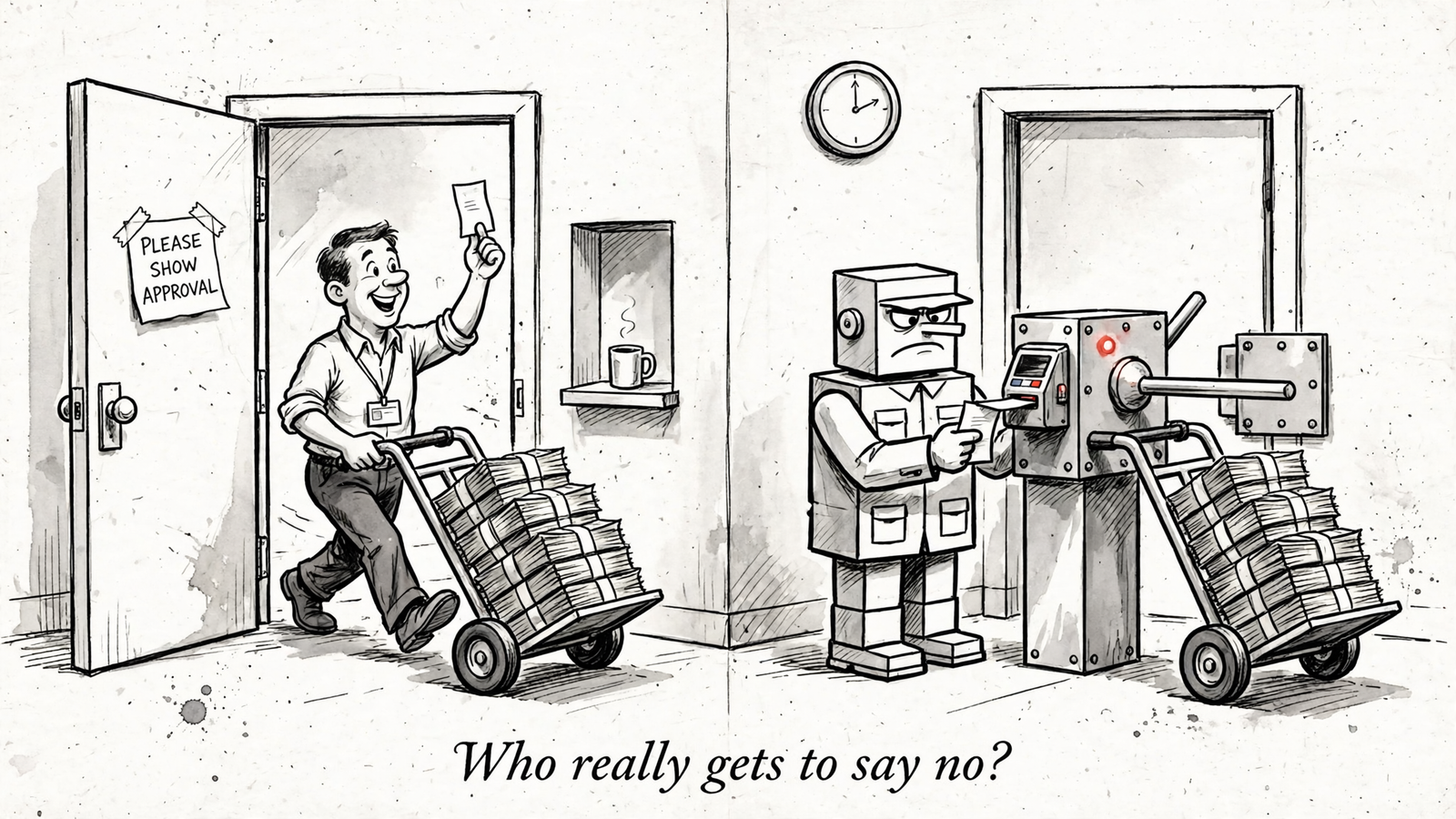
I’d pick Claude over groas MCP for a $2,000 move from Google Search to Meta, right up until finance says a chat confirmation can’t make it happen. If I run both channels and my own approval system has to block the edit until it finds a matching record, I’d pick a custom agent using groas through an API key.
The distinction isn’t where finance records the approval. It’s where the rule is enforced. Finance can keep the record in its own system either way. The question is whether I’m allowed to check that record myself and tell Claude to proceed, or whether the software has to check it before it can send the edit. One is a marketing workflow. The other is software my team has to maintain.
I’ll use the same hypothetical job for both. Say I spend $20,000 a month across Google and Meta. Google Search is running at a $68 CPA against a $45 target. Meta prospecting is holding $41 over the last 14 days and has room for more volume. I want to shift $2,000 from Search to prospecting. That means proposing exact daily budget deltas, naming the accounts and campaigns, and spelling out what’s still uncertain. Finance wants a record of who asked, who approved, how much, and which accounts are involved. Now I can compare what each setup actually does with that record.
1. Setup: A connector or code I have to own
With Claude over groas MCP, I connect the accounts and work in chat. In Claude, I add the custom connector at https://mcp.groas.ai/mcp and sign in with OAuth. The Claude setup takes about a minute. Claude can read the accounts I’ve connected to groas, along with research data such as competitor ads and funnels. For this job, I start with something less glamorous: two campaigns and their numbers.
I ask for the last 14 days of spend, CPA, and conversion volume for the Google and Meta campaigns. I want the account and campaign IDs, the exact daily budget changes Claude proposes, why it proposes them, and what it can’t tell from the data. I can read that proposal before I ask Claude to change anything. I keep autopilot off while I evaluate either route. I’m comparing two ways to make one bounded edit, not handing over the accounts.
On the custom side, I run my own agent code and give it a groas API key from Account settings → API Keys. The Hermes Agent setup shows the distinction: OAuth for interactive sign-in, a Bearer header with GROAS_API_KEY when my code makes the request. As this OAuth versus API key explainer lays out, the key suits code that runs without me sitting there to sign in. Closing my laptop doesn’t stop the job. It also doesn’t make the job somebody else’s problem.
The custom route still needs code to pull the same evidence, shape the proposal, and stop at the right point. It also needs somebody to handle credentials and review which accounts the agent can reach. I wouldn’t build that just to get the same two budget numbers I can already review in chat.
2. Approval: A record I check or a rule the software enforces
In Claude, I can ask for confirmation before any edit. If finance permits a manual check, the sequence is straightforward:
- I review the proposal and make sure finance approves that specific move in its own system.
- I check the record, bring the approval ID back into chat, and tell Claude to execute the approved change.
- Claude edits the two daily budgets, then reads both accounts again so I can see what changed.
The pasted ID is a reference, not a gate. It tells me which record I relied on. It doesn’t mean the chat independently checked that record or would refuse to proceed without it. The distinction matters as soon as the person who runs the session isn’t the person with authority to approve the spend. A useful breakdown of where human approval sits in an agent workflow shows why: confirmation in the client goes to the requester, which isn’t the same as routing it to the designated approver.
Supermetrics makes a similar distinction in its per-account approval modes: set approval in the product rather than trusting a prompt that says always ask me first. For the job I’d otherwise do by hand, I’d still choose Claude over groas. I can prepare the move, check finance’s decision, and execute in one conversation. But I wouldn’t sell that conversation to finance as a mechanism that blocks unapproved edits. A shared doc doesn’t become a control just because I paste its contents into a nicer interface.
With the custom agent, my code has to enforce the stop before it sends the edit. It reads the approval record from finance’s system and checks the amount and account IDs against the proposed change. If the record is missing or doesn’t match, it doesn’t send the edit. That’s what finance gets for the extra work. The API key lets the code act; it’s the check I put in front of the write that decides whether it may.
I’d settle this question before debating interfaces: is finance asking me to check a record, or asking the software to prevent me from proceeding without one? Only the second answer justifies building the gate.
3. Failure handling: Who owns the refusal?
The clean run is the easy one to put in a deck. The approval exists, the IDs match, and both platforms accept the change. I’d make the decision on the uglier case: finance’s approval system is down when the budget move is supposed to run.
With Claude and a manual check, I can’t confirm the approval, so I don’t tell Claude to proceed. I can see a refusal or a failed edit in the conversation and decide what needs attention. That’s enough when I’m the operator and the process expects me to be there. It’s not enough when finance needs proof that the edit never went out even if nobody was watching the chat.
With the custom agent, a failed approval check means no budget edit. My code has to distinguish a missing record, a mismatch, and a check it couldn’t complete. If the check passes and a platform rejects the edit, I need a log of what the agent attempted and what the platform returned. Those are different failures. One means the agent had no business sending the edit. The other means it sent an approved edit and didn’t get the expected result. I want the log to tell me which one I’m dealing with before I touch another budget.
Before I commit to that route, I check that the approval tool exposes a record the agent can read, that groas account scoping covers the Google and Meta accounts finance controls, and that somebody will own the rejection logs, key rotation, and failed runs at 2 a.m. The comparison of Claude MCP setups by what I still have to do by hand gets at the tradeoff: if checking the record and pasting an ID is all the manual work left, I wouldn’t replace it with a service someone has to keep alive.
4. Verification: What changed, and where’s the evidence?
Both contenders can make the change because groas gives them a write path for Google and Meta. That’s worth checking before I compare approval flows. The official Google Ads MCP described here can’t modify budgets. If I start with a reporting-only connector, I can get a tidy proposal and still have to make the edit myself. That’s not the head-to-head here.
Once the edit goes out, I want the before and after from both accounts. With Claude, I ask it to re-read the daily budgets and show me what changed in the same chat. Groas logs each change with its reason and lets me undo it in one step. The same approach applies when I let an assistant make ad changes with autopilot off: review the bounded change, run it, check the result. With a custom agent, I have to make the re-read part of the job and write the receipts back to finance’s system. The approval tells me what was allowed. The re-read tells me what actually happened. I want both, in that order.
I also keep account verification separate from policy verification. The corrected DTCskills Meta MCP guide is a useful example: earlier versions made broad claims about mandatory AI labels and a fixed ladder of strikes to a ban; the correction says Meta’s documentation doesn’t support those claims. The disclosure requirement it describes for social issues, elections, or politics using photorealistic AI media is narrower than a blanket rule for ordinary ads. If either agent tacks a labeling warning onto my budget proposal, I ask for the current Meta help page before I treat it as a constraint. A successful budget edit doesn’t make the policy advice true.
| Decision | Claude over groas MCP | Custom agent over groas API |
|---|---|---|
| Setup | Connect Claude and sign in with OAuth; no agent code to maintain | Set up a key and own the code, credentials, and account scope |
| Approval | I check finance’s record and give the go-ahead in chat | My code checks for a matching record before sending the edit |
| Failure handling | I handle a missing approval or investigate a failed edit in chat | My agent blocks on a failed check and logs what happened |
| Verification | Claude re-reads both accounts in chat; groas logs the reason | My agent re-reads both accounts and writes receipts back to finance |
Verdict: Claude wins unless finance needs the software to say no
I’d choose Claude over groas MCP for a team that allows a person to check finance’s approval and authorize the edit. I get the same live evidence, the same bounded $2,000 proposal, and the same before-and-after check without taking on agent code. Finance can still keep the approval in its own system. I don’t need to move the record into chat; I just need to be allowed to act on it from there.
For the stricter buyer, I’d pick the custom API agent. If the written rule says the software must query finance’s system, match the approval to the proposed edit, and refuse to act when it can’t, a chat confirmation doesn’t qualify. I’d pay for key handling, validation, and midnight failures because the refusal is part of the job. Otherwise, it’s a lot of machinery for moving two budgets.
I’ve spent enough time running accounts by hand to understand the temptation to build the clever system. I’d resist it here. Build custom when finance needs a gate chat can’t override. Otherwise, connect Claude, keep autopilot off for the change, and spend the developer hours you saved on creative and landing pages that actually move CPA.





