

 LinkedIn

Your Bing campaign is already making money. If I connect it to ChatGPT through groas MCP, should I let the assistant change what’s working or just ask it to explain why it works? Smart operators disagree because both choices cost money: a bad setting keeps eating budget if I leave it alone, but touching a profitable campaign can send it back into learning. Permission to read is not permission to disturb.
The case for acting is that an assistant can spot a concrete problem and fix it within limits I set. The case for holding off is that I can undo a setting in one step without getting back the impressions or sales I missed while the campaign adjusted. Those are two different bills, and only one is easy to estimate before it comes due.
I used to tell clients the connection was the win and the changes would follow naturally. I was wrong about the second part. The connection gives me an analyst. Whether it gives me an operator is a separate decision.
The case for action: A profitable campaign can still waste money
Say I connect Microsoft Advertising through groas. ChatGPT comes back with three findings:
- One campaign spends 40% of its budget on placements that rarely convert.
- An ad group has spent $50 without a conversion.
- A budget cap is holding back the winner while cheaper inventory goes unused.
If the same problem shows up week after week and all I ask for is another report, I’m paying to be reminded of a decision I haven’t made.
The strongest argument for execution isn’t that any of those observations should trigger an immediate change. It’s that once the account gives me a concrete, measurable opportunity, leaving it alone has a cost too. The campaign can be profitable overall and still spend money on placements that don’t pull their weight. Profitability tells me the current setup works. It doesn’t tell me every setting is earning its keep.
That 40% is where I’d look, not what I’d promise to save. “Rarely converts” and “never converts” aren’t the same finding. But if the conversions have had time to come in and the same placements still don’t pull their weight, I have something more useful than a vague recommendation to optimize: I have a candidate for one specific change.
Bidding is a good example. In Microsoft’s internal global data from June to July 2026, advertisers who switched from enhanced CPC to Maximize Conversions with a CPA target saw 18% more conversions on average at a similar cost per action. I wouldn’t put 18% in a forecast for your account. I’d use the result to make a case for testing one campaign with a stated review date. A familiar bidding setting can quietly cost me money as the auction changes around it.
None of this requires switching on autopilot. I can name the campaign, pick one change, limit how much spend I put at risk, and approve the change before it goes live. That’s where groas does more than a plain connector: my AI makes the case, groas can carry out the change, and I get a log of what changed and why, plus a one-step undo. I’m not giving the assistant a standing brief to improve everything it sees. I’m authorizing one decision I can review. If the evidence supports it, I want to know what another cycle of reporting buys me.
The case for holding off: Undo restores a setting, not a result
A campaign returning 700% ROAS is more than a row in a report. Its settings are getting it into auctions that reach people who buy. Change the bid strategy, move a placement exclusion, or add or remove an ad group and I can change who sees the ads and where the money goes. The campaign may spend part of its budget learning what works under the new settings. I asked for an analyst. I didn’t necessarily sign up to pay for that lesson.
One practitioner described that pattern in r/PPC. Campaigns that had been hitting 700% ROAS lost impressions or shifted toward the Audience Network after placement changes. Switching between enhanced CPC, Maximize Conversions, and target CPA also appeared to hurt performance, which the poster said never fully recovered after reverting. That’s one operator’s account, not proof that the changes caused the decline. Commenters pointed to thin conversion volume, and a Microsoft employee in the thread suggested roughly 30 conversions in 30 days, or two to three conversion cycles, before judging a change. The uncertainty matters: if I can’t tell what drove the drop, it’s harder to know what will bring performance back.
Microsoft’s bidding guidance makes the timing problem concrete. A strategy can start changing its bids within two hours but take up to two weeks to bid optimally. Changes to budgets, conversion settings, or the ad groups in the campaign can extend learning. I can see the account start to behave differently well before I know whether the change helped.
That’s the limit of one-step undo. I can restore the configuration. I can’t restore the auctions I missed. Switching back puts the prior setting in place, but it doesn’t give me the impressions, clicks, or sales I might have had if I’d left the campaign alone. Before I approve a change to a winner, I need to decide whether I can afford to wait long enough to judge it. The undo button doesn’t settle that question.
Make both sides argue from the same campaign data
The prompt I’d avoid is “What should I do?” It invites the assistant to build a confident answer around whatever it notices first. I’d rather use the connection to make it argue against its own recommendation. After connecting Microsoft Advertising through groas, I’d give ChatGPT this brief:
Read our Microsoft campaign through groas. Present the strongest case for leaving it unchanged and the strongest case for one bounded change. Show assumptions and missing evidence. Do not execute.
That last sentence matters. Ask for a case, not a click. For the mechanics of keeping that boundary in place, the read-only setup walkthrough shows how to analyze Bing without authorizing changes. The point of the prompt is to make the assistant justify leaving the account alone as carefully as it justifies touching it. If the answer can’t say what it doesn’t know, it isn’t ready to spend my money.
I judge the two cases on four points:
- Conversion lag. How long does it take an ad interaction to turn into a conversion, and when does that conversion show up in reporting? If the purchase cycle is a week, three days of results won’t tell me whether the change worked.
- Result stability. Is the campaign delivering steadily, or is one good day doing most of the work in a volatile week? A strong headline number doesn’t answer that on its own.
- Goal validity. Does the conversion I’m optimizing for still tell me something useful about revenue? A landing page change, a broken tag, or a new offer can leave the campaign optimizing for a goal I wouldn’t choose today.
- Cost of waiting. What does one more conversion cycle with the current settings cost, in dollars? I put that estimate next to the spend and revenue I’m willing to put at risk while the campaign learns. I don’t let one side argue in dollars while the other argues in adjectives.
Take the ad group that spent $50 without a conversion. If that spend is still inside the usual conversion window, I’d leave it alone and look again when the results have had time to come in. If the window has passed and the same pattern keeps showing up, the cost of another cycle belongs in the decision. Same $50. Different case for action.
I don’t use a universal number of days or conversions for that decision. A campaign with five conversions a month and one with five hundred won’t give me the same evidence on the same schedule. I want to agree on what counts as evidence before a change gives me a number I’m tempted to explain away.
If leaving the campaign alone wins on those four points, I stay analysis-only and mean it. I don’t leave execution half authorized while the assistant makes the same pitch every week. If one proposed change wins, I put the scope in writing before anyone clicks: which campaign, what change, how much budget is exposed, and when there’s enough evidence to review it.
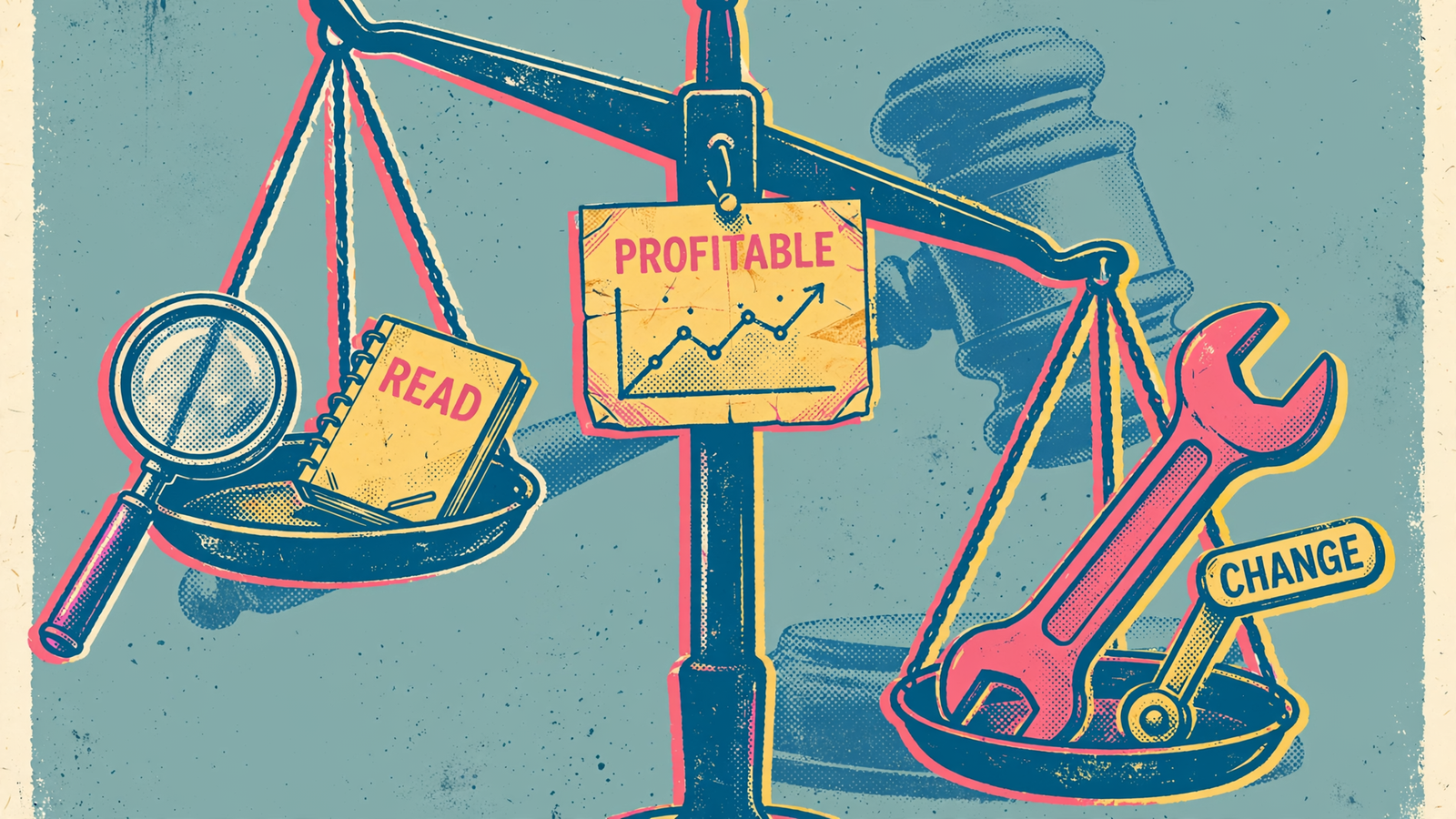
My verdict: Connect ChatGPT now. Make execution earn its scope.
For an operator whose Bing campaign already makes money, I side with the analyst-only camp. The deciding factor is what I can’t recover. I can estimate what another cycle of tolerating a wasteful setting will cost. If an unnecessary change knocks a winner off course, I can’t replay the same auctions with the old setup to see what I lost. Both costs are real. Only one gives me a useful estimate before I make the decision. That’s why the burden of proof sits on the proposed change, not on the campaign that’s already working.
Analysis-only is the starting point. For some profitable accounts, it’s also where I’d stay. To go further, I’d set the evidence threshold before looking at the recommendation. If the recommendation clears it, I want five things on record before I approve anything:
- Campaign ID: Which campaign gets touched?
- Specific change: What’s the one thing I’m authorizing?
- Budget exposure: How much spend am I putting at risk while I judge it?
- Review condition: What date or condition ends the test?
- Logged reason: What evidence justifies making this change now?
groas logs the change and its reason and lets me undo it in one step. That’s the infrastructure I want, but a log entry isn’t a justification. It should record the reason I approved the change, not give me a reason after it happened. If I can’t fill in all five, I don’t have a test. I have a hunch with a login.
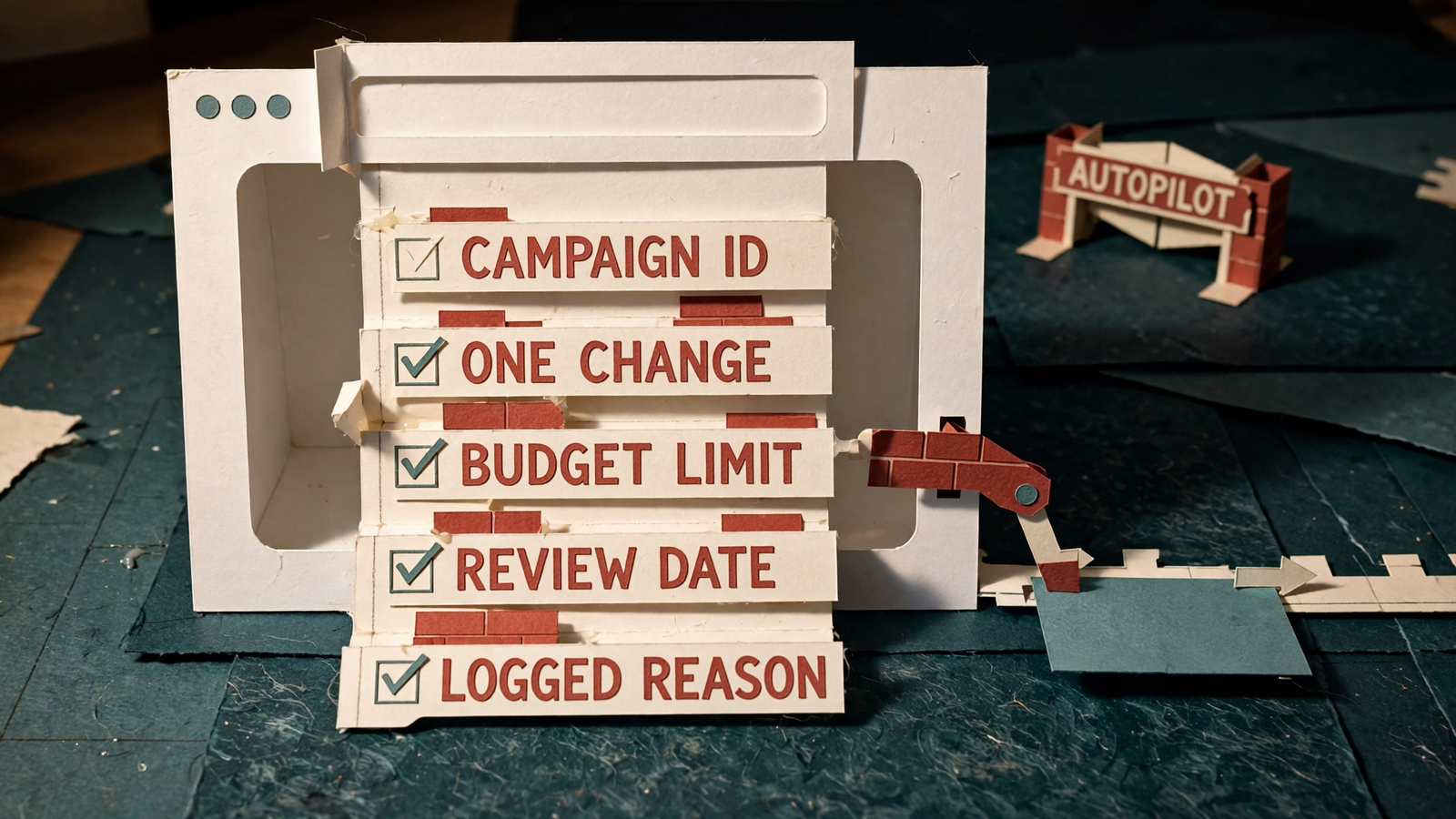
There’s one more line I wouldn’t blur. A requested change is something I approve after seeing the evidence. Autopilot is a standing instruction to keep finding and making changes under rules I set, without asking me to approve each one. Evidence for one budget or bid change is evidence for that change, not permission to go looking for the next one. With groas, autopilot stays off until I switch it on. I can use the same connection to analyze the account and, when the case is strong enough, act without making ongoing execution the default.
So I’d connect ChatGPT to Bing through groas and have it argue both sides from live campaign data. If no change clears the threshold, I keep the analyst. An honest answer about why I’d leave a campaign alone is useful even if there’s no new setting to show for it. If a change does clear the threshold, I authorize it in one campaign, within the limits I set, with the reason on record. That’s not a compromise between the two positions. It’s the verdict: execution is earned by evidence, campaign by campaign, never granted by connection.
I’d connect groas to ChatGPT for $19 a month flat, with no percentage-of-spend markup, and start with the prompt above. ChatGPT does the analysis in plain English, groas supplies the data and can carry out an approved change, and autopilot stays off until I switch it on. For a profitable Bing campaign, that’s the setup I’d choose: everything connected, nothing promoted without proof.





