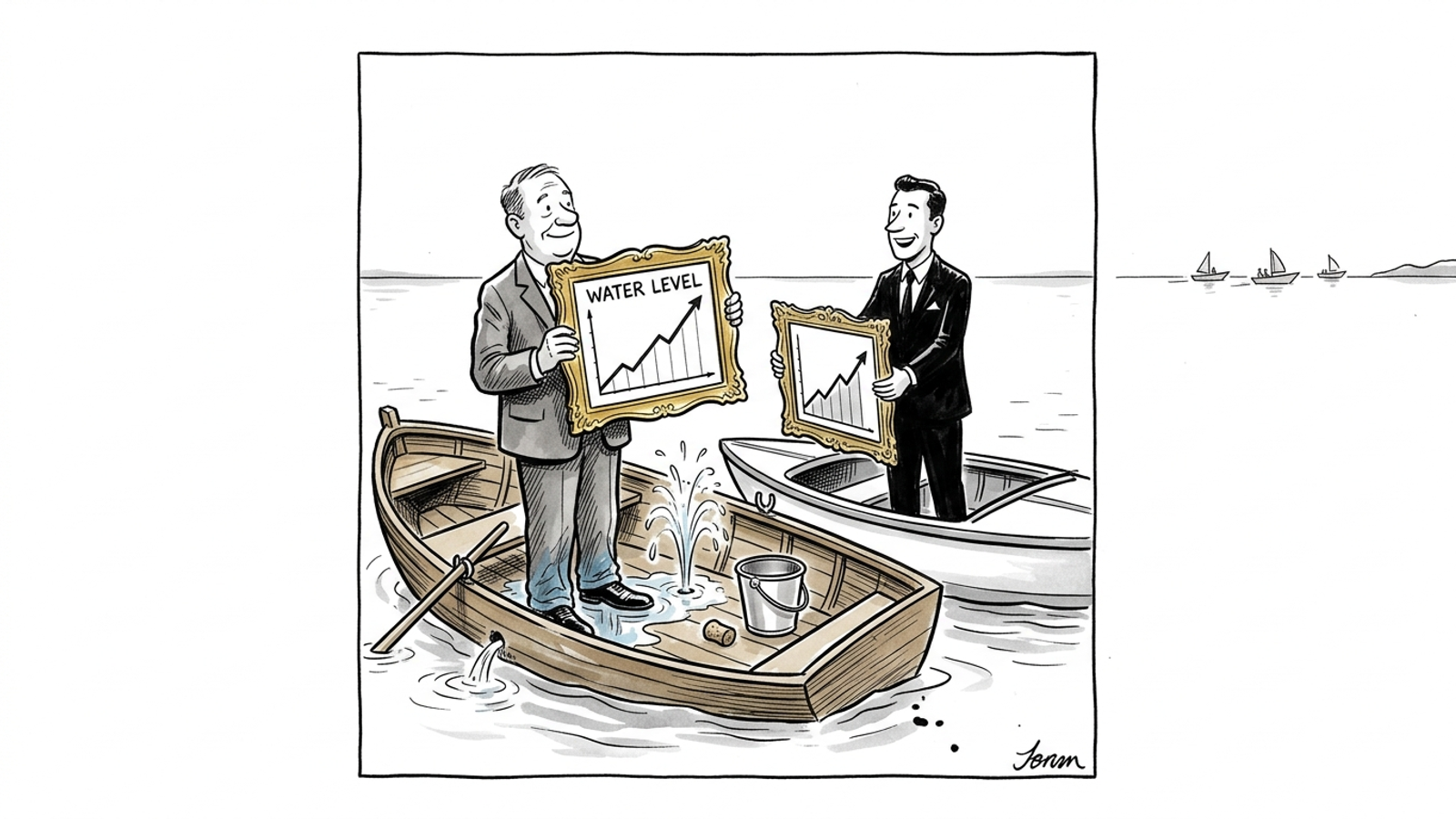
Most mid-market advertisers running Google Demand Gen campaigns are wasting budget on performance theater. Demand Gen campaigns are Google’s YouTube and Discovery ad format designed to drive action from upper-funnel audiences, but the reality is that most accounts add them based on Google’s recommendations rather than evidence, and the conversion numbers they report are significantly inflated by view-through attribution defaults. The contrarian thesis here is straightforward: for the majority of mid-market advertisers, Demand Gen campaigns do not deliver incremental revenue, and the budget would perform better allocated elsewhere.
This is not a blanket dismissal. There are legitimate use cases for Demand Gen, and we will cover them honestly. But the default playbook of layering Demand Gen onto an existing account because your Google rep suggested it, or because the campaign dashboard shows strong conversion numbers, deserves serious scrutiny. Is Demand Gen worth it for Google Ads? For most accounts reading this, the answer is probably no.
The Accepted Wisdom: Demand Gen Is The YouTube Play For Performance Marketers
The conventional view is reasonable on its face, which is why so many advertisers have adopted it. Google positioned Demand Gen as the evolution of Discovery campaigns, combining YouTube in-stream, YouTube Shorts, Discover feed, and Gmail inventory into a single campaign type optimized for conversions. The pitch is compelling: reach people earlier in the buying journey, use lookalike segments and first-party data to find high-intent prospects, and let Google’s machine learning optimize delivery across all those placements.
Google reps actively recommend Demand Gen to mid-market advertisers as a complement to Search and Performance Max. The logic sounds airtight. You are already capturing demand with Search. Performance Max fills in some gaps. Demand Gen creates new demand at the top of the funnel that feeds those lower-funnel campaigns. A complete funnel, powered by Google’s AI.
The early case studies from Google showed strong results. Advertisers reported lower cost per acquisition, expanded reach, and positive ROAS. Industry publications echoed the narrative. Agency partners built it into their standard playbooks. By 2025, it was unusual for a mid-market account review not to include a Demand Gen recommendation.
None of this is a strawman. The underlying technology is genuinely capable, and for certain advertisers with specific conditions, it works. The problem is not the product itself. The problem is the gap between what Demand Gen reports and what it actually delivers for most accounts, and the structural incentives that prevent advertisers from seeing that gap clearly.
Where Demand Gen Delivers Versus Where It Quietly Underperforms
Where Demand Gen Delivers: The Use Cases It Was Built For
Demand Gen is a legitimate campaign type for specific scenarios. If you are launching a product category with zero existing search volume, Demand Gen puts your message in front of people who cannot search for something they do not know exists. If you have strong video creative assets and your goal is measurable awareness at scale, Demand Gen gives you more control than a standard YouTube campaign. If you are running remarketing to warm audiences who already know your brand, Demand Gen’s multi-placement delivery can re-engage them efficiently.
These are real strengths. Acknowledging them is important because the contrarian argument is not that Demand Gen is broken. It is that most advertisers using it do not fit these use cases.
Where It Quietly Underperforms: Frequency, Attribution, And Incrementality
For the typical mid-market advertiser adding Demand Gen to an existing Search and Performance Max setup, three problems consistently emerge. Frequency management is poor. Attribution defaults inflate reported conversions. And when you test incrementality, much of the reported performance evaporates. Each of these deserves a full breakdown.
The Frequency Problem Nobody Talks About
YouTube ad frequency is one of the most underappreciated budget drains in Google Ads, and Demand Gen campaigns make it worse.
How YouTube Ad Frequency Defaults Changed In 2025 And 2026
Google has progressively loosened frequency controls across its automated campaign types. Demand Gen campaigns in 2026 offer limited frequency capping compared to standard YouTube campaigns. You can set frequency targets at the campaign level, but the algorithm treats those as suggestions rather than hard caps, particularly when optimizing for conversions. The result is that your audience sees the same creative far more often than you intend.
What Over-Frequency Does To Brand Perception And CTR
Research on ad fatigue is well-established. After a certain number of impressions to the same user, click-through rates decline, skip rates increase, and brand perception can actually turn negative. The threshold varies by creative quality and audience, but most advertisers start seeing diminishing returns after four to six exposures within a short window. Demand Gen campaigns regularly exceed this, especially on YouTube Shorts where session frequency is high.
Why Demand Gen Campaigns Make Frequency Harder To Control
The core issue is that Demand Gen spans multiple placements, and frequency is measured per campaign, not per user across campaigns. If you are also running Performance Max, which serves YouTube inventory on its own, the same user may see your ads from both campaign types with no cross-campaign frequency coordination. Google does not deduplicate at the account level. This means your actual per-user frequency can be double or triple what any single campaign dashboard shows. This is a well-documented challenge with Performance Max that gets compounded when Demand Gen enters the mix.
Attribution Theater: Why Demand Gen Conversion Numbers Look Better Than They Are
This is the most important section in this article. Demand Gen campaign performance in 2026 looks strong on dashboards because of how Google counts conversions by default.
View-Through Attribution And The Incrementality Gap
Demand Gen campaigns default to counting view-through conversions. If someone sees your YouTube ad, does not click, and then converts through a different channel within the attribution window, Demand Gen gets credit. This is not fraud. It is a legitimate attribution methodology. But for most mid-market advertisers, it dramatically overstates the actual impact of the campaign.
The question is not “did the user see the ad and then convert?” The question is “would the user have converted anyway without seeing the ad?” For branded audiences, remarketing lists, and high-intent segments, the answer is frequently yes. When conversion signal quality is already a challenge across your account, adding a campaign type that inflates conversion counts further degrades your ability to make sound decisions.
How To Test Whether Your Demand Gen Conversions Are Real
The test is straightforward. Run a holdout experiment. Pause Demand Gen for two to four weeks while keeping every other campaign unchanged. Track total account conversions, not just the campaigns that remain active. If your total conversion volume drops proportionally to what Demand Gen was reporting, those conversions were real. If total conversions barely move, you were paying for credit, not causation.
Alternatively, use Google’s built-in conversion lift studies if you have the budget and account size to qualify. These are imperfect but significantly better than reading the Demand Gen conversion column at face value.
For accounts where groas manages Google Ads end-to-end through its DFY service, this kind of incrementality testing is standard. The dedicated strategist running your account designs holdout tests and reads incrementality data, not dashboard conversions, to decide where budget actually belongs. That distinction between reported ROAS and real ROAS is where most advertisers leave money on the table.
Performance Max Already Runs YouTube Inventory: So What Is Demand Gen Actually Adding?
This is the question most mid-market advertisers skip. Performance Max already serves ads on YouTube, Discover, and Gmail. It uses the same machine learning backbone. It optimizes across the same inventory pools.
When you add Demand Gen to an account that already runs Performance Max, you are not opening new inventory. You are creating a second campaign competing for the same impressions, often to the same audiences, with less control over how that overlap is managed. The incremental reach is smaller than most advertisers assume. What you mainly get is a separate line item that reports its own conversions, many of which Performance Max was already going to claim.
Google benefits from this because total reported conversions across both campaign types look higher than either one alone, even when the actual customer outcomes have not changed. It is a reporting artifact, not a performance gain.
When Demand Gen Is Genuinely Worth Running
To be fair, there are scenarios where Demand Gen earns its place in the account.
New Product Launches With No Search Demand
If nobody is searching for what you sell, you need to create awareness before you can capture intent. Demand Gen with strong video creative and well-built lookalike audiences can genuinely introduce a product to a relevant audience. This is a real use case, and it works.
Remarketing To Warm Audiences At Scale
If you have a large remarketing list and strong video assets, Demand Gen can re-engage users across YouTube and Discover efficiently. The key is that the audience already knows your brand, so the view-through attribution issue is less severe because these users were already in your pipeline.
Brands With Strong Creative Assets And Clear Awareness Goals
If your goal is genuinely awareness and you have the creative budget to produce multiple high-quality video assets, Demand Gen gives you more creative control than Performance Max. But this requires you to measure success on awareness metrics, not pretend that view-through conversions are the same as direct response performance.
The common thread: Demand Gen works when you have a specific strategic reason to use it, strong creative, and measurement rigor to evaluate it honestly. For the majority of mid-market accounts, none of those conditions are met.
What Most Mid-Market Advertisers Should Do Instead
Stop adding campaigns because Google recommends them. Start from your actual business goals and work backward.
If you are already running Search and Performance Max profitably, the highest-leverage move is almost always to optimize what you have rather than adding another campaign type that fragments your budget and muddies your data. Improve your smart bidding strategy. Fix your conversion tracking. Test your landing pages. These produce measurable, incremental revenue without the attribution ambiguity of Demand Gen.
If you want to run YouTube ads, consider running them as standard YouTube campaigns where you have full frequency control, clear attribution settings, and no overlap with Performance Max inventory. You can build a proper YouTube lead generation setup that gives you actual control over targeting, frequency, and measurement.
This is precisely the kind of analysis that happens inside groas. For DWY clients, the senior strategist reviews your full account structure, identifies where budget is being wasted on overlapping campaign types, and recommends a structure that maximizes real incremental revenue. You stay in control of execution while the proprietary engine, trained on over $500 billion in profitable ad spend, handles the heavy lifting underneath. For DFY clients, the dedicated strategist makes these decisions and implements them. Either way, you get an honest read on whether a campaign type is driving real results or just inflating a dashboard.
Stop Adding Demand Gen Because Google Recommends It
Google’s incentives and your incentives are not perfectly aligned. Google benefits when you run more campaign types, spend more budget, and see higher reported conversion numbers. You benefit when your actual revenue grows relative to your actual spend.
Demand Gen campaigns are a capable product applied to the wrong accounts by default. For most mid-market advertisers, they add cost without adding conversions, inflate reporting without improving outcomes, and create frequency and overlap problems that degrade the performance of campaigns that were already working.
The fix is not complicated. Audit whether your Demand Gen conversions are incremental. Run holdout tests. If the conversions are real, keep the campaign. If they are not, reallocate the budget to what is actually driving revenue and stop running campaigns based on Google’s recommendations instead of your own data.
If you want a team that makes these calls based on evidence rather than Google’s playbook, groas operates differently. Whether you choose DWY to keep your team in control with a senior strategist and the proprietary engine working alongside you, or DFY to hand over Google Ads entirely to a dedicated strategist who owns every decision, groas earns its place every month with no long-term contracts. Apply for DFY or get started with DWY, and find out what your account looks like when someone is actually measuring what matters.