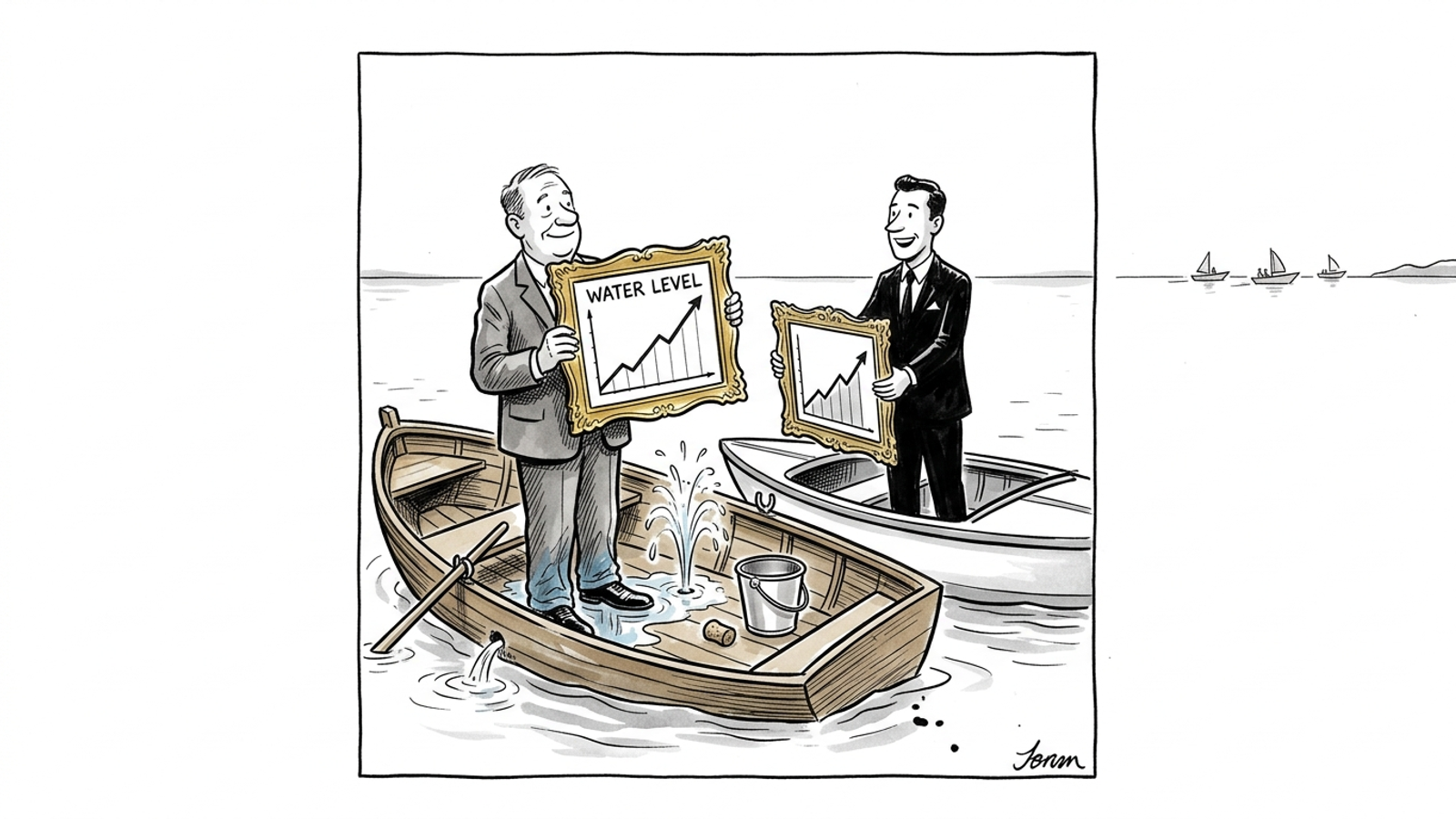
Google Shopping ROAS recovery is almost always a structural and feed problem, not a bidding problem. This case study walks through how an ecommerce brand running roughly $80K per month in Google Shopping spend hit a revenue plateau, diagnosed the root cause as product group architecture and feed mismanagement, rebuilt the account from the ground up, and recovered profitable ROAS within 60 days. The core lesson: adjusting tROAS targets on a broken structure is like tuning the engine of a car with flat tires. The structure has to be right before Smart Bidding can do its job.
This is a representative scenario drawn from patterns common across ecommerce Google Ads accounts, not a named customer case study. The scale, symptoms, and fixes reflect real operational patterns seen across accounts managed through groas.
The Situation: A Scaling Ecommerce Brand With A Google Ads Account That Looked Fine On Paper
The brand sold consumer goods across roughly 1,200 SKUs, with average order values ranging from $45 to $180. Google Shopping was supposed to be the primary growth channel. Ad spend had climbed steadily over the prior year, reaching around $80K per month, but revenue had flatlined. The ROAS that once justified the budget was slowly compressing, even as the team poured more money in.
Revenue Plateau Despite Flat-To-Growing Spend
Month-over-month revenue had been essentially flat for four months. Spend was up roughly 15% in the same window. The blended ROAS had drifted from a healthy range down into territory where profitability was questionable on many product lines. The founder assumed seasonality was the issue. The numbers said otherwise.
What The Existing Agency Said The Problem Was
The agency managing the account pointed to increased competition and rising CPCs. Their recommendation was to raise the tROAS target to “force Google to be more selective.” When that compressed volume without improving efficiency, they suggested lowering tROAS to “give the algorithm more room.” Neither worked. The account was stuck, and the responses from the agency were contradictory.
What The Data Actually Showed
The real story was in the structure, not the bidding. Pulling the actual campaign data revealed a set of problems that no tROAS adjustment could fix. This is where the Google Shopping campaign restructure case study begins in earnest: not with what the bidding strategy was set to, but with how the account was built underneath it.
The Audit: What A Google Shopping Account Looks Like When Structure Is The Real Problem
A Google Shopping product group strategy only works if the account is structured to let Smart Bidding differentiate between products that deserve aggressive spend and products that do not. This account had none of that differentiation in place. Smart Bidding depends on clean signals to function properly, and this account was feeding it noise.
Everything In One Campaign, One Asset Group, No Product Group Segmentation
The entire catalog of 1,200+ SKUs was running through a single Shopping campaign with a single product group: “All Products.” Every SKU, from the brand’s best-selling $150 item with 60% margin to a $20 clearance accessory with 8% margin, was competing for the same budget under the same tROAS target.
This is one of the most common and most damaging structural failures in ecommerce Google Ads. When Google’s algorithm sees one flat product group, it optimizes for the aggregate. High-margin products that could sustain aggressive bids get the same treatment as low-margin products that should barely be spending at all.
High-Margin SKUs And Clearance Items Competing In The Same Budget Pool
The top 50 SKUs by margin contribution accounted for roughly 35% of revenue potential but were receiving a disproportionately small share of impressions. Meanwhile, low-margin and clearance items were consuming budget because they happened to match broad queries with higher search volume. The algorithm was not wrong, it was doing exactly what it was told: optimize the whole group as one unit.
No Custom Labels, No Margin-Aware Bidding, No Feed Hierarchy
The Merchant Center feed had no custom labels. Product types were inconsistent. There was no way for the bidding system to distinguish between product tiers because the feed never told it those tiers existed. Without a Google Shopping custom labels strategy, the algorithm has no mechanism to differentiate a hero product from dead inventory.
Search Term Reports Showing Irrelevant Queries Consuming 30%+ Of Budget
A search term audit for the prior 90 days showed that more than 30% of Shopping spend was going to queries that were either irrelevant, too broad, or matching to the wrong products. Terms like “cheap [category]” were pulling in clearance items when the brand positioned itself as premium. Generic category terms with no purchase intent were eating budget that should have gone to high-intent, product-specific queries. Negative keyword management at the product group level was nonexistent because there was only one product group.
The Fix: A 3-Part Google Shopping Restructure
The Google Shopping ROAS improvement did not come from changing bid strategies or adjusting targets. It came from rebuilding the foundation that Smart Bidding relies on. The restructure had three parts, executed in sequence over the first two weeks.
Part 1: Product Group Segmentation By Margin Tier And Product Category
The catalog was segmented into three margin tiers: high margin (above 50%), mid margin (25-50%), and low margin (below 25%). Within each tier, products were further grouped by category. This created distinct product groups that could receive differentiated bidding treatment. High-margin hero products got their own campaigns with budget allocations proportional to their revenue potential. Low-margin items were either paused entirely, placed in a restricted “low priority” campaign, or excluded from Shopping.
This segmentation is the backbone of any serious ecommerce Google Ads strategy. Without it, setting tROAS targets is essentially guesswork because the target is applied uniformly across products with wildly different economics.
Part 2: Custom Label Strategy Connecting Merchant Center To tROAS Targets
Five custom labels were implemented in the Merchant Center feed:
- Custom Label 0: Margin tier (high, mid, low)
- Custom Label 1: Product lifecycle (core, seasonal, clearance, new launch)
- Custom Label 2: Price band
- Custom Label 3: Bestseller flag (top 50 by revenue, top 50 by margin)
- Custom Label 4: Inventory status (in stock, low stock, overstock)
These labels connected business-level data to Google’s bidding system for the first time. Each campaign could now target specific label combinations, and tROAS targets could be set per campaign based on the actual margin profile of the products inside it. A high-margin bestseller campaign justified a lower tROAS target (more aggressive bidding) because every sale at that target was still deeply profitable. A clearance campaign needed a much higher tROAS target or no spend at all.
Part 3: Separating Brand Shopping From Generic Shopping To Protect Margin
Brand searches, where someone searched for the brand name plus a product, were being mixed in with generic category searches. Brand queries convert at dramatically higher rates and lower CPCs, which meant the blended ROAS looked better than it really was. When you stripped brand out, the generic Shopping ROAS was significantly worse than the headline number.
The fix was straightforward: a dedicated brand Shopping campaign with its own budget and tROAS, and a campaign priority structure that funneled brand queries into it. This is a well-documented technique, but it is also precisely the kind of structural work that requires understanding how brand and non-brand interact inside Shopping and Performance Max. The previous agency had never implemented it.
What Changed In The First 60 Days
The restructure triggered a learning phase across the new campaigns. Managing that learning phase carefully was critical; aggressive budget changes or tROAS adjustments during the first two weeks would have undermined the reset. The new structure was given room to stabilize before any optimization levers were pulled.
ROAS Improvement Across The Restructured Product Groups
Within the first 30 days, the high-margin product campaigns were already outperforming the old blended average. By day 60, the account-level ROAS had recovered to a level meaningfully above where it had been during the plateau, and the revenue trajectory was climbing again, this time on a per-product-group basis where every segment’s performance was visible and attributable.
The improvement was not because Smart Bidding suddenly “got smarter.” It was because the structure finally gave the algorithm the information it needed to make good decisions.
Budget Reallocation From Low-Margin SKUs To High-Margin Performers
With product groups segmented by margin, budget naturally shifted toward the campaigns that justified it. Low-margin and clearance SKUs that had been quietly consuming a large portion of spend were either paused or capped. That freed up budget for the products that actually drove profitable revenue. The total spend did not need to increase; it just needed to go to the right places.
Search Term Quality Improvement After Negative Keyword Layering By Product Group
With distinct product groups and campaigns, negative keywords could be applied at the campaign level with precision. Broad, low-intent terms were excluded from high-margin campaigns. Brand terms were funneled into the brand campaign. The result was a measurable improvement in search term relevance, which in turn improved click-through rates and conversion rates within each product group.
The Lesson: Google Shopping Is A Structural Problem, Not A Bidding Problem
This ecommerce Google Ads case study reinforces a pattern that shows up repeatedly: Google Shopping underperformance is almost always rooted in structure and feed quality, not in bid strategy selection or target levels.
Why Changing tROAS Targets Without Fixing Structure Never Works
When an agency tells you to “raise tROAS” or “lower tROAS” and the account is one flat product group with no custom labels, they are adjusting a dial that controls nothing meaningful. A higher tROAS on a single product group just tells Google to be pickier across the entire catalog indiscriminately. A lower tROAS tells it to spend more aggressively on everything, including the low-margin items dragging performance down. Neither addresses the root cause. The choice between tCPA and tROAS matters, but only after the structure beneath it is sound.
The Compounding Effect Of Bad Product Group Architecture On Smart Bidding Signals
Smart Bidding learns from conversion data. When all products are in one group, the conversion signals are blended. The algorithm cannot distinguish between a $150 high-margin sale and a $20 low-margin sale because both are just “conversions” in the same bucket. Over time, this trains the algorithm to optimize for volume rather than value, which is exactly the opposite of what an ecommerce brand with varied margins needs. The longer this runs, the harder it is to fix because the algorithm’s learned signals are contaminated. The rebuild resets those signals, which is why the learning phase after a restructure is not a setback but a necessary correction.
What Fully Managed Google Shopping Execution Looks Like When Structure And Bids Move Together
This is where the gap between a traditional agency and a service like groas becomes impossible to ignore.
The agency managing this account had the brand on a standard retainer. One media buyer, juggling multiple clients, checking in a few times a week. The structural problems described above are not exotic. They are the kind of thing a thorough audit catches immediately. But a single person managing multiple accounts during business hours does not have the bandwidth to rebuild a 1,200-SKU feed, restructure campaigns, implement custom labels, layer negative keywords by product group, and monitor the learning phase daily across every segment.
groas approaches this differently. For DFY (Done For You) clients, a dedicated strategist owns the Google Ads account end-to-end, from feed structure to bid strategy to landing page optimization, backed by a proprietary engine trained on over $500 billion in profitable ad spend. The engine runs execution around the clock while the strategist owns the decisions. That means the structural audit, the custom label build, the campaign restructure, the negative keyword layering, and the daily monitoring during the learning phase all happen in parallel, not sequentially across weeks as one person gets to each task.
For DWY (Done With You) accounts, where the brand has an in-house person who knows Google Ads and wants to stay in the driver’s seat, groas provides the engine plus a senior strategist working alongside the team. The in-house person stays in control, but they are not operating alone. They get the structural diagnosis, the recommended rebuild plan, weekly reports on what was executed, and a strategy call every other week to course-correct. The engine handles the heavy lifting underneath.
In either case, the outcome is the same: structure and bids move together because the system was built to operate that way. There is no gap between diagnosing the problem and executing the fix.
$0 onboarding. Month-to-month, cancel anytime. groas earns the next month by performing, not by locking you into a contract while the problems compound.
What This Means For You
If your Google Shopping account is generating flat or declining revenue despite consistent or growing spend, the answer is almost certainly not a bidding adjustment. It is a structural rebuild: product group segmentation, custom labels tied to margin data, brand and generic separation, and negative keyword architecture by product group.
This is the pattern behind most Google Shopping ROAS improvement stories. The brands that recover are the ones that stop treating the bid strategy as the lever and start treating the account structure and feed as the foundation.
If your current agency is telling you to “give the algorithm more room” or “wait for seasonality to improve,” ask them to show you the product group structure, the custom labels in the feed, and the search term report by campaign. If those do not exist, you do not have a bidding problem. You have a structural problem that no amount of patience will fix.
If you want groas to own this end-to-end, apply for the DFY service. If you have someone in-house and want the engine plus a strategist alongside your team, DWY is the right starting point. Either way, the first step is the same: get the structure right, then let Smart Bidding do what it was designed to do on a foundation that actually supports it.
Apply for DFY if you want groas to own your Google Shopping execution end-to-end.
Get started with DWY if you have an in-house team and want the engine plus a strategist working alongside you.