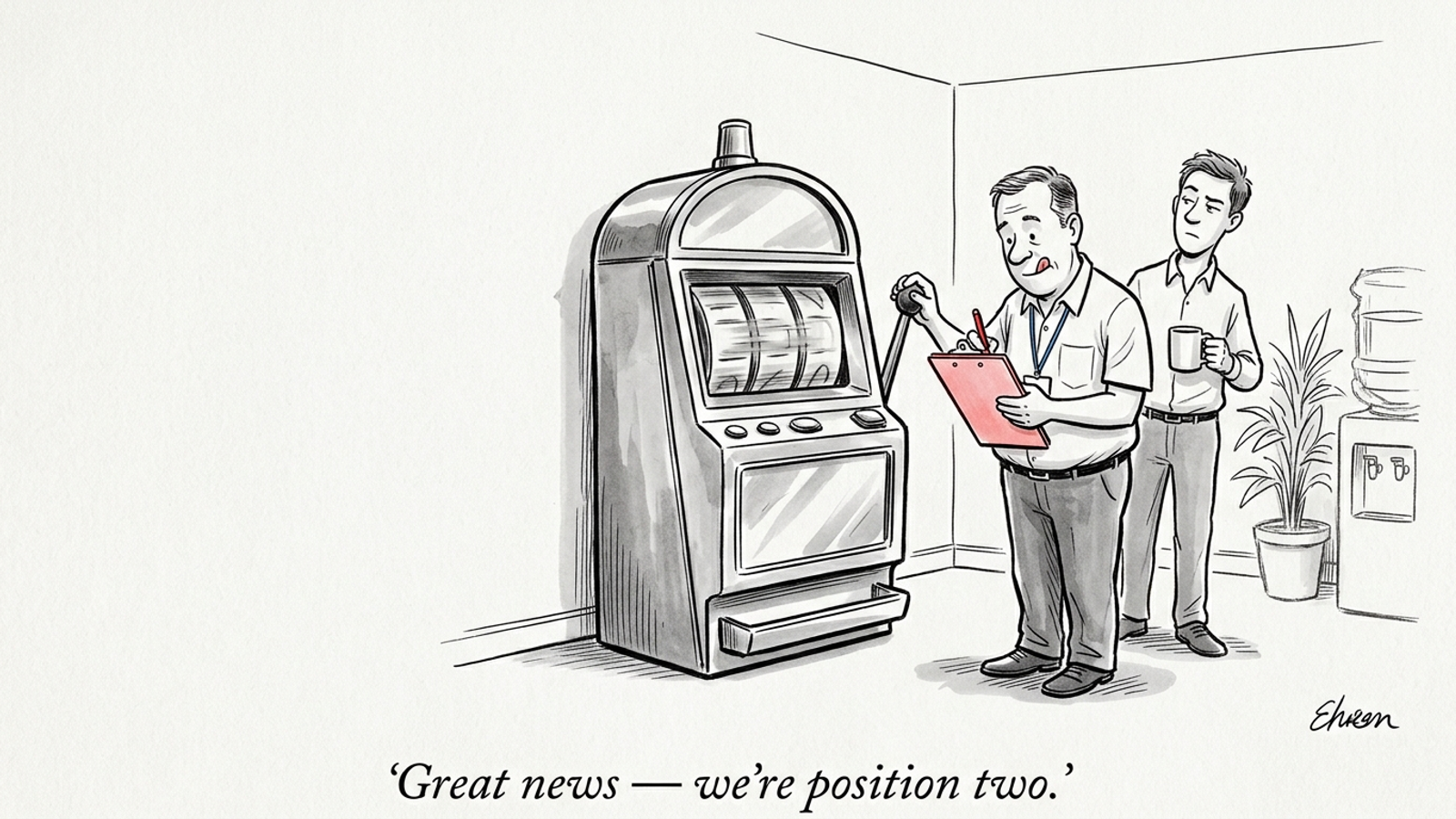
Every traditional Google Ads agency pricing model contains a structural conflict of interest that prevents the agency from optimizing purely for your outcomes. Whether you pay a percentage of ad spend, a flat monthly retainer, or a performance-based fee, the agency’s financial incentive diverges from yours at some predictable point. This is not a moral failing. It is a math problem baked into how agencies bill for their time. Google Ads agency pricing model conflict of interest is not a fringe complaint from disgruntled clients. It is the central, unresolved tension in the managed advertising industry, and the reason most advertisers cycle through agencies every 12 to 18 months without ever finding a durable fit. The conventional wisdom says you just need to find the “right” agency. The real problem is that no hourly or retainer-based model can stay aligned with your goals once your account reaches meaningful scale.
What Most People Believe About Agency Pricing Models
The standard advice for hiring a Google Ads agency goes something like this: find a reputable shop, negotiate a fair retainer or agree on a reasonable percentage of spend, set clear KPIs, and hold monthly check-ins where you review performance. If results slip, you escalate. If the agency underperforms for a quarter, you move on.
This sounds reasonable, and it works well enough at small spend levels where the stakes are low and the margin for error is wide. Most agency pricing breakdowns you will find online compare percentage of ad spend vs flat fee agency structures on surface-level criteria: predictability of cost, scalability, transparency, ease of budgeting. They treat the pricing model as a preference, like choosing between a fixed-rate and variable-rate mortgage.
What these breakdowns miss is the behavioral economics underneath. Every pricing model creates a set of incentives. Those incentives shape the decisions an agency makes when you are not looking, which accounts get prioritized, which optimizations get run first, and whether the agency will ever recommend reducing your spend even when reducing spend is the right strategic move.
Most advertisers believe their agency relationship is governed by the contract. In practice, it is governed by the billing model. The contract tells you what you will pay. The billing model tells you what the agency will do.
The Percentage Of Ad Spend Model: Agencies Profit When You Overspend
Percentage of ad spend is the most common Google ads agency pricing model. Typical rates range from 10% to 20% of monthly spend. At $50,000 per month in spend, that is $5,000 to $10,000 in agency fees. Straightforward, scalable, easy to understand.
Here is where it breaks.
The Structural Incentive To Increase Spend
An agency earning 15% of your ad spend makes more money when your spend goes up, regardless of whether performance improves. If you are spending $100,000/month and the agency recommends scaling to $150,000/month, they just gave themselves a $7,500 annual raise. That recommendation might be correct. It might also be self-serving. You have no reliable way to distinguish between the two.
This does not require malice. It does not even require conscious bias. It just requires that the agency, when facing a judgment call about whether to push spend higher or hold steady, is financially rewarded for one answer and penalized for the other. Over hundreds of micro-decisions per month, that bias compounds.
When It Becomes Actively Harmful
The percentage of spend model becomes most dangerous when your account hits diminishing returns, and every account eventually does. You reach a point where the next $10,000 in spend produces meaningfully less return than the previous $10,000. A perfectly aligned advisor would tell you to stop scaling, reallocate to higher-efficiency campaigns, or fix structural problems like keyword bloat before spending another dollar. A percentage-of-spend agency has every reason to push through that plateau, because their revenue depends on your total outlay, not your marginal return.
This is the advertising retainer pricing problem that nobody in the agency world wants to discuss openly. The model does not break at low spend. It breaks at the exact moment you need the best strategic advice: when you are deciding how much to scale.
The Flat Fee Model: Agencies Profit When They Do Less
The flat monthly retainer fixes the overspend problem. You pay $3,000 or $5,000 or $10,000 per month regardless of how much you spend on ads. The agency is no longer incentivized to inflate your budget. Problem solved, right?
Not quite. The flat fee just moves the conflict of interest from spend to effort.
The Structural Incentive To Under-Serve
An agency earning a fixed monthly fee makes the same revenue whether they spend 40 hours on your account or 4. The profit-maximizing behavior is to do the minimum amount of work necessary to keep you as a client, then allocate remaining capacity to acquiring new clients or servicing the ones who complain the loudest.
This is why flat-fee agencies tend to front-load effort during onboarding (when churn risk is highest) and gradually reduce attention over time. The retainer stays the same. The work shrinks. You notice when performance starts declining, but by then the agency has been coasting for months.
The Reporting Trap
Flat-fee agencies often compensate for declining effort with increasing reporting. Monthly decks get longer, dashboards get fancier, and calls get more polished. None of this is optimization. It is client retention theater. Meanwhile, Google Ads operates in real time. Bid landscapes shift daily. Competitor behavior changes hourly. A monthly reporting cycle in a real-time optimization environment is structurally inadequate, and your ROAS numbers may be misleading you anyway.
The flat fee model does not align the agency with your performance. It aligns the agency with your perception of performance, which is a very different thing.
Performance-Based Pricing: The Closest Thing To Aligned, And Still Flawed
Performance-based models attempt to solve the problems above by tying agency compensation to results: a percentage of revenue, a cost-per-acquisition target, or a bonus tied to ROAS. In theory, this is the purest alignment. The agency only wins when you win.
In practice, performance-based models introduce their own set of distortions.
Attribution Becomes A Battleground
When the agency’s fee depends on which conversions “count,” every attribution decision becomes a negotiation. Did that conversion come from the Google Ads campaign the agency runs, or from the email sequence your in-house team sent, or from the organic traffic your SEO team generated? Performance-based models turn attribution into a revenue event for the agency, which means the agency is incentivized to claim credit broadly and to resist any attribution model that might reduce their reported performance.
Short-Termism Takes Over
Agencies on performance-based models are incentivized to chase the easiest conversions, not the most valuable ones. That means heavy brand-bidding, remarketing to people who would have converted anyway, and cannibalizing other channels to inflate the numbers the agency gets paid on. Strategic investments that take 60 to 90 days to compound, like fixing your Performance Max campaign structure or building out upper-funnel awareness, get deprioritized because they reduce short-term metrics the agency is compensated on.
Risk Aversion Kills Scaling
An agency paid on performance has a rational incentive to avoid experiments that might temporarily reduce results, even when those experiments are necessary to find the next level of scale. Testing new audiences, launching new campaign types, restructuring accounts: all of these carry short-term risk. A performance-based agency absorbs that risk directly, which makes them conservative at exactly the moments you need them to be aggressive.
Why All Three Models Reward Activity, Not Outcomes
The unifying failure across all traditional Google Ads agency pricing models is that they compensate the agency for being involved, not for producing results at scale. A percentage-of-spend model rewards involvement with your budget. A flat-fee model rewards involvement with your account. A performance model rewards involvement with your attribution.
None of them reward continuous, autonomous execution that runs around the clock regardless of human bandwidth. And that is the real bottleneck. Your agency, no matter how talented, is capped at what one team can physically get through in a workweek. You pay full rate for that ceiling. When the account needs more attention than the team can provide (and it always eventually does), performance degrades, but the billing stays the same.
This is why many of the red flags signaling an underperforming agency are really symptoms of a broken pricing model, not a broken team.
What A Conflict-Free Model Actually Looks Like
A pricing model with fully aligned incentives has three properties: it scales with account size (not arbitrarily, but because larger accounts require more execution), it does not reward the provider for increasing spend beyond what is profitable, and it does not reward the provider for reducing effort.
Spend-Based Pricing Tied To Account Scale, Not Hours
groas uses spend-based pricing that scales with the Google Ads spend managed through the service. This is structurally different from percentage-of-spend agency billing, because groas does not benefit from pushing spend beyond profitability. The pricing reflects the complexity and execution load of managing a given account size. It is month-to-month with no long-term contracts. Cancel anytime. groas earns the next month every month by performing. There is $0 onboarding, compared to the $5,000 or more most agencies charge before they touch your account.
Autonomous Execution: Removing The Human Bottleneck From Optimization
The deeper structural problem with agency pricing is not just the billing model. It is what the billing model pays for: human hours. Hours are inherently limited. A proprietary engine trained on over $500 billion in profitable ad spend does not have that constraint. It runs 24/7. It does not take weekends off. It does not deprioritize your account when a bigger client needs attention. And because it does not bill by the hour, there is no incentive to do less.
The DFY Model: When Full Ownership Resolves The Conflict
For businesses that want Google Ads handled end-to-end, groas offers a fully managed service where a dedicated senior strategist owns your entire account and every decision that gets you scaling profitably. This is not a tool you log into. It is not a dashboard with suggestions. A real person runs your campaigns, your landing pages, your offers, working on everything from first click to final conversion. The engine handles the execution volume that no human team could match, while the strategist makes the strategic calls that no algorithm should make alone. The result is a model where automation and human strategy reinforce each other instead of competing.
If you are not sure whether you need full management or want to keep your team in the driver’s seat, groas also offers a collaborative model where the engine and a senior strategist work alongside your in-house team. You stay in control. The engine does the heavy lifting. A strategist advises on the calls that matter. For agencies who want to power their own client work, groas provides direct access to the engine as a reseller channel, where you keep your clients, your brand, and your margin.
What To Do Before Signing Your Next Retainer
Before you renew or sign with any Google Ads agency, ask one question: when was the last time this agency recommended I reduce spend? If the answer is never, the pricing model is working exactly as designed. Just not in your favor.
Look for these structural signals:
The provider’s revenue does not increase when your spend increases beyond profitability. The provider cannot profit from doing less work. There is no long-term contract creating switching costs that protect the provider from underperformance. Execution happens around the clock, not just during business hours. The provider has skin in the game every single month, not just during the onboarding phase.
If your current agency or freelancer cannot check those boxes, the pricing model is the problem. Not the people, not the strategy, not the creative. The model.
groas was built to resolve this exact structural tension. A proprietary engine trained on hundreds of billions in profitable ad spend runs execution continuously. A senior strategist owns the decisions that require human judgment. The service is month-to-month because the numbers speak for themselves inside the first few weeks. There is no onboarding fee, no lock-in, and no incentive to inflate your spend or reduce your service.
If you want Google Ads fully handled with zero conflicts of interest, apply for groas. If you want to keep your team in control with the engine and a strategist alongside, get started today. If you are an agency that wants to scale your client book without adding headcount, start your 7-day free trial.
The traditional agency pricing model is not broken because agencies are bad at their jobs. It is broken because the math was never on your side. Fix the math, and the results follow.