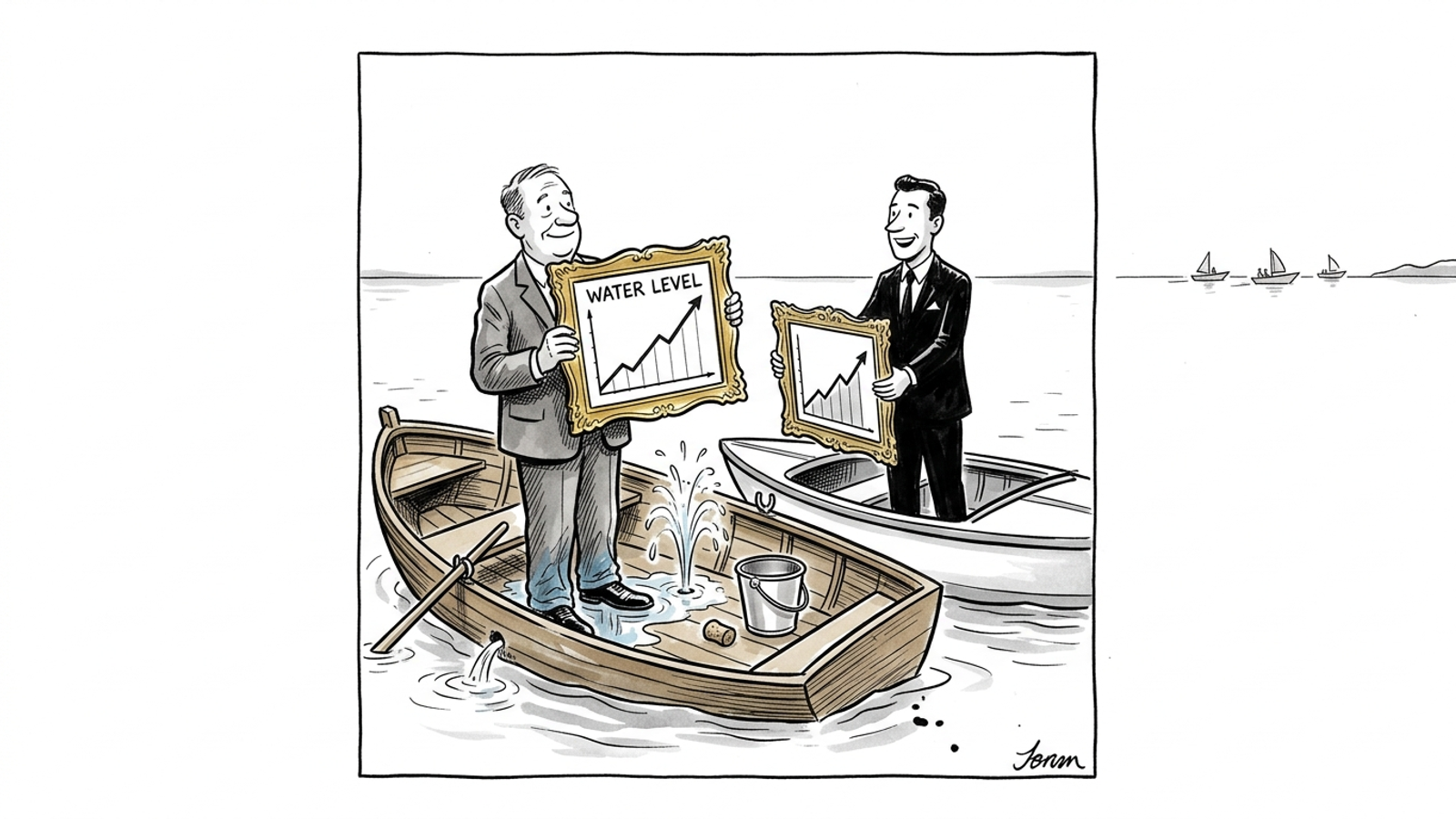
Google Ads agencies hit a ceiling that has nothing to do with talent, market demand, or pricing. Scaling a Google Ads agency without hiring new staff requires removing the structural constraints that make human-dependent delivery models break past 15 to 20 accounts. Most agencies plateau at this range because every new client adds linear operational load to a team that is already stretched. This article breaks down seven specific constraints that prevent agencies from growing their client book without adding headcount, and provides a framework for how a purpose-built execution engine removes each one. If you run a Google Ads agency and recognize your operation in this list, the path forward is a systems-level change, not another hire.
Why Agency Account Management Does Not Scale Past 20 Clients
The math is straightforward. A skilled account manager can run 8 to 12 Google Ads accounts with the depth required to deliver real performance. At 20 clients, you need at least two full-time managers. At 40, you need four, plus someone to manage the managers. Every new hire adds salary, training time, management overhead, and retention risk. Agency Google Ads client book scaling stalls because the delivery model is built on human throughput, not systems throughput. The bottleneck is not demand. It is the architecture of how work gets done.
White label Google Ads management for agencies has emerged as one attempted solution, but most white-label providers just shift the same problem to a different team with less context and less accountability. The real unlock is an engine layer that handles the high-volume, time-intensive execution while your team focuses on what actually differentiates your agency: strategy, relationships, and growth.
1. The Account Manager Bottleneck: One Human Per 8-12 Accounts
Every Google Ads agency runs into the same ratio. One account manager handles somewhere between 8 and 12 client accounts before quality starts degrading. This is not a competence issue. It is a physics issue. Each account requires bid adjustments, search term reviews, budget pacing checks, creative rotations, and weekly reporting. Multiply those tasks across 10 accounts and you are looking at a full 40-hour week before a single strategic thought enters the picture.
Why Adding Accounts Without An Engine Degrades Performance
When an account manager picks up their 13th client, they do not suddenly become less competent. They just run out of hours. The first accounts to suffer are usually the ones performing “well enough” because they get deprioritized in favor of accounts that are actively on fire. This creates a silent churn problem where your best-performing clients receive the least attention.
What Actually Needs To Change
The bottleneck is not the manager. It is the execution layer sitting underneath them. Bid management, budget pacing, search term mining, and negative keyword management are high-frequency, data-heavy tasks that an engine can run continuously. When those tasks are offloaded to a system trained on hundreds of billions in ad spend, a single account manager can credibly oversee 30 to 40 accounts because their role shifts from execution to oversight and strategy.
2. MCC Oversight At Scale: What Gets Missed When Nobody Is Looking
Google Ads MCC management at scale is a visibility problem. At 5 accounts, you can manually spot anomalies. At 25 accounts, you are relying on whatever alerts Google decides to surface, and those alerts are designed to get you spending more, not spending better.
The Blind Spots That Compound Silently
Budget overspend across shared budgets. One campaign cannibalizing another’s impression share. A search term eating 15% of spend with zero conversions. Keyword bloat creeping across accounts without anyone consolidating. These are not dramatic failures. They are slow leaks that accumulate into thousands of dollars in wasted spend per month across your client book.
The Oversight Gap Is A Structural Problem
No amount of discipline fixes this. You cannot ask a human to monitor 25 accounts with the same granularity they give 8. The answer is continuous, automated monitoring that flags issues at the account, campaign, and search term level in real time, not during a weekly check-in that happens three days after the damage is done.
3. Client Onboarding Time: Why It Takes 3-4 Weeks Without Automation
Most agencies take 2 to 4 weeks to fully onboard a new Google Ads client. That window includes account access, audit, strategy development, campaign builds, conversion tracking validation, and initial optimization. Every week a new client sits in onboarding limbo is a week they are paying you but not seeing results. It is also a week your team is doing setup work instead of managing existing clients.
Where The Time Actually Goes
The longest portions of onboarding are typically audit and campaign structuring. An experienced media buyer spends 8 to 15 hours just auditing an account, reviewing historical performance, and mapping out what needs to change. Campaign builds from scratch add another 10 to 20 hours depending on complexity. This is time your team cannot spend on existing client performance.
The Onboarding Tax On Growth
Every new client requires a fixed investment of human hours before they generate any returns for your agency. At a high-velocity growth rate, say 3 to 4 new clients per month, onboarding alone can consume an entire account manager’s bandwidth. Agencies that want to scale their client book without adding headcount need onboarding workflows that compress this timeline from weeks to days, powered by an engine that can audit, structure, and launch faster than any human team.
4. Reporting Overhead: Hours Per Client Per Month That Produce Nothing
Reporting is essential for retention but devastating for agency efficiency at scale. Most agencies spend 2 to 5 hours per client per month on reporting: pulling data, formatting slides, writing summaries, and preparing for calls. Across 20 clients, that is 40 to 100 hours per month of work that does not improve a single campaign.
The Hidden Cost Of Manual Reporting
The time cost is obvious. The hidden cost is context switching. Your media buyers lose momentum every time they stop optimizing an account to build a report about that account. They are doing the same analysis twice: once to make decisions and once to explain those decisions. That duplication is pure waste.
What Reporting Should Look Like At Scale
The engine generates the report as a byproduct of the work it already does. When optimization runs continuously and every action is logged with rationale, reporting becomes assembly, not creation. This is where platform-level automation gives agencies back dozens of hours per month that can be redirected into acquisition and strategy.
5. Campaign Optimization Lag: The 48-72 Hour Window Where Budget Burns
In most agency delivery models, campaign optimization happens in batches. An account manager reviews performance data, identifies issues, makes changes, and waits for results. The cycle typically takes 48 to 72 hours from the moment a problem appears to the moment a fix is deployed. During that window, budget continues to flow into underperforming campaigns, keywords, and audiences.
Why Batch Optimization Is Structurally Expensive
Consider a search term that starts spending aggressively with a zero percent conversion rate. In a batch model, that term might burn through hundreds of dollars before the next scheduled review. Multiply that across dozens of campaigns and hundreds of search terms across a 20-account portfolio, and the cumulative waste is significant.
The Case For Continuous Optimization
An engine that monitors and adjusts in real time eliminates the lag between problem detection and resolution. This is not about removing human judgment. It is about removing the human bottleneck on execution speed. Strategic decisions still need a human. But identifying that a keyword is bleeding budget and acting on it within minutes rather than days is an engine function, not a strategist function.
6. Hiring To Grow: Why Headcount Is The Wrong Solution To A Systems Problem
The default agency growth playbook is simple: win more clients, hire more people. The problem is that headcount scales costs linearly while adding management complexity that scales exponentially. Your third account manager needs a team lead. Your sixth needs a director. Recruiting, training, and retaining skilled Google Ads professionals is expensive and slow.
The True Cost Of A New Hire
Beyond salary, a new media buyer costs an agency $5,000 or more in recruiting and onboarding before they touch an account. Training takes 4 to 8 weeks before the new hire operates independently. And in the current market, the average tenure for a performance marketing hire is under 2 years. You are constantly rebuilding a team that will turn over.
What Agencies Actually Need
The goal is not zero headcount. It is decoupling growth from headcount. When your execution layer runs on an engine, each human on your team multiplies their output instead of dividing their attention. You still need people for strategy, client relationships, and quality control. You do not need people for the thousands of micro-optimizations that happen across accounts every day.
7. Client Retention Risk: How Reactive Management Creates Churn At Scale
Client churn in Google Ads agencies averages somewhere between 3 and 5 months of tenure for accounts under $10,000 in monthly spend. The primary driver is not bad performance. It is the perception that the agency is not actively working on the account. When optimization happens in batches and reporting happens monthly, clients feel neglected even when the numbers are solid.
The Visibility Problem Underneath Churn
Clients leave agencies they do not hear from. When your team is stretched across too many accounts, communication drops first. Strategy calls get postponed. Reports arrive late. Slack messages go unanswered for days. None of this means the account is suffering, but the client experience is, and that is what drives cancellations.
How Proactive Management Changes Retention Math
Agencies that can demonstrate continuous, visible work on an account, backed by data showing actions taken and results produced, retain clients significantly longer. This requires either more humans (which we have already established is the wrong answer) or an execution layer that generates a continuous stream of documented activity while freeing your team to invest in the relationship side. Client retention is ultimately what determines whether agency growth compounds or collapses.
Recognizing these red flags from the client’s perspective is equally important. If your own clients could describe your agency using those signals, you have a structural problem.
How groas Approaches This Differently
groas is built specifically for the agency scaling problem described above. The DIY product gives agencies direct access to a proprietary engine trained on over $500 billion in profitable ad spend. Agencies connect unlimited client accounts under one subscription, keep their own brand and client relationships, and run everything themselves with the engine handling execution underneath.
The Engine Layer That Removes Human Latency From Optimization
The groas engine runs 24/7 across every connected account. It handles bid management, budget pacing, search term analysis, negative keyword refinement, and campaign-level optimization continuously, not in batches. Your account managers stop spending their days on execution tasks and start spending them on strategy and client development. The difference shows up in how many accounts each person can credibly manage.
How DIY Agency Operators Restructure Their Delivery Model
Agencies running groas restructure their teams around oversight and strategy instead of execution. One experienced strategist can oversee 30 to 40 accounts because the engine handles the volume work. Onboarding compresses from weeks to days. Reporting generates automatically from the engine’s activity log. The result is a delivery model where growth does not require new headcount, and where margin per client improves as the book scales.
Margin Math: What Each Additional Client Costs Today Vs. On groas
Today, your 21st client requires either overloading an existing manager (quality drops, churn increases) or hiring a new one (adding $60,000 to $90,000 in annual salary plus overhead). On groas, your 21st client connects to the same engine as your first 20. There is no incremental headcount cost. Onboarding is $0. The subscription is month-to-month with no lock-in, so if a client leaves, your costs adjust immediately instead of leaving you with a salaried employee and an empty seat.
If you have compared other tools in this space, the difference is that groas is not a dashboard or alerting system. It is an execution engine that does the work, not one that tells you what work to do.
What To Do Next If You Recognize Your Agency In This List
If your agency is stuck between 15 and 25 clients and the only answer anyone offers is “hire another media buyer,” the problem is not your team. It is your delivery model. Every constraint on this list, from the account manager bottleneck to client churn from reactive management, traces back to one root cause: your execution layer depends entirely on human throughput.
The agencies that scale past this ceiling without ballooning headcount are the ones that put an engine underneath their team. groas gives you that engine. You keep your clients, your brand, and your margin. The engine runs execution 24/7 while your people focus on what makes clients stay: strategy, communication, and results they can feel.
Start your 7-day free trial and connect your first client accounts. There is no onboarding fee, no long-term contract, and no risk beyond a week of your time. If the numbers do not move, cancel. If they do, you just found a way to double your client book without a single new hire.