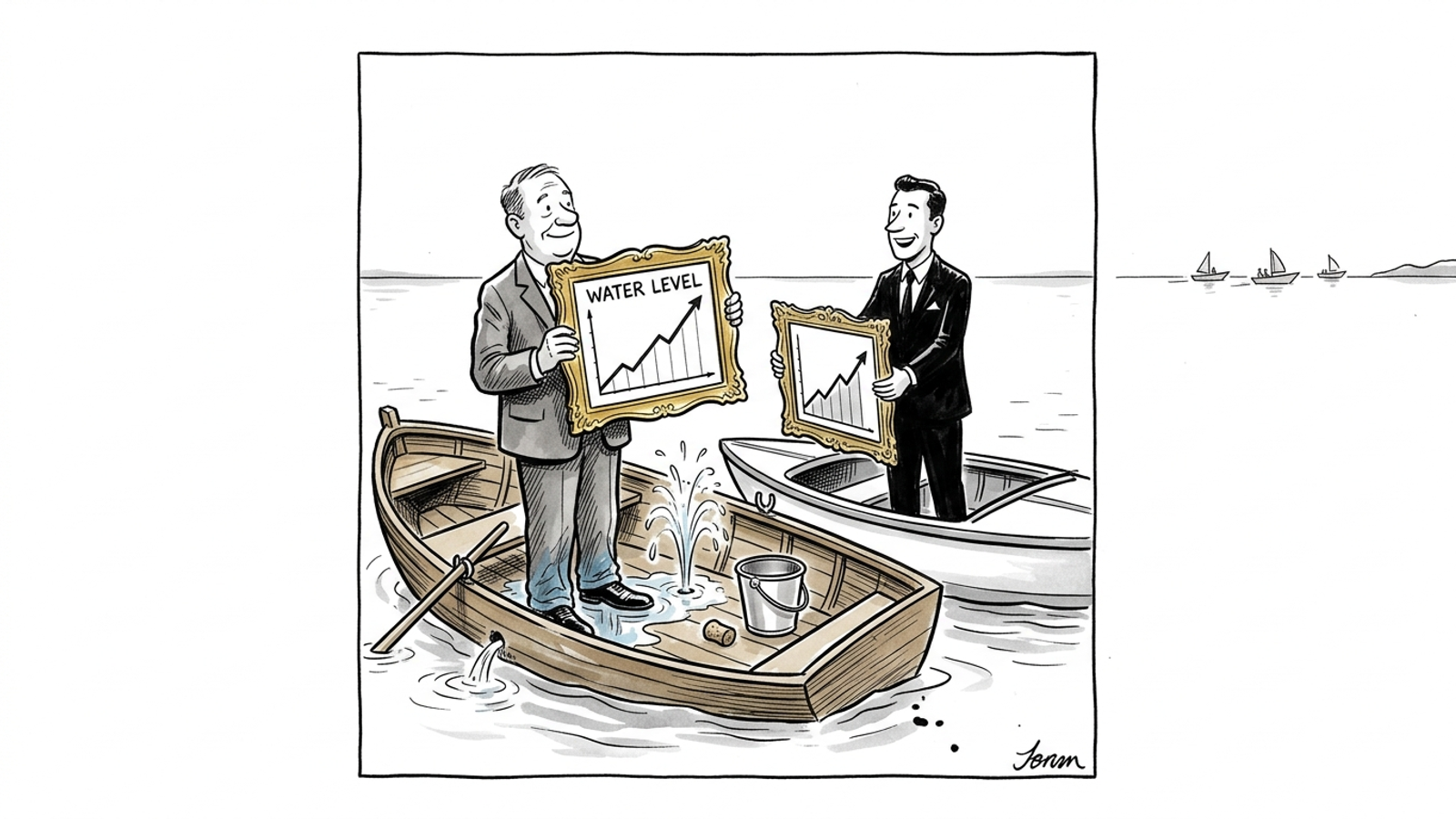

Scaling a Google Ads agency without burning out your team is a structural problem, not a hustle problem. A Google Ads agency client retention rate above 80% over twelve months is rare when account managers are manually optimizing fifteen or more accounts each, and most agencies hit a ceiling where adding clients means degrading service for existing ones. This article follows the arc of a performance agency that was running client accounts at scale, hemorrhaging margin, and losing clients to churn before making a structural shift to an execution engine. The result: higher retention, better margins, and new business capacity that had been locked behind a human bottleneck. The agency in this story is a composite drawn from patterns common across mid-size PPC shops, not a single named customer.
Background: The Agency, The Client Book, And The Ceiling
What The Agency Looked Like Before The Shift
Picture a performance agency with around twenty active Google Ads client accounts, monthly managed spend in the range of $300K to $500K total, and a team of three account managers plus a founder who still touched accounts. The business model was straightforward: charge a management fee as a percentage of spend, deliver optimization and reporting, retain clients month to month. Revenue was healthy on paper. The problem was underneath.
Each account manager was carrying between twelve and eighteen accounts. The work was almost entirely manual: bid adjustments, search term reviews, ad copy rotations, campaign restructuring, landing page recommendations that went into a shared doc and rarely got implemented. Reporting alone consumed a full day per AM per week.
The Specific Delivery Problem: Quality At Volume
The real issue was not that the team lacked skill. It was that quality execution requires hours, and hours do not scale linearly. When a single AM manages six accounts, each one gets deep attention. At fifteen accounts, the AM is triaging. They are optimizing whichever account screamed loudest that week, while the other fourteen drift. This is the core dynamic that kills google ads agency margins at scale: the denominator (accounts) grows, the numerator (available execution hours) stays fixed.
The Decision Point: Build Internal Systems Or Use An Engine
The agency considered three paths. First, hire more account managers. The math did not work: fully loaded cost of a competent AM runs $70K to $90K per year, and onboarding takes months before they are independently productive. Second, build internal automation using Google Ads scripts and internal tooling. This is the path many agencies attempt, and it works for narrow tasks like pausing overspending keywords or flagging anomalies. But scripts have hard limits on what they can actually execute, and maintaining custom code becomes its own operational burden. Third, run client accounts on an external execution engine that handles the heavy optimization work while AMs shift to strategy and client relationships. The agency chose the third option.
The Problem In Detail
How Margins Erode As Client Count Grows Without Infrastructure
Running google ads client accounts at scale without infrastructure means margin compression is baked in. Here is why. A new client in month one is exciting. The AM audits the account, restructures campaigns, sets up conversion tracking, writes new ad copy. That first month might take twenty to thirty hours of real work. By month three, the account is optimized. Ongoing work drops to maybe five to eight hours per month for a well-run account. The fee stays the same, so margins look good on that single account. But the agency fills that freed capacity with another new client, and now the AM is back at full load. Except some of those “stable” accounts need intervention. A competitor enters the auction. Google changes a bidding algorithm. A client launches a new product line. Suddenly the AM has sixteen accounts that each need eight hours, and there are only about 160 productive hours in a month.
The margin erosion is invisible until it shows up as churn.
The Account Manager Bottleneck: What 15 Clients Per AM Actually Costs
Fifteen accounts per AM is a common benchmark in mid-size agencies. What it actually means in practice: each account gets roughly two hours of proactive optimization per week. That covers search term mining, bid adjustments, and maybe one creative test per month. It does not cover competitor analysis, landing page iteration, audience strategy, or the kind of structural campaign redesign that drives step-change performance improvements. The AM is doing maintenance, not growth work.
The cost is not just in hours. It is in the decisions that do not get made. An account that should be restructured from single keyword ad groups to a broader theme-based structure sits untouched because the rebuild would take fifteen hours the AM does not have. A client who should be testing Performance Max alongside their search campaigns never gets the recommendation. The ceiling is invisible to the client, but they feel it when results plateau.
Client Churn Pattern: Where It Was Coming From And Why
The agency’s churn was not coming from accounts that performed poorly from day one. It was coming from accounts that performed well in months one through three, then flatlined. The client’s internal narrative was predictable: “They did great work at first, but now it feels like they are on autopilot.” They were not wrong. The AM was on autopilot, not by choice but by constraint.
This is the pattern that destroys google ads agency client retention: strong onboarding, diminishing execution depth, performance plateau, client frustration, churn. The agency was losing roughly two to three clients per quarter to this pattern, which meant they were constantly backfilling rather than growing.
The Structural Change: Running Client Accounts On An Execution Engine
The agency connected its client accounts to the groas engine through the DIY product, which is built specifically for agencies that want to run their own clients on a proprietary engine trained on over $500 billion in profitable ad spend. The agency kept its brand, its client relationships, and its margin. groas powered the execution underneath, operating as a white-label layer the clients never saw.
What Changed In The Day-To-Day Workflow
Before the shift, an AM’s week looked like this: Monday reporting, Tuesday through Thursday manual optimization across accounts, Friday client calls and admin. After the shift, the engine handled bid management, search term analysis, ad copy performance evaluation, budget pacing, and campaign-level structural recommendations continuously. The AM’s week shifted to: reviewing the engine’s output, making strategic decisions about account direction, preparing client-facing insights, and spending real time on growth strategy rather than maintenance.
This is the critical distinction. The engine did not replace the account manager. It replaced the repetitive execution work that consumed 70% of their week. The AM became more valuable, not less, because they could now focus on the work that actually retains clients: strategic thinking, proactive recommendations, and growth planning.
How Onboarding Time Changed
Previously, onboarding a new client account took the AM roughly twenty to thirty hours in the first month: audit, restructure, build new campaigns, set up tracking, write ad copy. With the engine running underneath, onboarding dropped to roughly five to eight hours of AM time. The engine handled the heavy structural work. The AM focused on understanding the client’s business, setting strategic direction, and configuring the engine’s priorities. This freed massive capacity.
What The Account Managers Actually Did Instead Of Manual Optimization
The AMs shifted to three activities that directly drive retention and growth. First, strategic account planning: identifying new campaign types, markets, or audiences for each client on a quarterly basis. Second, client communication: moving from defensive “here is what we did” reporting to proactive “here is what we should do next” conversations. Third, creative and landing page strategy: recommending tests and positioning changes that the engine’s data surfaced but that required human judgment to prioritize.
This shift mirrors what happens when agencies build execution infrastructure properly. The human layer becomes strategic, and the execution layer becomes continuous.
The Results Across The Client Book
Performance Benchmarks Before Vs After
Across the client book, the pattern was consistent rather than dramatic in any single account. Accounts that had been plateauing for months started showing incremental improvement again, because the engine was making optimization moves around the clock that AMs simply did not have time to make. Wasted spend dropped as search term management became continuous rather than weekly. Bid adjustments happened in response to real-time auction dynamics rather than on a Tuesday-morning schedule.
The aggregate effect was meaningful: the portfolio’s overall efficiency improved noticeably within the first few weeks, consistent with what happens when execution frequency increases from a few hours per week to 24/7.
Retention Rate Change Over 6 Months
The agency’s quarterly churn rate dropped significantly. Before the shift, they were losing two to three clients per quarter. In the six months after the shift, they lost one client total, and that loss was due to the client’s business shutting down, not performance dissatisfaction. The reason was straightforward: accounts were no longer plateauing. Clients could feel the difference in the depth of optimization and the quality of strategic recommendations their AMs were now delivering.
New Business Capacity: How Many Clients Could Now Be Taken On
With onboarding time cut by roughly 70% and ongoing maintenance absorbed by the engine, each AM could now comfortably manage twenty-five to thirty accounts without quality degradation. For a three-AM team, that meant the agency could scale from twenty to seventy-five or more active accounts without hiring. The constraint shifted from “how many accounts can a human physically manage” to “how fast can we close new business.” This is exactly the dynamic described in detail in this breakdown of how a PPC agency doubled capacity without hiring.
The Margin Analysis
What The Engine Costs Vs What It Generates In Deliverable Capacity
The math is simple. The alternative to groas is hiring another AM at $70K to $90K per year, plus months of ramp time, plus the risk of them leaving. groas charges $0 for onboarding, operates month to month with no long-term contract, and connects unlimited client accounts under one agency subscription. The capacity unlocked per dollar is not comparable. A single AM hire gives you maybe ten additional accounts. The engine gives you scale limited only by your sales pipeline.
The agency’s effective margin per client improved because delivery cost per account dropped while the management fee stayed the same. They were not charging clients less. They were delivering more efficiently.
How White-Label Delivery Changed The Agency’s Positioning
Running on the groas engine also changed how the agency sold. They could now credibly promise 24/7 optimization, something no agency staffed with humans working business hours can deliver. They could promise faster onboarding. They could promise continuity: no staff rotation, no AM turnover disrupting client accounts. These are real differentiators in a market where most agencies compete on the same generic pitch. The agency started winning RFPs against larger shops because they could articulate a delivery model that was structurally superior, not just “we try harder.”
Lessons For Other Agencies Considering This Shift
What Works Immediately And What Takes Time
The execution improvement is immediate. The engine starts optimizing the moment accounts are connected, and efficiency gains show up within weeks. What takes time is the cultural shift for your AMs. Moving from “I manually control every bid” to “I review the engine’s work and focus on strategy” requires trust, and that trust builds over the first month as AMs see the engine making moves they would have made, plus hundreds of moves they never had time to make.
The One Thing Most Agencies Get Wrong When They Onboard An Engine
The most common mistake is treating the engine as a replacement for thinking. It is not. Rule-based tools fail at scale precisely because they execute without judgment. The groas engine is trained on over $500 billion in profitable ad spend, which gives it pattern recognition far beyond any individual AM. But the AM still needs to set the strategic direction, understand the client’s business, and make judgment calls the engine surfaces but cannot resolve alone. Agencies that get this right, using the engine for execution and their humans for strategy, see the best results.
How To Position This To Clients Without Confusing Them
Do not lead with the engine. Clients do not care about your internal delivery infrastructure. They care about results, responsiveness, and strategic insight. Position the shift as: “We have invested in proprietary technology that lets us optimize your account continuously, which frees our team to focus entirely on growth strategy for your business.” That is true, it is compelling, and it does not require explaining what an execution engine is.
What This Means For Your Agency
The ceiling most Google Ads agencies hit is not a talent problem or a pricing problem. It is a structural problem. Manual execution does not scale. Every account you add dilutes the attention every other account receives, and the result is plateau, churn, and a treadmill of client replacement that eats your margin and your energy.
The agency in this story broke the pattern by putting a proprietary engine underneath their delivery while keeping their team, their brand, and their client relationships intact. The groas DIY product is built for exactly this use case: agencies connect unlimited client accounts, the engine runs execution 24/7, and the agency’s humans do what humans do best.
No onboarding fees. No long-term contracts. Cancel anytime. groas earns the next month by performing, the same way your agency does with its clients.
Start your 7-day free trial and see what changes when your execution never sleeps.