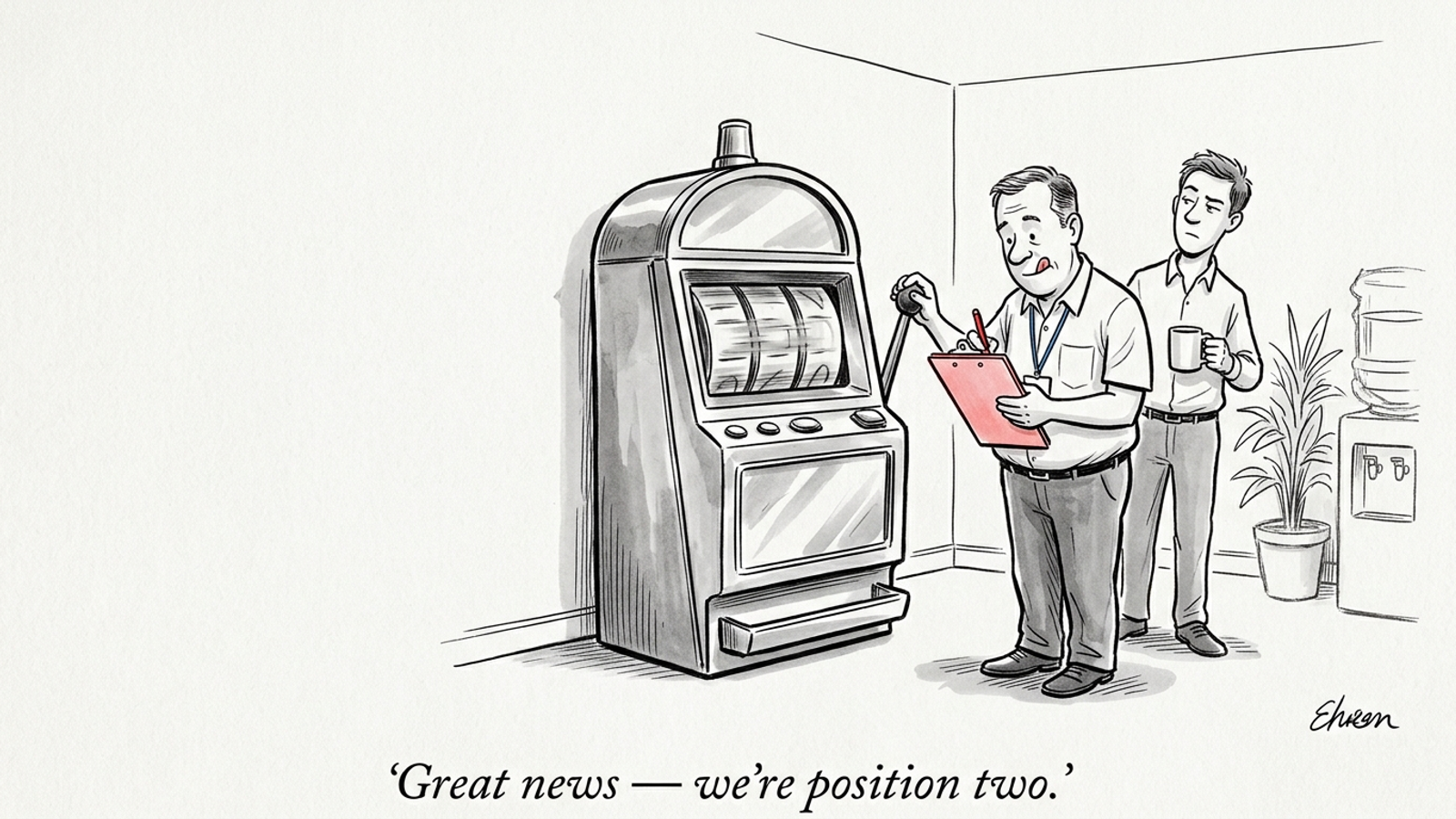
The traditional Google Ads agency is no longer the right infrastructure for serious advertisers in 2026. That is not a prediction. It is an observation about what has already happened. The agency model was built for an era when managing Google Ads required constant manual intervention, and the value an agency delivered was directly tied to the hours a human spent inside the account. That era is over. Smart Bidding, Performance Max, and AI-native execution layers have absorbed the bulk of what junior and mid-level account managers used to do. The question is no longer whether Google Ads agencies are worth it in 2026. It is why you are still paying for a model designed for 2015 when the infrastructure underneath it has fundamentally changed.
This does not mean expertise is irrelevant. It means the delivery mechanism for that expertise, the traditional agency retainer staffed by account managers billing hours, has become overhead rather than advantage.
The Conventional Wisdom: Hire A Google Ads Agency To Scale
The standard advice for any business spending more than a few thousand dollars a month on Google Ads has been the same for a decade: hire an agency. The reasoning is straightforward. Google Ads is complex. The platform changes constantly. A good agency has specialists who manage dozens of accounts, which means they see patterns you cannot see from inside a single account. They handle campaign builds, bid adjustments, ad copy, keyword research, audience segmentation, negative keyword management, and reporting. You get access to experienced media buyers without the overhead of a full-time hire.
This advice made sense for a long time, and it was genuinely good advice. Before Smart Bidding matured, managing bids was a manual, time-intensive process where experience directly correlated with performance. Before Performance Max consolidated campaign types, building and maintaining granular campaign architectures required real craft. Before AI-native execution layers existed, the only way to get sophisticated Google Ads management was to pay for human hours.
The problem is not that agencies were never valuable. The problem is that the ground shifted under the model, and the pricing and structure did not shift with it. Most agencies in 2026 are still selling a labor-based service in a market where execution has been substantially automated.
Why The Traditional Agency Model Breaks At Scale
Percentage-Of-Spend Pricing Misaligns Incentives As You Grow
Most agencies charge a percentage of ad spend, typically between 10% and 20%. At $20,000 per month in spend, that is $2,000 to $4,000 in management fees. Reasonable. At $200,000 per month, you are paying $20,000 to $40,000. The question is whether the work the agency does at $200,000 is ten times the work it does at $20,000. It is not. The account might be more complex, but the marginal effort does not scale linearly with spend. You are paying a premium for a pricing model, not for proportional value. If you are wondering whether your agency model is already showing cracks, you are not alone.
Human Account Managers Cannot Process Account Data At Machine Speed
A skilled account manager might review an account for an hour a day, maybe two. They check performance trends, adjust bids, pause underperformers, test new ad copy, and review search term reports. That is valuable work, but it is constrained by human processing speed. A Google Ads account generating thousands of clicks per day produces a volume of signal data that no individual can fully process. Conversion rate shifts by device, by hour, by geography, by audience segment, by landing page variant, all happening simultaneously. The account manager catches the biggest patterns. The smaller ones, which compound into meaningful performance differences, are invisible at human speed.
The Talent Ceiling: Why Adding Headcount Does Not Add Proportional Performance
Agencies scale by hiring. More clients means more account managers. But every hire introduces coordination costs, training time, and variance in quality. The best agency account managers are genuinely excellent, but they leave, burn out, or get promoted into management. The next hire might be a junior buyer learning on your account. The talent problem is structural, not fixable by better recruiting. Adding headcount does not add proportional performance because the bottleneck is not labor supply. It is the fundamental mismatch between human throughput and the volume of optimization decisions a modern Google Ads account demands.
What An Agency Retainer Actually Pays For Versus What Moves Performance
Break down what a typical agency retainer covers: project management, client communication, reporting, internal meetings, billing administration, and the actual in-platform work. The portion of the retainer that goes toward decisions that directly move performance is often smaller than advertisers assume. This is not because agencies are lazy. It is because running a service business has real overhead, and that overhead is baked into every retainer.
What Has Actually Changed In Google Ads Since 2020
Smart Bidding Absorbed Most Of What Junior Account Managers Used To Do
Smart Bidding strategies like Target ROAS, Target CPA, and Maximize Conversion Value now handle real-time bid adjustments across millions of auction signals. This is not speculative. Google’s bidding algorithms process device, location, time of day, audience, query context, and dozens of other signals at a speed and granularity no human can match. The limitations of Smart Bidding are real, but they exist at the strategic layer, not the execution layer. The junior account manager who used to spend hours adjusting bids manually is now redundant for that specific task. The senior strategist who understands when to override Smart Bidding, how to set the right targets, and how to structure the data inputs is not redundant. But that is one person’s judgment, not an entire team’s labor.
Performance Max Reduced The Need For Manual Campaign Architecture
Performance Max campaigns consolidate what used to require separate Search, Display, Shopping, YouTube, and Discovery campaigns. The strategic complexity of PMax is real, but the manual architecture work is dramatically reduced. An agency that built its value on complex campaign structures now has less structural work to sell.
AI-Native Execution Layers Now Exist That Agencies Cannot Replicate With Staff
This is the shift that matters most. In 2020, the only way to get sophisticated Google Ads management was to pay for human hours. In 2026, autonomous execution engines exist that process account data continuously, execute optimizations around the clock, and operate at a speed and consistency that a team of humans cannot replicate regardless of size. These are not simple rule-based automation tools. They are engines trained on massive volumes of ad spend data, capable of identifying patterns and executing changes that would take a human team days to process.
The New Mental Model: Agency As Overhead, Engine As Infrastructure
What Agencies Are Still Good For
Agencies are not worthless. They are good at things that are genuinely human: building client relationships, developing creative strategy, understanding brand nuance, synthesizing business context into advertising direction, and presenting reporting in a way that stakeholders can act on. If you need a team to sit in a room with your CMO and explain what is happening in your Google Ads account, an agency does that well.
What Engines And Autonomous Management Are Better At
Bid management, signal processing, speed of execution, coverage across time zones, consistency of optimization, processing search term reports at scale, identifying cross-campaign cannibalization, testing at volume, and adjusting to real-time performance shifts. These are infrastructure problems, not creativity problems. They are solved better by engines than by adding another account manager.
The mental model shift is simple: stop thinking of Google Ads management as a service you outsource to people, and start thinking of execution as infrastructure you plug into. The human layer still matters, but it belongs at the strategic level, not the execution level.
Who Should Still Hire A Traditional Agency (And Who Should Not)
You should still hire a traditional agency if you need a full marketing department and Google Ads is one piece of a broader engagement that includes brand strategy, creative production, and multi-channel planning. In that case, the agency relationship is about more than Google Ads management.
You should not hire a traditional agency if your primary need is Google Ads performance. If you are paying $10,000 or more per month in management fees and your agency’s core deliverable is campaign management, bid optimization, and reporting, you are paying for a labor model that has been outpaced by infrastructure. The cost comparison between in-house, agency, and managed service models makes this clear.
The Agency-As-Client Model: Why Forward-Looking Agencies Are Switching To Engine-Powered Execution
Here is the part most “agencies are dead” takes miss: the best agencies are not dying. They are evolving. Forward-looking agencies recognize that their competitive advantage is not in-platform execution. It is client relationships, strategic thinking, and the ability to translate business goals into advertising strategy. The execution layer is where they were losing margin and quality.
How DIY Agencies Use groas To Deliver Better Results Without Growing Headcount
This is exactly why groas built its DIY product for agencies. Agencies connect unlimited client accounts under one subscription and get direct access to the groas engine, a proprietary engine trained on over $500 billion in profitable ad spend. The agency keeps its brand, its clients, and its margin. groas powers the execution underneath. No more hiring junior media buyers who need six months of training. No more losing clients because your best account manager left. No more capping performance at whatever one person can physically get through in a week.
The agencies using this model are scaling their client books without adding headcount, delivering better results, and keeping more margin. They are not becoming unnecessary. They are becoming more valuable by shedding the part of the work that machines do better and focusing on what humans actually do well.
If you run an agency and this resonates, start your 7-day free trial and see what the engine does with your client accounts in the first week.
What This Means For You If You Are Not An Agency
If you are an in-house team running Google Ads and you want to keep your hands on the steering wheel, groas offers a DWY (Done With You) model: the proprietary engine runs underneath doing the heavy lifting while a senior strategist works alongside your team. You stay in control. You get a weekly report on exactly what was done plus a strategy call every other week. You keep the institutional knowledge inside your organization while dramatically upgrading execution speed and depth. Get started through self-serve checkout for smaller accounts, or apply if you are managing larger spend.
If you are a founder, CEO, or business leader who would rather not be involved in Google Ads execution at all, groas offers a DFY (Done For You) model where a dedicated strategist owns your entire account end-to-end. Nothing to log into or manage. groas works on everything from the first click to the final conversion, including landing pages and offers. This is not a vendor relationship. It is a partnership. Apply for DFY and the team figures out the right plan on the call.
Both options share the same core advantage: $0 onboarding, month-to-month commitment with no long-term contracts, and a proprietary engine that does not stop working when a human runs out of hours. Compare that to the $5,000 or more onboarding fee and 6- to 12-month lock-in from a traditional agency.
The Honest Answer: What The Future Of Google Ads Management Looks Like
The future of Google Ads management is not “no humans.” It is fewer humans doing higher-value work, powered by engines that handle execution at a speed and scale that labor-based models cannot match.
The traditional agency model, where you pay a percentage of spend for a team of account managers doing manual work inside your account, is becoming unnecessary for the majority of serious advertisers. That is not controversial anymore. It is already happening.
The advertisers who are winning in 2026 are the ones who stopped paying for a labor model and started plugging into infrastructure. Whether that means running groas’s engine yourself as an agency, collaborating with a groas strategist while your team stays in control, or handing the entire function to groas end-to-end, the pattern is the same: engine-powered execution with senior human strategy on top.
The gap shows up in the numbers inside the first few weeks. That is not a promise. It is what happens when you replace a model capped by human throughput with one that is not.