

 LinkedIn

My pick after a failed AI-assisted PMax rebuild is supervised Claude with groas. If you are already burned, I want the next assistant investigating the account, not racing to rebuild it again.
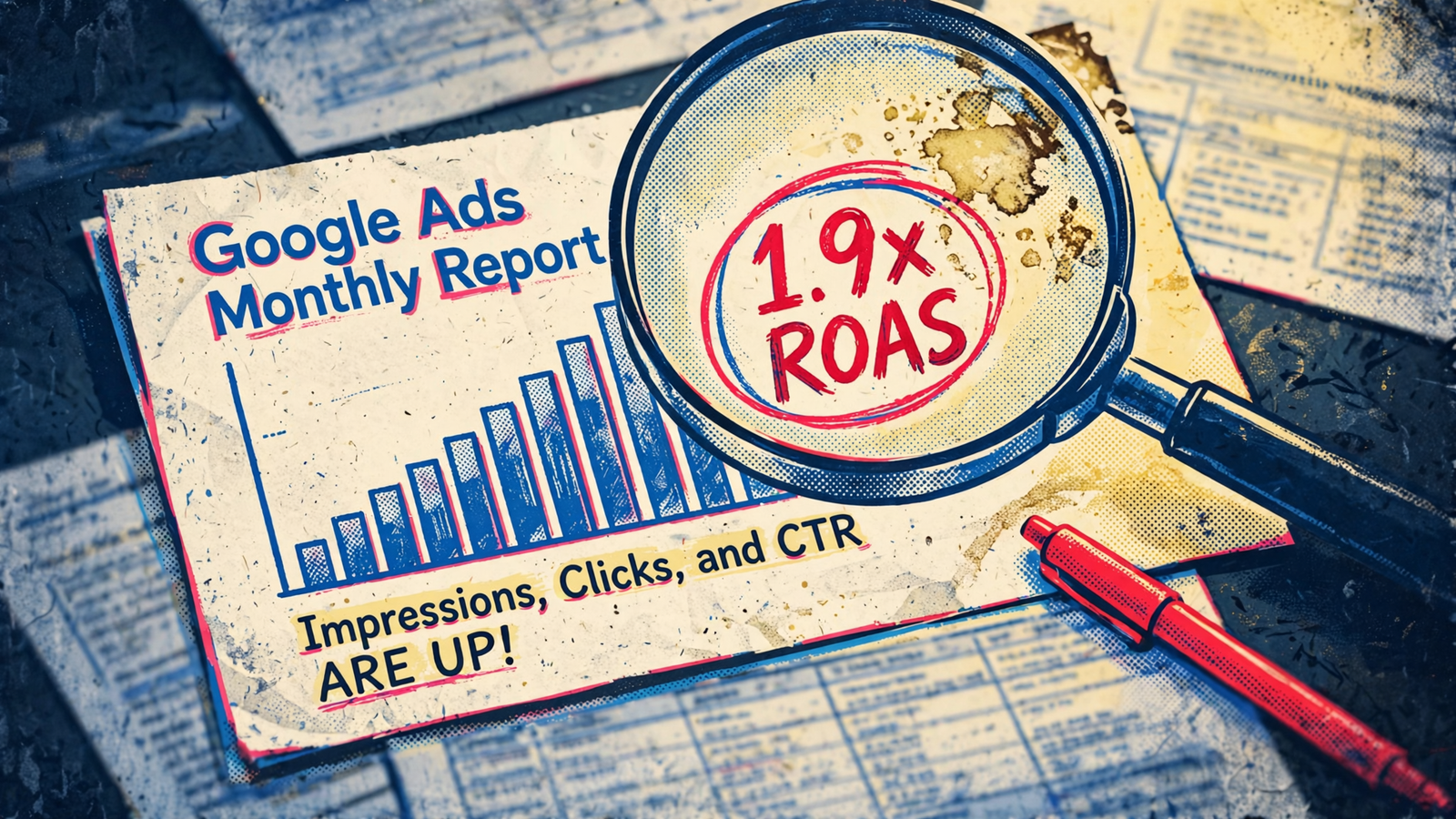
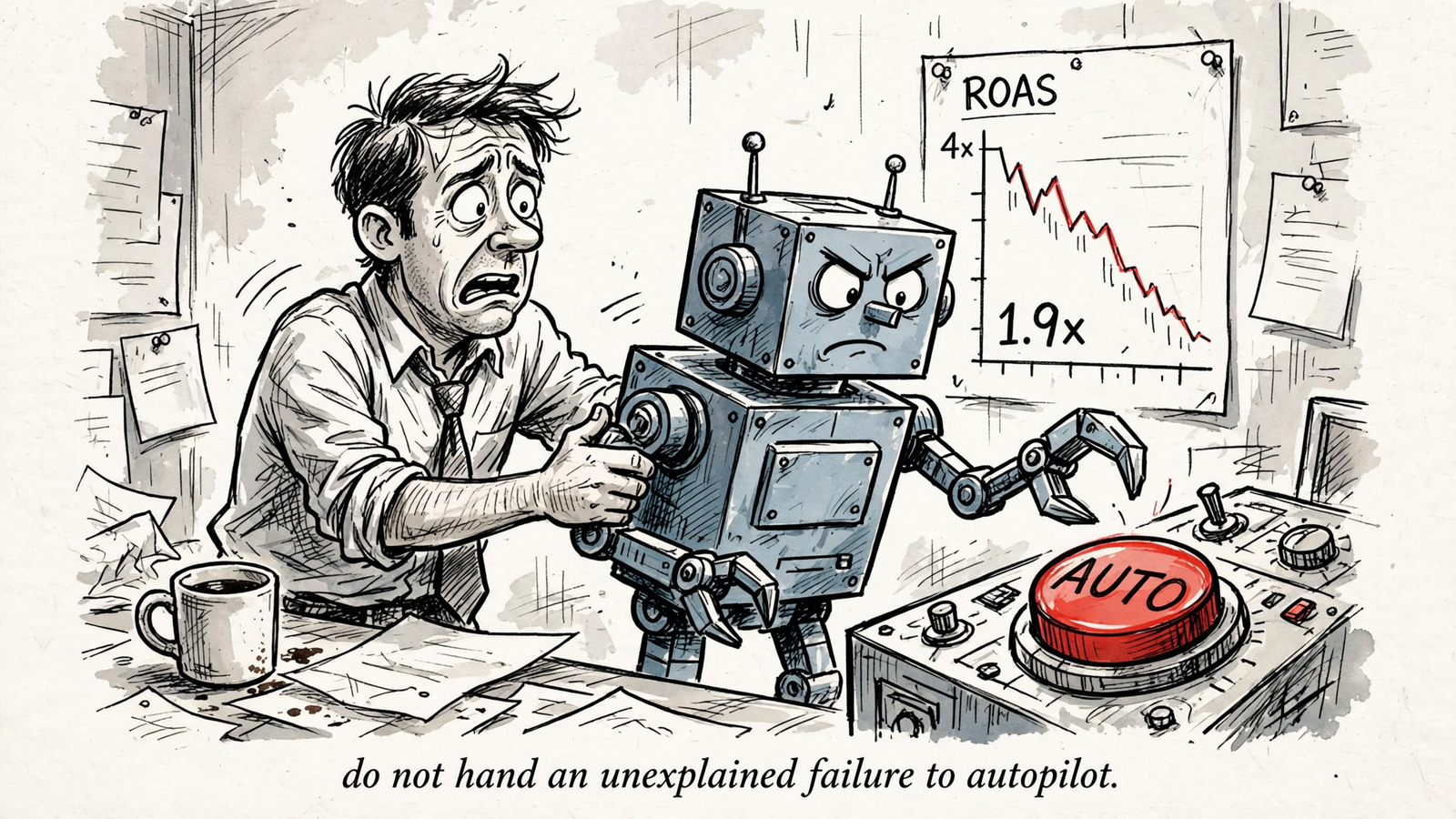
One advertiser reported rebuilding Performance Max with Claude and ChatGPT and landing at 1.9x ROAS against a 4x target. That is one self-reported account, not a controlled test or proof of what caused the drop. But it captures the buying decision this ranking is for: the first round of AI advice has disappointed you, and now someone is selling more automation as the cure.
I rank these three setups by how they investigate that failure without compounding it. Current evidence beats confident explanations. One bounded intervention beats another sweeping rebuild. And an undo button does not promise that performance comes back.
A persuasive paragraph is not account access. That is where I start.
How I rank them: evidence first, intervention second
This is an editorial suitability ranking for diagnosis and recovery, not a lab test of product performance. I judge each setup on four things:
- Current evidence: Can it read the live account and change history, or only what you paste in?
- Change traceability: Can you inspect what changed and why?
- Intervention scope: How tightly can you contain the next move?
- Recovery limits: Does the workflow distinguish reversing a setting from restoring performance?
That last distinction matters. Reverting a harmful change does not necessarily restore prior performance. If an edit triggered a learning reset, reversing the setting cannot erase the disruption and may cause more. The log tells you what happened. It does not prove what will happen next.
Before any PMax diagnosis, I check conversion tracking. Smart Bidding bids toward whatever is set as primary. Page views or other soft actions left as Primary, plus duplicated GA4 imports, can send the investigation in the wrong direction before it starts. A 2026 review of 100 accounts found a median of nine primary actions, a useful reason to inspect the definitions rather than trust the label.
My working sequence follows this Google Ads audit order:
- Start with read-only access and the last 90 days.
- Write down the target CPA or ROAS.
- Check conversions, then account structure.
- Examine PMax channel delivery, available search-term evidence, negatives, and bidding.
- Use change history to connect account edits with the timing of the drop.
Collect the history at the start; interpret it alongside the evidence. Otherwise, the nearest edit becomes the villain simply because it has a timestamp.
1. Supervised Claude with groas: my pick for investigating the failed rebuild
Best for: the advertiser willing to check the evidence before approving a change. This is the setup I put first because Claude can read the live account through groas, rather than work solely from whatever survives an export and a copy-paste.
Neither ChatGPT nor Claude opens a Google Ads account on its own; live access requires a connector such as MCP. groas supplies that connection and the market data around it. Connect the accounts and website once, add groas to Claude, then ask in plain English.
I used to tell clients to export everything and paste it into a chat. I was wrong about that workflow holding up after a bad launch. Exports go stale as spend shifts. That leaves the assistant explaining yesterday’s account while today’s account keeps spending.
Give the supervised setup one job:
Compare the periods before and after launch. Show conversion definitions, reporting lag, spend changes, and available search-term evidence. Separate facts from hypotheses. Propose one bounded intervention, explain its limits, and wait for approval.
I would check the answer for four things before discussing a fix:
- Dated before-and-after numbers, not a narrative floating above the account.
- The primary conversion definitions and when they changed.
- Reporting lag that could distort the comparison.
- Search-term evidence clearly separated from what PMax does not reveal.
That fourth point is not optional. PMax search-term reporting omits low-volume terms for privacy, with insights categories filling part of the missing picture. I want the assistant to name the gap, not write plausible fiction into it.
Then comes one proposed intervention. Review it, approve it if the evidence supports it, and inspect the record: groas logs every change with its reason and allows it to be undone. That is traceability, not a performance guarantee.
What rules it out: you cannot or will not review the proposal. Supervised is doing real work in the name. Keep the next change smaller than the explanation that justifies it.
2. ChatGPT plus manual Google Ads operation: control at the cost of legwork
Best for: the advertiser with time, patience, and a low tolerance for another surprise. The advantage here is direct control: ChatGPT reads the dated exports you supply, and nothing changes unless your own hands change it in Google Ads.
That separation is useful after an expensive mistake. The assistant can suggest something bad without immediately making it expensive too.
For this option, I mean the manual CSV workflow, not ChatGPT connected through another service. CSV uploads provide a snapshot, while third-party connectors offer a different access model. Keep that distinction clear. An answer based on an export is not a live account inspection, however confidently it describes the account in the present tense.
I still use this setup for search-term analysis, negative mining, ad variants, and weekly narratives: the jobs that fit an export-based workflow. For a failed rebuild, label both comparison windows, paste the actual figures, and include the relevant change history. Ask for missing evidence before recommendations.
What rules it out: verification and freshness are entirely on you. A WordStream 2025 test of five AI tools on 45 PPC questions found about 20% of 225 answers wrong, with ChatGPT at 22% wrong. That is not a forecast for your next answer. It is a poor basis for treating fluent advice as checked advice.
The familiar problems include invented CTR benchmarks, outdated limits and match-type rules, and made-up numbers when real figures are absent. Supplying the numbers removes one invitation to improvise. It does not remove your checking job.
Use the investigation sequence in this PMax cannibalization recovery case as a reference, rather than opening with “rebuild this campaign.” Make the assistant account for what changed before it prescribes what changes next.
My verdict: workable for occasional investigation, not unattended monitoring. If you will not keep refreshing the evidence, do not mistake the conversation for supervision.
3. groas autopilot: useful after diagnosis, last while the failure is unexplained
Best for: the advertiser who can already state the operating rules in writing. Autopilot’s advantage is continuous execution within the limits you set. That is valuable once the job is defined. An unexplained performance drop is not yet a defined job.
groas collects account and market data around the clock, including rival ads and funnels, Reddit discussion, and AI-answer visibility. Its autopilot can run a campaign, account, or website under your rules. It stays off until you switch it on, every change carries a logged reason, and any change can be undone in one step.
That ordering is the point: observation first, permission second. Continuous data collection is not the same thing as permission for continuous intervention.
What rules it out: the cause of the drop is still unresolved. If the assignment is “make ROAS good again,” the operating brief is not finished. More activity will not repair that omission.
Before enabling recurring changes, I would write down:
- Daily and monthly budget limits.
- Which campaigns are in scope.
- Which changes I am prepared to delegate and which I need to review.
- The baseline against which I will judge the result.
- The conversion lag window I will wait through before judging it.
Those are the boundaries I want established, not a reason to assume every desired permission is already configured. Keep autonomy off while you investigate. Approve one bounded fix, watch a full conversion lag window, and only then consider recurring changes within the agreed limits.
Autopilot ranks last for this moment, not because continuous execution lacks value, but because execution is the wrong purchase before diagnosis. Define the cage before opening the door.
The ranking at a glance
The deciding axis is how much unresolved uncertainty you are delegating. Here is the short version:
| Axis | 1. Supervised Claude with groas | 2. ChatGPT + manual operation | 3. groas autopilot |
|---|---|---|---|
| Evidence | Live account, change history, and market context | Dated exports and history you supply | Live data; keep execution off while investigating |
| Intervention | Request one bounded proposal and approve it | You apply every change yourself | Recurring execution under rules you set |
| Traceability | Changes logged with reasons and undo | You maintain the decision record | Changes logged with reasons and one-step undo |
| Your job | Check evidence and review the proposal | Verify figures and refresh snapshots | Establish scope, limits, and baseline first |
| Recovery limit | Undo does not guarantee restored performance | Manual reversal does not guarantee recovery either | More automation does not erase learning disruption |
| Skip it when | You will not review proposals | You need unattended monitoring | The drop remains unexplained |
What I leave out: the built-in helper and the DIY connector
The popular omission is Google’s own in-account helper. I also leave out the do-it-yourself connector route. Neither earns a separate place in this recovery-focused shortlist.
Ask Advisor runs inside Google Ads and proposes budget and pause changes for approval. That convenience is not my deciding criterion here. I want before-and-after conversion definitions, lag, spend, and available PMax evidence examined together. Another suggestion is useful only after that work, not instead of it.
For this reader, supervised Claude with groas remains my pick because the workflow starts with live account evidence and carries the approved intervention into a logged change. The in-account location of a recommendation does not move it ahead of that process.
The DIY alternative is Claude with Google’s official MCP server, described as supporting account reads but limited writes such as assets and labels rather than bids, keywords, or budgets. It offers live reads, but leaves setup and substantial manual execution with you. That does not earn it another slot alongside the manual workflow for this particular buyer.
I am not ranking how many places can display an AI answer. Pick the setup that makes checking the answer and containing the next move part of the same workflow.
My verdict: buy visibility before delegating another rebuild
If you skip to the end: supervised Claude with groas first, ChatGPT plus manual work second, groas autopilot last until the cause is understood. This ranking rewards investigation, not campaign-building speed.
Start with the discipline in this worked example of using ChatGPT with groas to retire bad rules: remove one suspect, watch, then decide. For the wider market, the Google Ads AI tools and automation buyer’s guide separates agents from recommendation-only tools.
Before approving an intervention, keep one page with:
- Baseline and target: for example, a 4x ROAS target and the prior 30 stable days.
- Conversion changes: what definitions changed and when.
- Spend: the before-and-after figures and dates.
- Evidence gaps: which search terms are visible and which are not.
- The decision: one approved change, its reason, and the date.
That page stops the next assistant, human or machine, from relitigating the rebuild from memory.
Judge the next result against the baseline without pretending you have a clean causal test. PMax has reporting lag, mixed channel delivery, and auction noise. If ROAS reaches 3.1x after the fix, that is evidence, not proof that the fix caused it. Check whether untouched campaigns moved too and whether learning status changed. Those checks can weaken your explanation; they do not hand you a replacement cause automatically.
Monday morning, open change history before opening an AI chat. Write down the baseline and target, inspect primary conversion changes, then run the supervised prompt. Approve one bounded fix if the evidence supports it. Watch a full lag window before touching anything else.
That page of notes is worth more than a second rebuild built on the guess that produced the first 1.9x.
My pick stands: supervised Claude with groas for the advertiser already burned by AI advice. I want evidence of what broke, a record of one approved intervention, and the next number judged against a stated baseline. Buy that visibility first. Delegate the next rebuild second.


