


An agency offers to get your brand cited in ChatGPT, Perplexity, and Google AI Overviews for another $3,000 a month. Is that new work, or the SEO work you already pay for with a new label? Smart people disagree because answer engines need readable, authoritative information, just as search engines do, but they do not always fetch, cite, or expose that information in the same way. My view: the skeptic is mostly right. Pay for the three differences that can change your visibility: AI fetchers reading your pages, off-site citation sources, and measurement across engines that do not publish conventional rankings. Do not pay twice for direct answers and clean site architecture.
The price of getting that distinction wrong is substantial. A First Page Sage study of 1,146 quotes across 214 agencies found a median AEO retainer of $6,850 per month, 45% above the $4,740 median for traditional SEO. Roughly 68% of those agencies pitched AEO as a separate recurring retainer. An agency can be right that a number-one Google ranking does not guarantee an AI Overview citation and still be wrong that you need a second contract to write conversational summaries.
I want to give each argument its strongest version before ruling on the invoice. First, the case that Answer Engine Optimization (AEO) is SEO in a more expensive jacket. Then, the case that answer engines create work a conventional SEO retainer can miss.
Position A: AEO is ordinary SEO with a new invoice
Google AI Overviews still depend on the search foundation
The skeptic starts with a plain mechanical point: Google AI Overviews do not crawl a secret, parallel internet. They draw on Google’s search infrastructure. If your page cannot be indexed or shown as a standard search snippet, a special AEO package will not rescue it. Google’s Search Central documentation says AI Overviews and AI Mode require no separate markup, feed, or technical optimization beyond the ordinary eligibility requirements. Google Search Liaison Danny Sullivan has also said that good SEO is good GEO or AEO.
That does not mean every AI Overview cites the first organic result. It means the work an agency calls AI readiness may begin with the same indexability and content problems it should already be fixing. If the proposal starts with basics you already bought, ask why they appear on a second invoice.
Answer-first content was good copywriting before it was AEO
Listen to the editorial tactics in a proprietary AEO framework. Put a short answer beneath a descriptive H2. Use a clear HTML table for a product comparison. Write in active voice. Answer the question instead of spending six paragraphs warming up. In performance marketing, we called some of this featured snippet optimization in 2016. Before that, we called it inverted-pyramid copywriting.
I am not arguing against direct answers. I am arguing against charging twice to write them. If an agency spent five years producing 2,500-word articles padded with introductions and now says those pages need an AI-specific refresh, the new label does not excuse the old writing. A concise, useful answer should have been in the original scope.
The AI Readiness Score often covers an old checklist
The technical proposal can look familiar too: missing schema markup, broken internal links, slow server responses, uncompressed images, pages bots struggle to discover. An agency puts an AI Readiness Score on the cover and presents ordinary technical SEO as a new discipline.
Those fixes matter. That is precisely why they should not have waited for an AEO upsell. Adding JSON-LD product markup to a Shopify theme may improve how a crawler understands a page, but calling it next-generation search engineering does not change the task. Ask the agency to separate technical work it owes you under SEO from work specific to how an AI fetcher reaches and reads the page.
Prompt-count pricing deserves the same scrutiny as spend-based fees
Then comes the pricing table: $3,000 for 50 monitored prompts, $6,500 for 150, $12,000 for enterprise coverage. I spent years watching agencies charge more as media budgets grew, even when the extra dollars did not create proportional management work. A prompt-count tier raises the same question: what additional work does the higher fee actually buy?
Running a synthetic prompt is cheap. Choosing commercially meaningful prompts, repeating tests, interpreting inconsistent answers, and connecting citations to business outcomes takes more thought. A vendor that prices on prompt count alone has not shown which of those jobs it will do. Strip away the vocabulary, and the skeptic’s case is strong: a large share of what gets sold as AEO is technical hygiene and direct copywriting, rebilled because clients are afraid of disappearing from ChatGPT.
Position B: answer engines differ enough to require new work
A live fetch can miss what Google eventually renders
Now give the engineers their turn. Googlebot can crawl a page, store it, and render JavaScript separately. An answer engine responding to a query may need to select and fetch candidate pages quickly. That creates a practical distinction: the page a person sees may not be the page an AI fetcher can read.
Independent crawler testing has found that AI search bots do not execute client-side JavaScript. If a React or Vue site serves a thin HTML shell and fills its useful content in the browser, its product details may be absent from the response a bot fetches. A Google ranking is not proof that every answer engine can extract the same information. You have to inspect the raw response, not admire the rendered page in your own browser.
Citations do not mirror the organic top ten
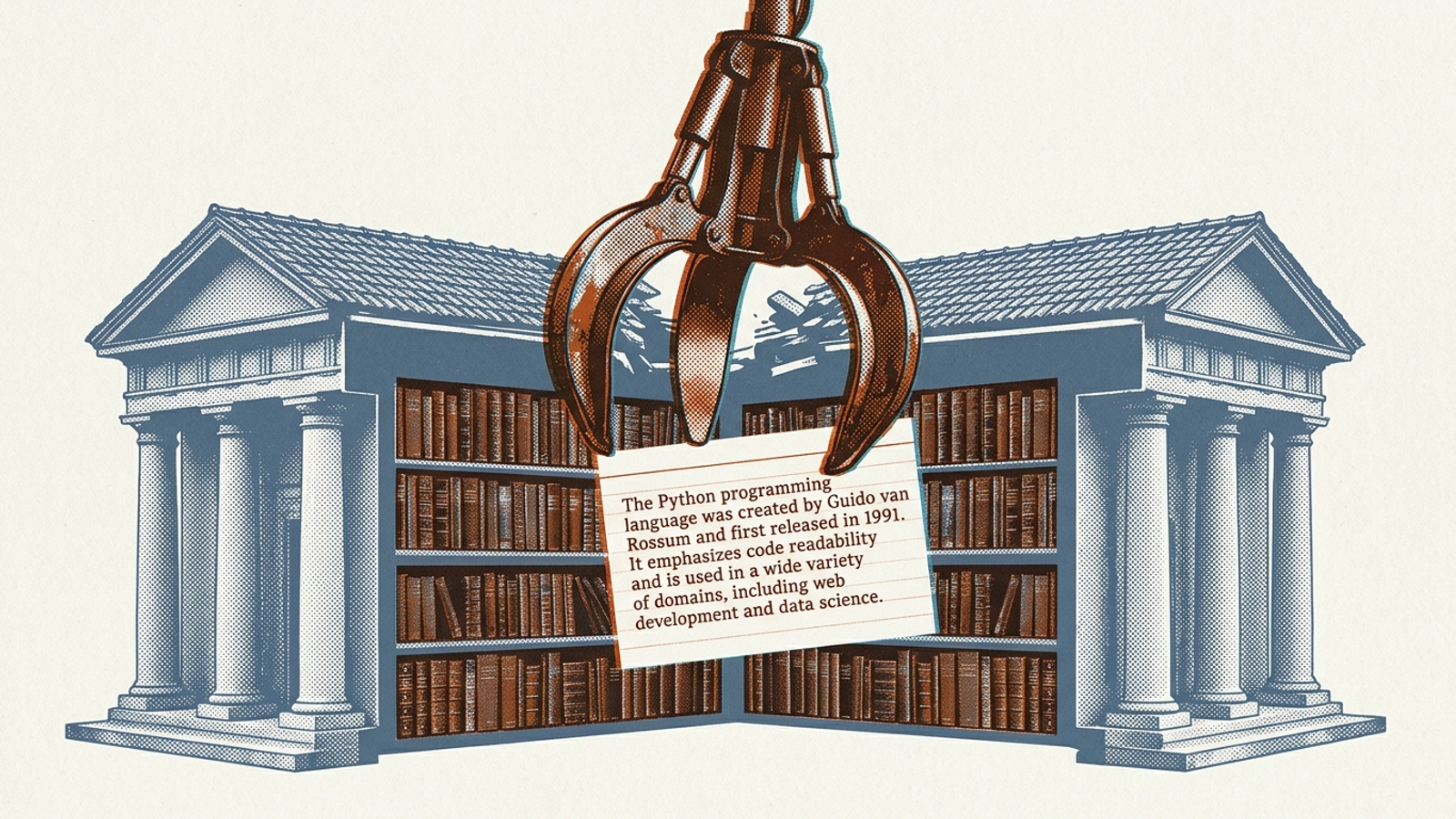
Traditional rank tracking asks where a page sits for a keyword. An answer engine can instead use a passage that answers a narrower question, even when the source page is not a top organic result. In an Ahrefs analysis of 863,000 search result pages, 37.9% of URLs cited in Google AI Overviews ranked in the organic top ten. Another 31.2% came from positions 11 through 100, and 31.0% from beyond position 100.
That does not make rankings irrelevant. It does mean that a report showing your position on page one cannot, by itself, tell you whether an answer cites you. Clear, extractable passages help, although the skeptic is right that clear passages also belong in good SEO copy. The genuinely different job is checking what the answer engine retrieves and cites. And there is no single set of citation habits to assume: ChatGPT, Perplexity, and Google AI Overviews do not choose and present sources identically.
Your own site is not the whole citation map
A company can polish every feature page it owns and still leave an answer engine with little independent information about it. For a commercial comparison, buyers and answer engines can encounter review platforms, directories, videos, and discussions alongside the vendor’s claims. A Peec AI analysis of 30 million AI citations identified third-party platforms including Reddit, Wikipedia, YouTube, LinkedIn, G2, and Yelp among the most-cited domains across major answer engines.
This is not an invitation to manufacture forum praise. It is a reason to inspect the sources that already shape comparisons in your category. If an AEO agency spends every billable hour rewriting your website while leaving relevant third-party profiles and discussions untouched, it may be working on only one part of the answer an interested buyer sees. Off-site evidence needs an owner, not another on-site content calendar.

Visibility cannot be reduced to one keyword position
The last difference is measurement. An organic ranking gives you a position to track. An answer engine can respond to related phrasings with different summaries and different citations, or omit citations from a particular answer. Practitioners discussing AEO measurement have pointed out how a generated answer can compress the space that traditional search gave to several visible results.
A weekly screenshot of one favorable prompt will not tell you how often your brand appears across the questions buyers actually ask. Useful monitoring has to test clusters of commercially relevant prompts across the engines that matter to you, record citation changes and retrieval failures, and relate visibility to pipeline where possible. A rank tracker cannot report a ranking the engine does not publish.
Where each side overreaches
The skeptic can be right about the invoice and still miss a broken fetch. Saying that good SEO is enough does not help if an AI bot receives an empty HTML shell, or if a buyer’s comparison draws heavily on sources outside your domain. Those are operational problems. Someone has to own them.
The AEO seller can be right about those problems and still inflate the scope. Direct H2 answers, sensible site architecture, and ordinary technical repairs do not become novel because a deck calls them neuro-semantic entity embedding. I have no objection to paying for work. I object to renaming yesterday’s deliverables so they can be billed tomorrow.
That distinction decides the debate. It also makes the purchasing decision less mysterious: require the vendor to show the work that your current search program does not already perform.
My verdict: pay for three differences, not a second SEO retainer
I take the skeptic’s side on the broad claim. Most of an AEO pitch overlaps with competent SEO. For a business whose buyers use answer engines to research expensive or considered purchases, though, three pieces of work are worth paying for:
- Check what AI fetchers can actually read. Inspect the raw HTML on important pages without executing client-side JavaScript. If the useful content is missing, fix how those pages are served. Do not mistake a rendered browser view or a generic performance score for a fetch test.
- Manage the off-site sources buyers and engines consult. Identify the relevant review platforms, directories, and discussions in your category. Keep your presence accurate and understand what those sources say about you. Rewriting your own homepage will not do that job.
- Measure citations where conventional rankings stop. Monitor relevant prompt clusters across engines, look for recurring omissions and source changes, and connect what you learn to commercial intent and attributable pipeline rather than a count of favorable screenshots.
Notice what is not on that list: a new fee for writing a direct answer beneath a heading. Do that writing. It is useful. Just keep it in the content scope you already pay for. The single consideration that decides whether an AEO premium earns its place is whether it buys execution your existing search work does not cover.
This does not automatically justify an ongoing $7,000 monthly retainer. As I argue in the cost of getting cited in Google AI Overviews, a technical fix and continuing monitoring are different expenses. Make a vendor price and explain them separately.
Who can skip the dedicated AEO pitch for now
Not every business needs a specialist AI visibility line item today. If you run a local plumbing or HVAC company, your Google Business profile, local map presence, and Local Services Ads are likely a more immediate priority. Keep your local information and reviews in order; do not let an agency sell you a separate content program before it has made the case for one. An ecommerce store with fast-moving inventory should likewise pay close attention to its Merchant Center feeds and Shopping campaigns rather than assume more narrative articles are the missing piece.
I would put B2B software vendors, professional services firms, and high-consideration enterprise categories higher on the AEO review list. Their prospects may use ChatGPT or Perplexity to narrow a comparison before booking a demo. If your business is missing from those answers, a conventional keyword report may not reveal the gap. Prioritize the work according to how your buyers evaluate you, not how urgently an agency wants to add a line item.
What I would make a vendor prove before signing
If a proposal includes AEO, I would ask for evidence against the three jobs above, in that order:
- Show me the raw response. What do our important revenue pages return to an AI fetcher without client-side JavaScript? Which pages need a serving fix? A generic Core Web Vitals report does not answer those questions.
- Show me the off-site plan. Which third-party sources matter in our category, what appears there now, and what can the vendor responsibly manage? A plan confined to articles on our domain misses this part of the work.
- Show me the measurement method. Which commercial prompt clusters will you test, across which engines, and how will you report citation changes against pipeline? Three hand-picked screenshots are not a visibility program.
If you want paid ads, SEO, and AI search managed together rather than sold as disconnected retainers, groas brings them under one roof for a flat monthly fee. Whatever model you choose, the rule stays the same: pay to make your pages readable, your off-site presence credible, and your visibility measurable. Refuse to pay twice for the rest.