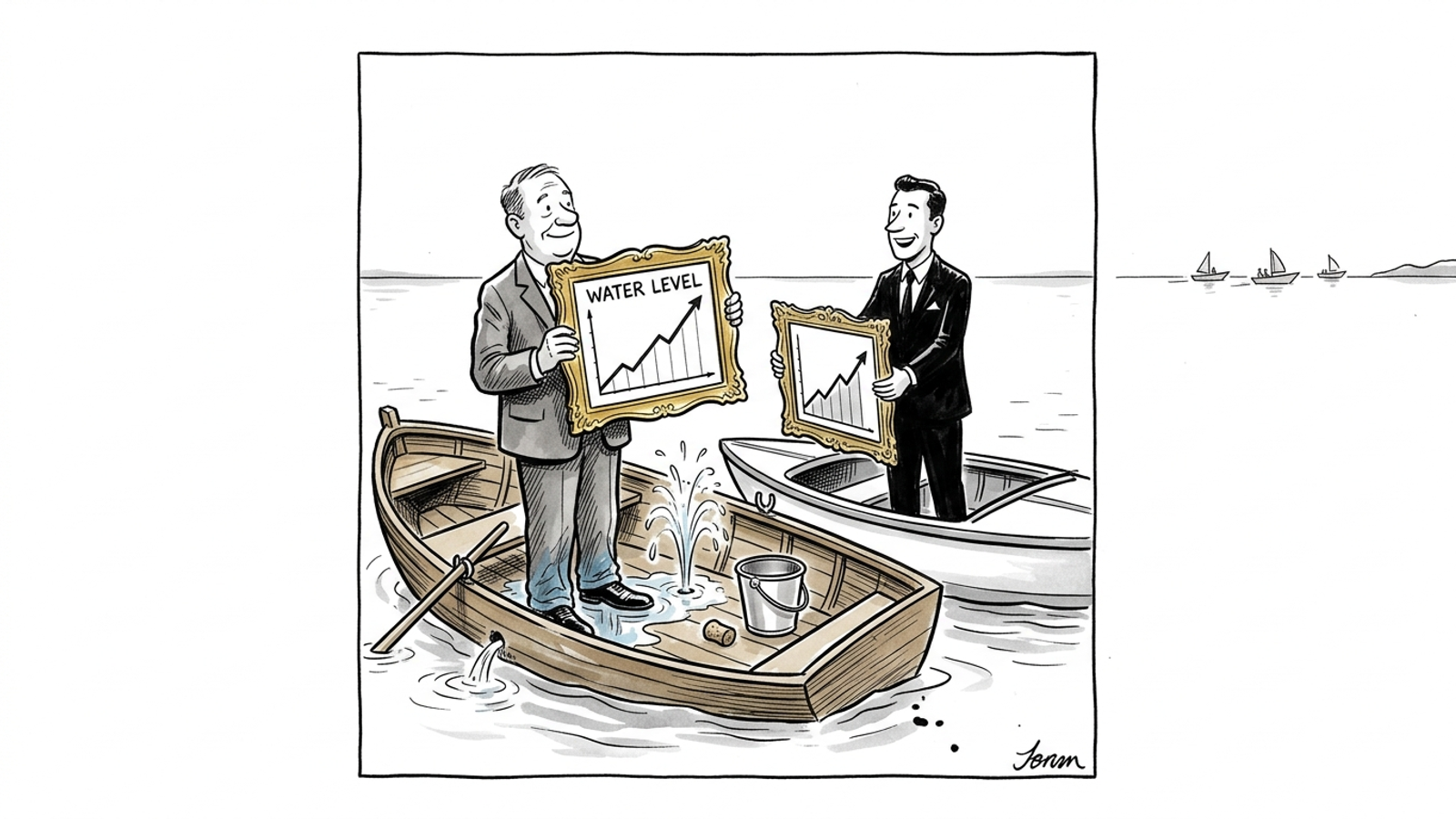
Over-negating your Google Ads account is now as damaging as not using negative keywords at all. The conventional wisdom that bigger negative keyword lists equal cleaner, more efficient campaigns was built for an era of exact match keywords and manual CPC bidding. In 2026, with broad match as Google’s default match type and smart bidding strategies controlling nearly every serious account, a bloated negative keyword list does not protect you from waste. It starves the algorithm of the signals it needs to find converting traffic you never thought to target. Too many negative keywords in Google Ads can actively suppress conversion volume, inflate your cost per acquisition, and trap your account in a learning loop it cannot escape. The real sources of wasted spend in modern accounts are poor conversion signals, weak landing pages, and misallocated budgets, not missing negative keywords.
This is not an argument against negative keywords entirely. It is an argument against the lazy, list-first approach that most agencies and freelancers default to because it looks like work.
What Most People Believe: Bigger Negative Keyword Lists Mean Better Performance
The standard advice has barely changed in a decade. Every agency onboarding playbook, every freelancer’s first-week checklist, every “Google Ads optimization” blog post repeats the same formula: build a massive negative keyword list, review search terms weekly, add anything that looks irrelevant, and watch your wasted spend disappear.
The logic is intuitive. If you sell commercial HVAC systems, you do not want to pay for clicks from people searching “how to fix my home AC.” Add “home” as a negative. Add “DIY.” Add “residential.” Add “cheap.” Keep going until your search term report is pristine.
This approach made perfect sense when Google Ads ran on exact and phrase match keywords, when you could see every search term that triggered your ads, and when manual CPC gave you direct control over what you paid for each click. In that world, negative keywords were a precision instrument. You defined the boundaries, and Google respected them.
Most agencies still operate this way. They will show you a negative keyword list with 300, 500, sometimes over 1,000 terms as evidence of account hygiene. It feels thorough. It feels like the account is well managed. And in many cases, it is quietly killing performance.
The problem is not that negative keywords are useless. The problem is that the system they were designed for no longer exists, and most account managers have not updated their mental model. As we covered in our breakdown of why Google Ads automation fails without the right human strategy, automation tools are only as effective as the strategic framework guiding them. The same principle applies here: negative keywords are a tool, and using them with an outdated framework produces outdated results.
Broad Match Plus Smart Bidding Broke The Old Negative Keyword Playbook
Google’s shift toward broad match and automated bidding fundamentally changed how keyword targeting works. Understanding this shift is the only way to understand why over-negating is now a real risk.
How Broad Match Actually Finds Conversions
Broad match in 2026 does not simply match your keyword to semantically similar queries. It incorporates user signals: location, device, time of day, browsing history, previous search behavior, and dozens of other contextual inputs that you cannot see or control. When paired with a target CPA or target ROAS bidding strategy, the algorithm uses conversion data from your account to predict which queries, for which users, at which moments, are most likely to convert.
This means broad match will surface queries you never anticipated, and many of them will convert. A B2B software company targeting “project management tools” might see conversions from queries like “how to organize team workflows” or “best way to track client deliverables.” Those queries look irrelevant on a search term report. They convert because the user’s intent and context aligned with the product, even though the keywords did not match the advertiser’s mental model of their customer.
What Happens When You Over-Negate
When you apply a 300-term negative keyword list to a broad match campaign running on tCPA bidding, you are not just blocking irrelevant queries. You are removing data points the algorithm needs to learn. Every blocked query is a conversion signal the system never gets to evaluate.
The algorithm responds predictably: it narrows its targeting to the remaining eligible queries, which reduces auction volume, which reduces learning velocity, which forces it to bid more aggressively on fewer opportunities, which drives up your CPA. You end up paying more for less, and the search term report looks clean because you have cut out everything the algorithm wanted to test.
This is the paradox. The cleaner your search term report looks, the more likely it is that you have cut off the algorithm’s best path to scale.
Signs Your Account Is Over-Negated
If your campaigns show declining impression share alongside a stable or rising CPA, you are likely over-negated. If your smart bidding strategy is stuck in “learning” for weeks, check your negative lists. If adding more negatives consistently fails to improve CPA, you are past the point of useful exclusion and into the territory of active harm. Signal quality is what actually drives smart bidding performance, not keyword suppression.
The Actual Sources Of Wasted Spend In Modern Google Ads Accounts
The obsession with negative keywords persists because it gives advertisers a sense of control. But in most accounts, the real waste is not coming from bad search terms. It is coming from structural problems that no negative keyword list can fix.
Poor Conversion Event Selection Is The Real Culprit
If you are optimizing toward page views, form submissions without qualification, or any conversion event that does not correlate with actual revenue, your algorithm is learning to find the wrong people. No amount of negative keywords will fix a campaign optimizing toward junk leads. The algorithm will find users who match your bad signal perfectly, and you will pay full price for every one of them.
This is the problem we see most often. An account spending $30,000 per month with 200 negative keywords, optimizing toward “contact form submitted” with no lead scoring, no offline conversion import, and no distinction between a qualified buyer and someone filling out a form by accident. The negative keyword list is a distraction. The conversion setup is the issue. The approach described in this breakdown of switching from leads to pipeline signals illustrates exactly how this problem gets solved at the structural level.
Low-Quality Landing Pages Waste Every Click Regardless Of Keyword
You can have a perfect negative keyword list and a well-configured conversion event, and still waste the majority of your spend if your landing page does not convert the traffic the algorithm sends. A generic landing page with a slow load time, no clear value proposition, and a form buried below the fold will underperform regardless of how clean your search terms are.
This is where most agencies stop short. They manage keywords and bids but do not touch the landing page. The result is an account that looks well-managed on the Google Ads side but leaks money at the point of conversion. Static versus dynamic landing pages is a decision that directly impacts this problem.
Budget Misallocation Across Campaigns
The third source of waste has nothing to do with keywords at all. Accounts that spread budget evenly across campaigns regardless of performance, or that refuse to shift budget away from low-volume campaigns that never exit the learning phase, are burning money in ways a negative keyword list cannot address.
When Negative Keywords Actually Matter (And When They Do Not)
This is not a blanket dismissal of negative keywords. There are specific situations where they are essential.
Protecting Brand Campaigns From Non-Brand Traffic
Brand campaigns should almost always carry negative keywords that prevent non-brand queries from leaking in. If your brand campaign is bidding on “Acme Software” and also picking up “project management software reviews,” you are contaminating your brand data and artificially inflating brand ROAS. Negative keywords here are structural, not optional.
High-Volume Informational Queries That Will Never Convert
Some queries are genuinely worthless. “How to” and “free” and “DIY” modifiers in industries where the product is a premium service, for example. If a query generates hundreds of clicks and zero conversions over a statistically significant period, excluding it is the right call.
Industry-Specific Exclusions
Every industry has a short list of terms that are always irrelevant. A luxury furniture brand should exclude “IKEA.” A commercial roofing company should exclude “residential.” These are obvious, stable, and should be in place from day one.
The key distinction: negative keywords should be surgical, evidence-based, and reviewed for impact. They should not be a sprawling list that grows every week based on a gut reaction to search terms that “look wrong.”
What A Healthy Negative Keyword Strategy Looks Like In 2026
A modern negative keyword strategy is minimal, structured, and constantly validated against performance data.
Account-Level Versus Campaign-Level Exclusions
Universal negatives, terms that are never relevant to your business, belong at the account level. Campaign-specific negatives should only exist when there is a clear reason to exclude traffic from one campaign that might be relevant to another. Most accounts need far fewer campaign-level negatives than they carry.
Shared Negative Keyword Lists For Agencies
Agencies managing multiple accounts in the same vertical benefit from shared negative keyword lists that capture industry-level exclusions. But even here, the list should be short and validated. A 500-term shared list applied blindly across 20 client accounts is a liability, not an asset. For agencies scaling client work, this guide to autonomous management addresses how to systematize these decisions without defaulting to blunt-force exclusion.
How Many Negatives Is Actually Too Many
There is no universal number, but the principle is clear: if your negative keyword list is growing faster than your conversion volume, something is wrong. A healthy account in 2026 typically has 30 to 80 well-validated negative keywords, not 300. Every negative on the list should have evidence behind it, not just a hunch.
How groas Operationalizes This Across Every Account
The reason most accounts get this wrong is not that account managers are lazy. It is that the work of continuously validating negative keyword impact against conversion signals, landing page performance, and budget allocation is more than any single person can do consistently. This is the structural limitation of agencies, freelancers, and in-house teams: they default to the list-building approach because it is manageable within human working hours.
groas takes a fundamentally different approach. The proprietary engine trained on over $500 billion in profitable ad spend continuously evaluates the relationship between query coverage, negative exclusions, conversion signals, and landing page performance. It does not add negatives based on how a search term “looks.” It measures whether an exclusion improves or degrades downstream conversion outcomes across the full funnel.
For DFY clients, a dedicated senior strategist owns this process end to end. They are not building a bigger negative keyword list to show activity in a monthly report. They are evaluating whether your conversion events are feeding the algorithm the right signals, whether your landing pages are converting the traffic broad match surfaces, and whether your budget is allocated to campaigns that have enough data to learn. The negative keyword list is a small piece of a much larger system.
For DWY clients, the engine runs this analysis underneath while a strategist works alongside your team. You stay in control of execution, but the insights guiding your decisions come from a system that sees patterns across billions in spend, not just your account.
For agencies using the DIY product, the engine provides the same analytical backbone. Your media buyers keep running their clients’ accounts, but they are operating with an engine that flags when over-negation is suppressing volume, when a landing page is the bottleneck, or when a conversion event is sending the wrong signals. Agencies can scale their client book without adding headcount, because the engine handles the execution that would otherwise require more hours than any team can deliver.
In every case, groas is month-to-month with no long-term contracts and $0 onboarding. If the engine and the strategist are not delivering, you cancel. That structure forces a performance standard that a 12-month agency retainer never does.
The Diagnostic Test: Is Your Negative List Hurting Or Helping?
Before you change anything, run this audit on your own account.
Pull your campaign-level metrics for the last 90 days. Look at impression share, conversion volume, and CPA trends. Now cross-reference those trends against when you last added significant negative keywords. If you added 50 negatives in week four and saw impression share drop 15% with no CPA improvement by week eight, those negatives are likely hurting you.
Next, check for “hidden” negatives: terms you excluded months ago that might now be relevant as your product, audience, or Google’s algorithm has evolved. A term that was worthless in 2024 may convert in 2026 because the user base or the algorithm’s understanding of intent has changed.
If your ROAS target is high but conversion volume keeps declining, the culprit is often a combination of over-negation and overly aggressive bidding constraints. Both problems share the same root: you are restricting the algorithm’s ability to find conversions at scale.
The Real Lever Is Signal Quality, Not Keyword Control
The thesis is straightforward: in modern Google Ads, the quality of your conversion signals, the strength of your landing pages, and the intelligence of your budget allocation matter more than the size of your negative keyword list. Over-negating is not a minor tactical error. It is a structural problem that compounds over time, quietly shrinking your addressable audience while making your search term report look deceptively clean.
The advertisers who are winning in 2026 are not the ones with the longest negative keyword lists. They are the ones feeding the algorithm the best data, converting traffic on pages built for the queries broad match surfaces, and letting a system that never stops learning find opportunities no human would think to target.
If your current agency’s idea of optimization is adding 20 negatives a week and sending you a clean search term report, you are paying for activity that looks productive but may be actively constraining your growth. groas replaces that model entirely: a proprietary engine running 24/7, senior strategists who understand when to exclude and when to expand, and a month-to-month commitment that means performance is not optional. Apply for DFY if you want groas to own your Google Ads end to end, or get started with DWY if you want the engine and a strategist working alongside your team while you stay in control. Agencies can start a 7-day free trial of the DIY product and see the difference in their first week.