

 LinkedIn

I want ChatGPT to tell me which Google Ads campaigns earn their keep and which don’t have enough data to judge. The fastest way to make it useless is to connect the account and ask for more clicks before I’ve told it what I can afford to pay for an order.
The connection takes about a minute. The work that makes it useful takes longer: putting a dollar ceiling on a purchase and checking that Google Ads counts each sale once. Until I have both, ChatGPT can read the account. It doesn’t get to touch a bid.
Why wouldn’t I start with more clicks or higher ROAS?
In a benchmark covering 21,000 commerce brands, click-through rate rose 15.81% to 1.72%. Cost per acquisition rose 14.55% to $29.43, conversion rate fell to 3.01%, and reported ROAS fell to 3.16. I used to tell clients that rising CTR meant the account was healthy. I was wrong. A better click-through rate can sit right next to a more expensive sale.
The benchmark authors point to a gap between what the ad promises and what the landing page delivers. That matches what I see in accounts: the ad sells one thing, then the page makes the shopper work to find it. More clicks don’t fix that. They just send more people through the same door.
I don’t start by asking for higher reported ROAS, either. Clicks don’t tell me what an order earns, and reported ROAS is only as useful as the purchase data behind it. If the same sale gets counted twice, a tidy ROAS column can make a bad spending decision look like an obvious yes. I start with the margin math, not a metric I want to see go up.
1. What can I afford to pay for an order?
I start with two numbers: average order value and contribution margin after product cost and fulfillment, but before ads. The margin tells me how much of the sale is left to pay for acquisition. I use it to set two lines:
- First-order acquisition ceiling: average order value times contribution margin. That’s the most I can pay to acquire the order without losing money on it under those assumptions.
- Break-even ROAS: one divided by contribution margin. That’s the revenue-to-ad-spend ratio where the order covers the costs I included. It isn’t a profit target.
Say my average order is $90 and my contribution margin is 40%. I have $36 left to pay for the order, and my break-even ROAS is 2.5x. That’s illustrative math, not an account result. It also shows why the costs I include matter: if I leave returns out, the calculation doesn’t quietly put them back in for me.
I leave repeat purchases out of the first pass. I’ll revisit what I can afford to pay for a first order if repeat buying is proven. Until then, I’m not funding today’s acquisition with an order that hasn’t happened.
My average order value is $__. My contribution margin is __% after product cost and fulfillment, before ads. Calculate my first-order acquisition ceiling and break-even ROAS. State how the inputs treat shipping and returns, flag anything I haven’t specified, and leave repeat purchases out.
I keep the ceiling and its assumptions in the chat. I’ll want both there when ChatGPT recommends something that costs money.
2. How do I connect ChatGPT without another spreadsheet?
Without a connector, ChatGPT can analyze a CSV I paste in, but it can’t see the live account. Google’s own MCP server can read live data for reporting and diagnostics. It can’t change a bid or budget. I use groas because I want ChatGPT to read the account now and be able to make a specific change later, once I approve it.
- In
chatgpt.com/plugins, add a custom MCP server namedgroasand enterhttps://mcp.groas.ai/mcp. - Set authentication to OAuth and sign in. The ChatGPT + groas setup uses that MCP connection.
- Connect the Google Ads account inside groas. Name the account and the reporting period in the first prompt so ChatGPT doesn’t have to guess.
The first prompt is read-only on purpose. I want to see what ChatGPT pulls before I ask it to judge what it finds.
For [account name], show purchase conversions, purchase value, and spend by campaign for the last 30 days. Explain each column in plain English. Make no changes.
3. Is what Google Ads calls a purchase actually one order?
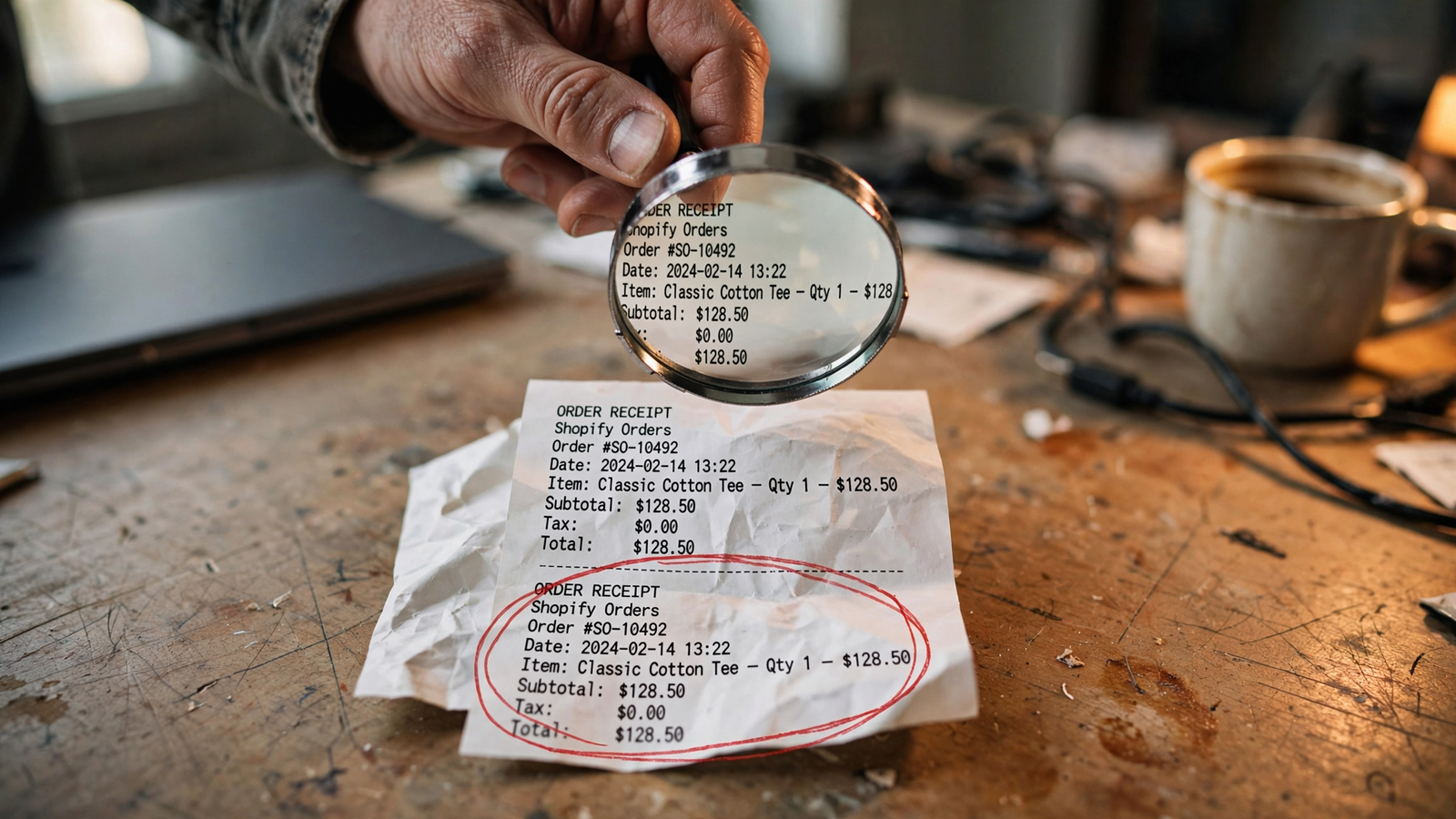
Before I trust a single ROAS number, I want to know which conversion actions feed the purchase total. If two Primary purchase actions both count the same checkout, one sale can show up as two. That makes the campaign look more efficient than it is and gives bidding the wrong signal.
List every conversion action included in the purchase totals. Show its count and whether it’s Primary or Secondary. Flag actions that might count the same order. Make no changes.
These are the Shopify tracking combinations I check for:
- The Google & YouTube app and an old manual purchase action.
- A Google Tag Manager purchase tag and the app.
- A GA4 purchase import and a Google Ads purchase tag.
- Server-side and browser purchase tags both set to Primary.
If I confirm two actions count the same sale, I keep one as the Primary source of truth and move the duplicate to Secondary. The reported count can drop without the store losing an order. That drop is the truth arriving. It’s also one reason Google Ads can report high ROAS while store revenue stays flat.
Then I check the numbers against Shopify or backend orders for the same period. I keep those order totals separate and don’t assume ChatGPT can see them. I also give recent conversions time to arrive: data-driven attribution can take up to 15 hours to show conversions, and GA4 imports can take 24 hours or longer. I don’t expect the two reports to match line for line. I do expect to be able to explain the gap before I spend against the reported number.
4. Which campaigns beat my ceiling, and which just need more data?
Now I can ask ChatGPT to rank campaigns. I give it the ceiling and break-even ROAS from the first step, not some account-wide target I picked because it looked respectable in a deck.
Using my $36 acquisition ceiling and 2.5x break-even ROAS, rank campaigns by cost per purchase and show spend and purchase value for the last 30 days. Separate campaigns that beat the ceiling, campaigns that are over it, and campaigns with insufficient evidence. Don’t propose changes yet.
I want to see spend of at least two to three times the ceiling before I consider calling a campaign a loser. That spend threshold is a floor for review, not a verdict. A campaign that spent $400 for one order is well over a $36 ceiling in that window. That tells me where to look. It doesn’t tell me what will happen next. A campaign with three clicks doesn’t even get that far. I want ChatGPT to say insufficient evidence when that’s what it has.
Before I ask for a change, I ask it to look at the path a shopper takes: the search term, the ad shown, and the landing page behind it. I want it to point to where the intent and the page stop matching. groas tracks competitor ads around the clock, so I use those ads to see what promises shoppers keep encountering. I don’t use them as evidence of profit. Copying a rival’s angle because it shows up a lot is how two stores lose money on the same keyword.
5. How do I approve one change without handing over the keys?
I never approve a vibe. A change worth approving names the exact setting, the old and new values, the reason to act, and the spending downside. If the old value is missing, I can’t tell whether the proposal reflects what’s actually in the account. If the downside is missing, I send it back.
Propose one change. Name the campaign, the current bid or budget, and the new value. Explain why the change makes sense against my $36 ceiling and how much extra it could spend per day. Wait for my yes.
After I approve it, I check the groas action log, then reload the campaign in Google Ads and look at the same field. Undo can put the setting back in one step. It can’t refund the money that went out before I noticed the mistake. That’s why I leave autopilot off until goals, spending limits, and approval rules are explicit. A log makes a change easier to reverse. It doesn’t make it free to get wrong.
What do I ask ChatGPT every week?
I run the same three questions:
- What changed in purchases, purchase value, and spend by campaign?
- Which campaigns beat my ceiling, and which have too little spend to judge?
- What’s the one change worth approving this week?
I compare the last 30 complete days with the prior 30 complete days, not yesterday with the day before. Recent purchases can still come in, and I don’t want to pause a winner over a partial week. If margins, shipping costs, returns, or the offer change, I redo the math and give ChatGPT the new ceiling before it ranks anything.
Until the rules are explicit, ChatGPT proposes, I approve, and groas logs the change. That sounds slow until I compare it with cleaning up a week of automated bid changes made against duplicate purchase data and a ceiling nobody wrote down.
What do I skip for now?
I skip the campaign rebuild. New structures, Performance Max splits, audience surgery, and bid-strategy debates can all wait until I know what an order can cost and whether purchases are counted correctly. I’ve audited stores running four campaign types against duplicate purchase data with no idea what an order could cost. More structure on bad data just spends the mistake faster.
What do I do in my first 20 minutes today?
I do this in order, then stop:
- Write down the break-even ROAS and first-order acquisition ceiling. Use average order value and contribution margin, and note which costs the calculation leaves out.
- Connect Google Ads to ChatGPT through groas. Run the read-only prompt for purchases, purchase value, and spend by campaign over the last 30 days. Put the ceiling and its assumptions in the same chat.
- Ask ChatGPT to list the purchase actions and flag possible duplicates. Check one campaign’s reported purchases against the Shopify orders you can reconcile. Don’t approve a change yet.
If ChatGPT says ROAS looks fine and Shopify tells a different story, I start with the store’s orders. I check for duplicate Primary actions, conversions that haven’t appeared yet, and refunds or cancellations Google never heard about. I fix what I can verify, rerun the ranking against the ceiling, and only then approve spend.
The first thing I’d do today isn’t open the connector. It’s write down what I can afford to pay for one order.





