

 LinkedIn
“Spent money, no conversions” is a review filter, not a negative-keyword policy. Ask ChatGPT to find waste in a search terms export and it can hand you a tidy list of searches to block without ever seeing how your account counts a conversion.
I managed Google Ads accounts by hand for the better part of a decade: match types built spreadsheet by spreadsheet, negative-keyword mining at 1 a.m., the whole apprenticeship. I like having ChatGPT do the sorting. I don’t like handing it the verdict. A published prompt for this job tells you to paste a 60-day export and add a negative for any term with five or more clicks and zero conversions. That rule is easy to apply. It’s also easy to apply to traffic you wanted.
Before groas applies a negative, I want ChatGPT to tell me why the query is wrong for the business and what valuable traffic the exclusion could block. First, though, I want to know what that zero actually means.
Your export is missing rows, and your conversions may still be coming in
The report shows only part of the traffic, and some of the results are still pending. Those are two different problems. A prompt that sorts by spend and conversions solves neither.
Google’s search terms documentation says the report shows only terms “that a significant number of people have used,” omitting others to meet privacy standards. When that threshold tightened in September 2020, Seer Interactive measured the share of search spend tied to visible terms falling from 98.7% to 71.0% overnight, as PPC Land reported. In one account audit, only about 40% of cost was visible as individual search terms. Run your filter on an account like that and you’re reviewing less than half the spend. Whatever dollar figure ChatGPT puts under wasted spend, it hasn’t audited the whole account.
Then there’s the clock. Google’s conversion-lag documentation says conversions can be reported up to 90 days after a click, depending on your conversion window. It recommends ending the report’s date range at least 30 days ago when looking for more complete conversion data. A recent click can have zero conversions today without having zero conversions for good. If a form fill in March becomes closed-won in July, three weeks of data won’t tell you what the query was worth to the business.
I use the filter to decide which visible rows to look at first. I don’t use it to put a price tag on waste. An older date range gives conversions more time to show up. It doesn’t give me back the terms the report left out.
Three kinds of zero, and only one clear case for blocking
A query can be right for the business and still show a zero. Before I touch the negatives list, I separate the rows into three piles:
- Irrelevant intent. The searcher wants something I don’t sell. The business reason for excluding it holds even if I cover up the conversion column.
- Relevant but unresolved. The searcher wants what I sell, but the conversion may still be coming in. Or tracking is broken, the offer loses on price, or a redesign took the form off the landing page. Blocking the query fixes none of those problems.
- Insufficient evidence. Two clicks, zero conversions, and nothing else to say. The term hasn’t been tested. It’s been observed.
In one r/PPC thread, an advertiser asked when to negate product-name searches with 127 and 259 clicks and no conversions. The replies didn’t argue that those clicks were cheap or that the advertiser should keep buying them indefinitely. They argued that the count wasn’t a diagnosis. Check assisted conversions and smaller conversion events. Look at bounce rate. See whether the landing page or offer is the thing failing. As one commenter put it, “it’s easy to start negating search terms and strangle your funnel.”
The bill can come due long after the cleanup. In another r/PPC discussion, a practitioner reported finding accounts with 500-plus negatives and seeing conversions rise by 30 to 40% after pruning back to the obvious junk, without sacrificing quality. That’s a reported outcome, not a lift I’d put in a forecast. The useful part is the mechanism: once a negative stops a valuable query from triggering an ad, you don’t get fresh performance data on that traffic to tell you what you lost.
Check the measurement before judging the query
With ChatGPT connected to the account through groas, I don’t have to ask it to infer the conversion setup from a CSV. I can ask it to inspect what the account counts and how long those conversions take to show up. I start here:
- What am I optimizing toward? Name the conversion actions and flag anything I may be mistaking for a business outcome, such as a page view or an unqualified form fill.
- Has this group of clicks had time to convert? Compare the report’s end date with the account’s conversion window. A recent export and a long window are a bad basis for a final verdict.
- How long do conversions actually take to show up? Use Google’s Days to conversion segment to see the lag in this account.
- What evidence would change the recommendation? Tell me what’s missing instead of filling the gap with a guess.
That last question matters because account access isn’t the same as knowing which lead turned into paid work. In one worked example, a practitioner cross-referenced 129 search terms against 68 CRM leads before approving any negatives. The export could show the clicks. The CRM helped show which ones became booked work.
If the measurement is suspect, stop the cleanup, not the investigation. Fix the tracking, pull an older date range, or bring CRM outcomes into the review. There’s a full nine-check protocol if you want the rest of the checks. The order is what matters here: measurement first, judgment second, deletion last.
Make ChatGPT give a business reason, not a row count
The export doesn’t know what I sell, what I deliberately don’t sell, or which customers I’m trying to reach. I give ChatGPT that context, along with the exclusions I already know about. Then I ask for classification, not deletion:
Classify each term as irrelevant, relevant but unresolved, or insufficient evidence. Explain each classification in one sentence tied to the business context I gave you. Do not propose a negative until I’ve read your reasoning.
The reason has to stand without the conversion column. “We sell commercial gutter cleaning; this searcher is looking for employment” is a judgment I can check. “Block it: zero conversions” is a data-entry event wearing a judgment costume.
I send relevant but unresolved terms to a separate queue with their spend and click history attached. That’s where I look at the landing page, the offer, the bid, or the match type. For insufficient evidence, I set a spend threshold and a review date. Both are decisions. Neither requires me to pretend the query was wrong for the business.
Check what the negative would block besides the junk
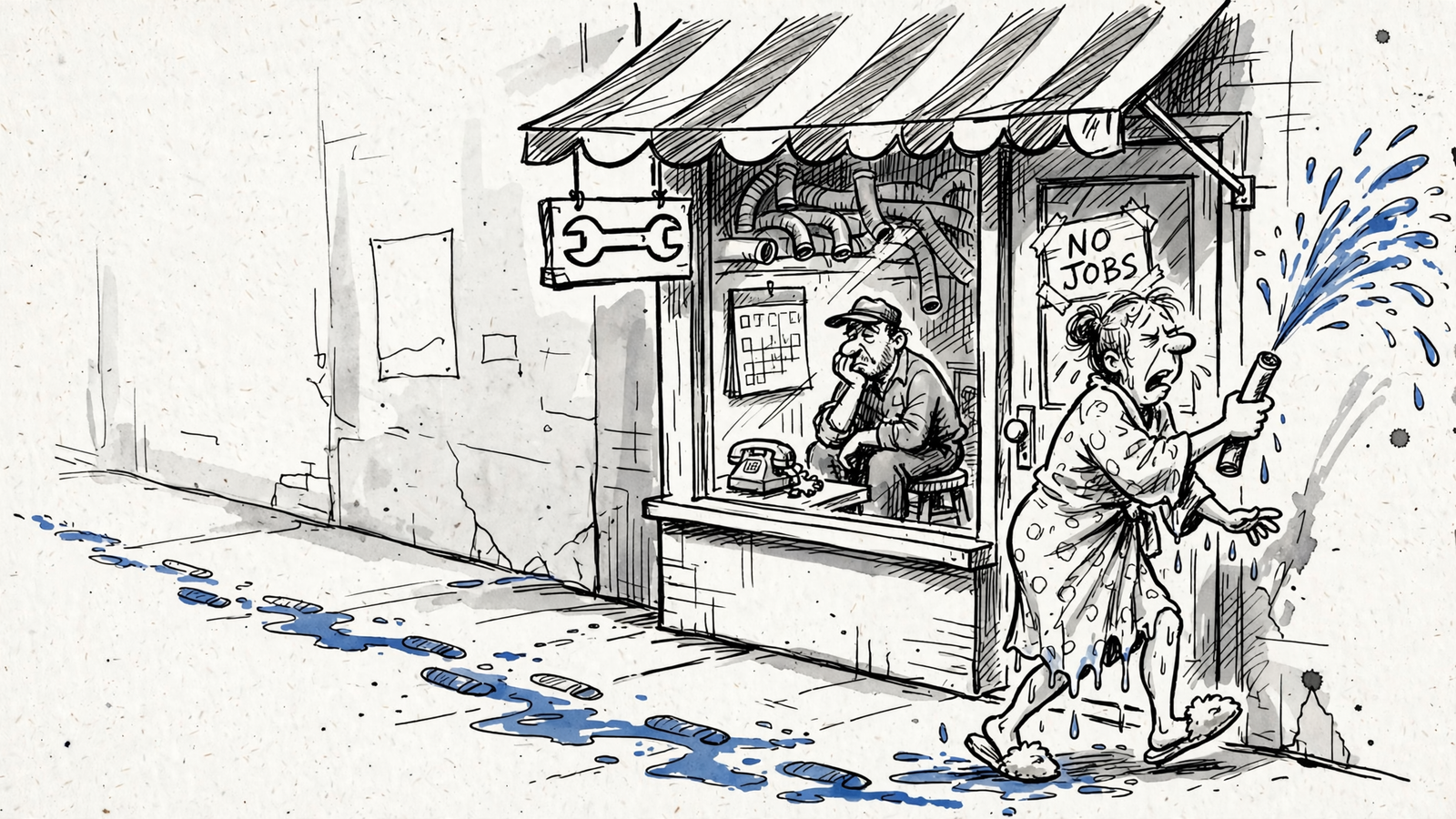
In the plumbing account from that CRM review, jobs looked like a sensible way to exclude employment searches. It would also have blocked small plumbing jobs dublin, a query that led to a booking. Same word, different customer. The fix was to narrow the exclusions to plumber jobs and plumbers jobs as exact-match negatives.
The mistake wasn’t deciding that the plumber didn’t want job applicants. It was taking a decision about employment searches and applying it to the word jobs. The exact-match exclusions acted on the searches the plumber didn’t want without catching the one that brought in work.
That’s why “Is this query irrelevant?” isn’t the last question. “What valuable searches would this negative also block?” is. The query under review and the negative you add are two different things. I want to see both, along with the match type and a concrete example of traffic the exclusion could catch.
LoomaScale’s guide to finding negatives with ChatGPT explains the distinction: negatives don’t match close variants, so sneaker doesn’t exclude sneakers. A broad negative also requires all its terms, so free shoes doesn’t block free alone. That’s how the same list can miss junk you thought you’d covered and still block searches you meant to keep. A SaaS advertiser running 25,000 negatives across five lists still reported seeing irrelevant queries. The size of the list tells me how much there is to audit, not how much control I have.
Scope needs its own check. I make ChatGPT name where each negative belongs: ad group, campaign, or account. A term that’s irrelevant to one campaign can be the money-maker in another. I also ask for a rejected-negatives list: what the model considered but declined to block, and why. If jobs is on the shortlist and there’s no record of what it would do to a plumbing query, I’m not ready to approve it.
Apply the shortlist, not the policy
By the time I’ve checked the measurement, the intent, and what else the negative would block, the shortlist is usually short. Good. Through groas, ChatGPT shows me the change before it lands: the term, match type, scope, and the sentence that earned it a place on the list. I approve that change, not a standing instruction to keep blocking things. If I’ve approved an exact-match negative for one campaign, I haven’t approved the same words on a broader match type or across the account. The wording can stay the same while the traffic it blocks changes.
Autopilot stays off until I switch it on. The search terms walkthrough shows the loop from export to approved exclusion.
The action log records each change and its reason, and I can undo it in one step. If small plumbing jobs dublin disappears after a cleanup, I can check whether a negative caused it, see why it was added, and reverse the change. groas Unlimited charges a flat monthly price for the whole team, not a cut of ad spend. The cost of doing the review properly is the time it takes to read the reasoning. The deletion prompt skips that cost and leaves me to find out what the shortcut cost later.
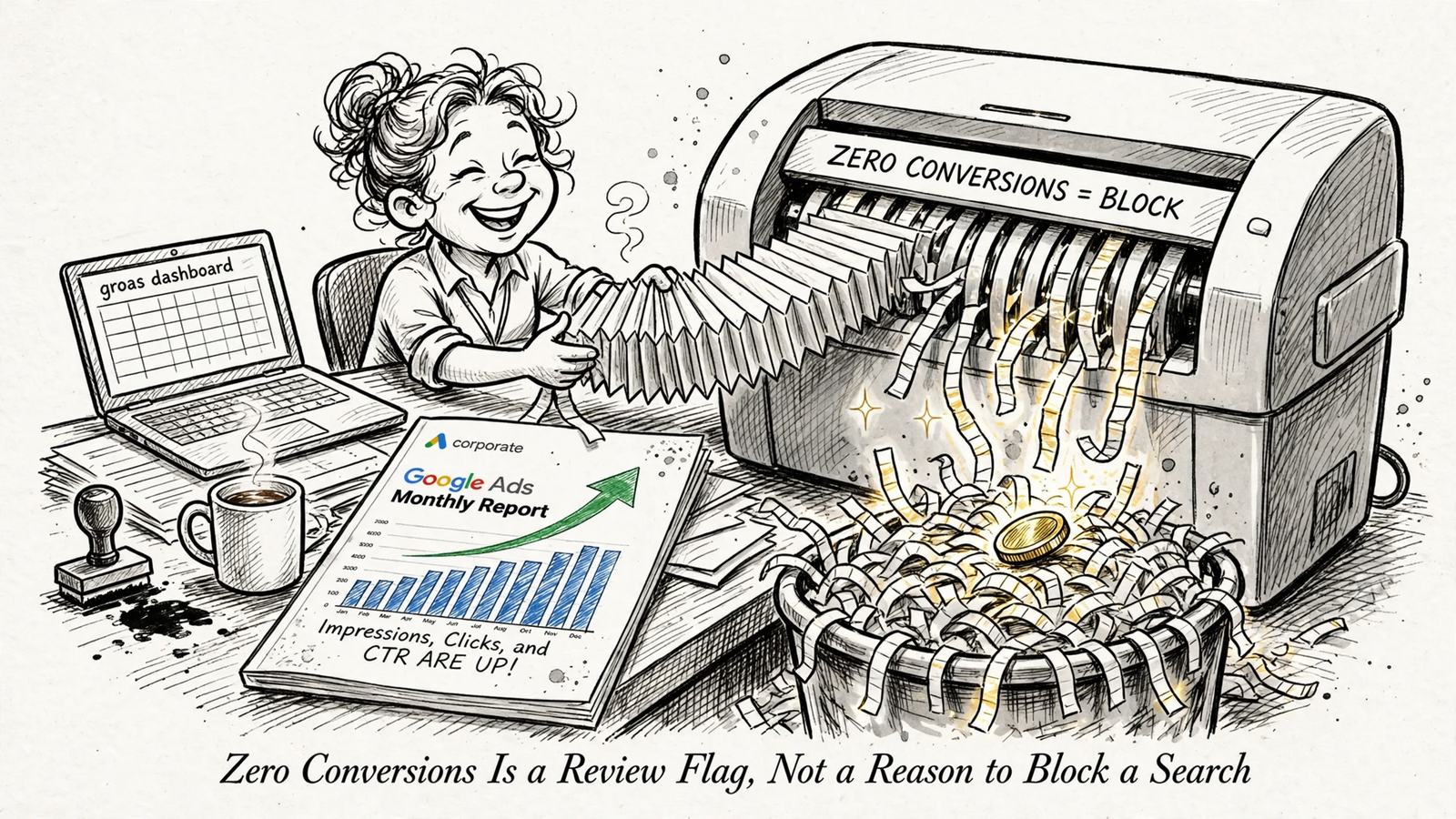
The accounts that scare me aren’t the ones drowning in junk traffic. Junk is loud. It announces itself in the search terms report. The accounts that scare me are the quiet ones, where someone runs the deletion prompt every quarter for two years and the long tail stops converting. Nobody can point to the day it happens. Each negative looks reasonable on its own. Together, they turn the funnel into a straw.
I’ll let ChatGPT gather the evidence. I won’t let a zero make the decision. Before groas applies anything, I want to know why the query is wrong for the business and which valuable searches the exclusion could take with it. Skip that, and you don’t get one dramatic quarter that tells you exactly what went wrong. You get a slow enough decline to blame on CPCs, competition, or the algorithm. Then you raise the budget to replace demand you paid to reach and blocked yourself.





