LinkedIn

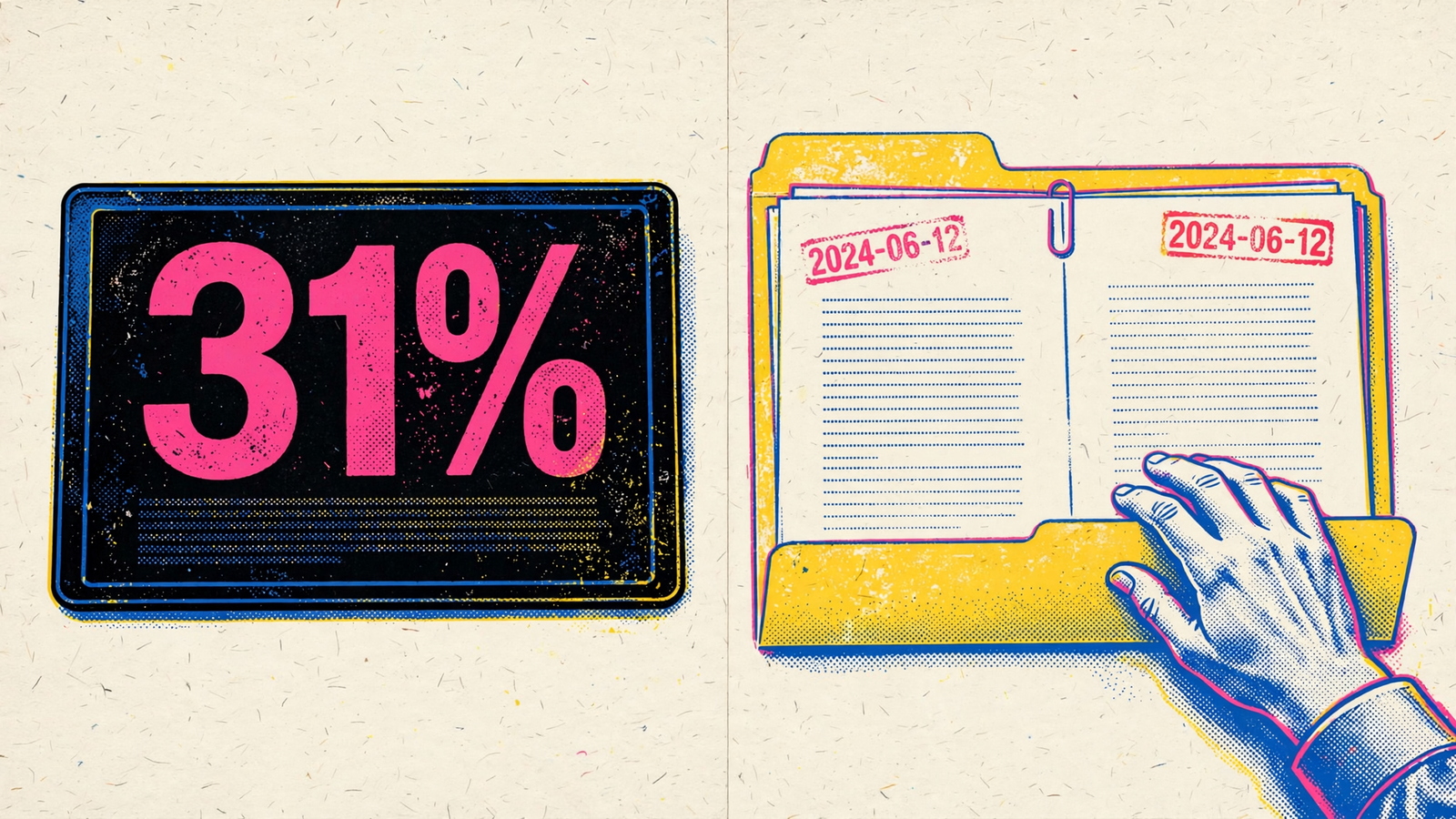
An AI visibility score can move from 24% to 31% without giving you a single reason to touch a page. Before I’d pay for a package that reports that number, I’d run a free ChatGPT and Perplexity spot-check and ask it to justify one publishing decision.
This is a second look at AI Search Monitoring Costs: The Dashboard Is the Cheap Part. Before you pay for monitoring, build a small sample of your own. It gives you something to put next to the vendor’s score and a way to tell what you actually need the package to do.
Test question: Can 48 answers support one concrete publishing decision? That means investigating a missing comparison, correcting wrong product information, or making no change yet. I expect the citations to do more work than the mention count. The count tells you how often you showed up in the sample. The cited page is where you can check a claim and see whether there’s anything to fix.
Decide what would make you touch a page
Pick one product, one buyer, and one market. Write them at the top of the sheet. Say you sell project software to 20-person agencies in the US. Keep that buyer in view when you write the prompts and when you read the answers. A gap that matters to a different buyer is not a finding for this test.
Write your action rule before you collect an answer. Give yourself three possible outcomes:
- Investigate a missing comparison if the same buyer question keeps surfacing named alternatives and the cited pages give you a specific comparison to look into.
- Correct wrong product information if you can verify the error and identify a page or claim that needs correcting.
- Make no change yet if the evidence doesn’t support either move. A missing mention on its own isn’t a publishing brief.
This is the part of a paid search test I don’t skip: decide what would change your mind before the numbers arrive. AI answers give you plenty of room to tell yourself a good story. In one 50-prompt test across four engines, when an answer named a tracked brand, a rerun a few minutes later named exactly the same set of brands only 60% of the time. Don’t let whichever answer you happen to read last set the action rule.
Freeze eight prompts that can embarrass you
Write two branded checks and six buyer questions that don’t name your brand. Use the branded checks to see what the services say about your product when asked directly. Use the other six to see what happens when the buyer hasn’t put you on the list for them.
Give the buyer questions a mix of jobs: category recommendations, direct comparisons, and a use case tied to money. For the agency software example, the prompts might sound like this:
- “Best project tool for a 20-person agency handling retainers”
- “Tool A vs Tool B for agency resource planning”
- “How to stop scope creep on fixed-fee agency projects”
I used to tell clients to add three branded searches and call it monitoring. I was wrong. Branded prompts are useful when you want to know what an answer says about you. They’re a poor test of whether the answer brings you up on its own. Save all eight prompts before the first run. If the wording looks awkward after you see an answer, leave it alone. You’re testing the same question three times, not trying three ways to get mentioned.
Collect 48 answers without changing the question
The setup follows the shape of a manual AI visibility check: ask unbranded buyer questions in fresh sessions, log who appears and what gets cited, then repeat in another service and on another date. Here’s the version I’d put on the run sheet:
- Run all eight prompts in ChatGPT and Perplexity. Start a fresh conversation for each prompt and run logged out where you can.
- Repeat the full set on two more occasions. Use the exact same wording. Keep visible settings consistent where you can and record what you can’t hold steady.
- Log each answer as you collect it. If a free-access limit interrupts collection, spread the work across several days and record the actual dates. Don’t count a prompt you couldn’t run as an answer that omitted your brand.
Eight prompts × two services × three runs gives you 48 answers if you complete the sheet. That’s a scope you can finish for free, not a reliability threshold. Repetition gives you a chance to see whether the same answer or source comes back. In one answer consistency test, reruns minutes apart returned exactly the same set of cited domains in only 41 of 200 answer pairs. One screenshot doesn’t tell you whether the next run will give you anything you can use.
Log the answer, not just the verdict
For each answer, save the exact prompt, date, service, visible model or mode, and locale and search settings where shown. Paste the full answer verbatim and save every cited URL. Then mark three separate columns:
- Mention: Does your brand name appear anywhere?
- Recommendation: Does the answer explicitly tell the buyer to shortlist or buy your product?
- Citation: Does the answer link to your domain?
A mention is not a recommendation. A recommendation backed by a third-party review is not a citation to your site. Keep the full answer and the URL together so you can tell which source, if any, backs the recommendation.
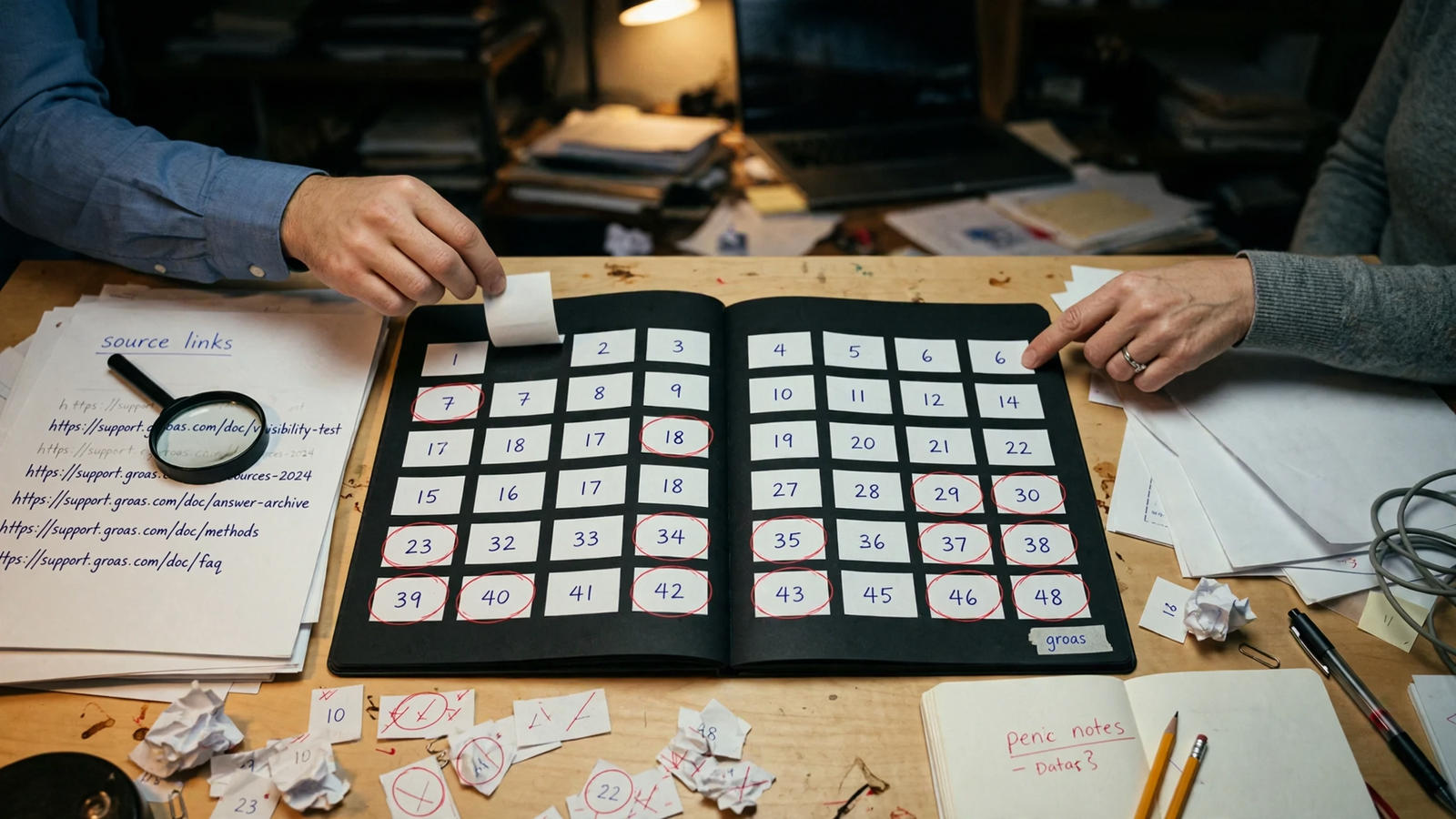
Your sheet covers the prompts you supplied, not the prompts customers actually entered. It can’t recover every question users ask or every answer they receive. As this explanation of prompt discovery limits makes clear, modeled prompt volumes aren’t headcounts. Use them to prioritize what to look at, not to estimate how many buyers saw you. If the sheet shows zero mentions, write down exactly that: zero in these eight prompts, on these two services, across these three runs.
Report counts with denominators, not market share
Split your results by service and by branded versus non-branded prompts. For each group, report mentions and recommendations out of the valid answers you actually collected. An example of what that looks like, not a test result:
| Service, non-branded prompts | Mentions | Recommendations |
|---|---|---|
| ChatGPT | 4 of 18 | 2 of 18 |
| Perplexity | 7 of 18 | 1 of 18 |
In that example, Perplexity mentions the brand more often but recommends it less often. A single score would hide the distinction. Keep the denominator next to every count. If a vendor rolls the panel up into share of voice, ask whether it counts mentions or recommendations and how it handles an answer that names two tracked brands. Ask for the competitor list, prompts, services, location, and dates alongside the percentage. Two tools can report different numbers without disagreeing about the same panel.
This isn’t enough data to prove a trend. In one sample-size analysis, near a 25% rate, about 72 answers still left roughly 10 percentage points of uncertainty. Telling 20% from 30% apart took around 294 answers per period. Keep the conclusion on the scale of the test: do you have evidence for a page decision? For more on that distinction, see Your AI Visibility Score Is a Sample, Not a Ranking.
Open the citation before you act on the answer
If the same prompt recommends you on Tuesday and omits you on Thursday, log the variation and open the sources. In one paired-run citation test, about 32% of sites cited in the first ChatGPT answer came back in the rerun, and 7 of 18 pairs shared no sites at all. That’s a reason to save the cited pages, not just the screenshot with your name in it.
Check whether the page supports the specific claim. Does the URL work? Can you point to the sentence the answer relies on? Is it your product page, a partner review, or a competitor listicle that happens to include you in row six? If you can’t establish the link between source and claim, mark the evidence as inconclusive. Don’t quietly promote it to a finding because the recommendation sounds good.
Say Perplexity recommends you twice and both answers cite a 2022 roundup that gets your pricing wrong. Once you verify the discrepancy, you have a correction to pursue, not two clean wins. You also know where the error lives. Rewriting your own pricing page isn’t the obvious first move if the wrong number is in someone else’s roundup. If none of the three runs gives you evidence that meets your action rule, write no change yet.
Ask the vendor to run your eight prompts
Bring the sheet to the demo. Ask the vendor to use the same prompts, services, and market settings where its coverage allows. Expect an explanation, not identical answers. Different dates can produce different answers. Different wording, locations, or tracked competitors can also make the numbers incomparable. Ask the vendor to show which differences apply before you put the two reports side by side.
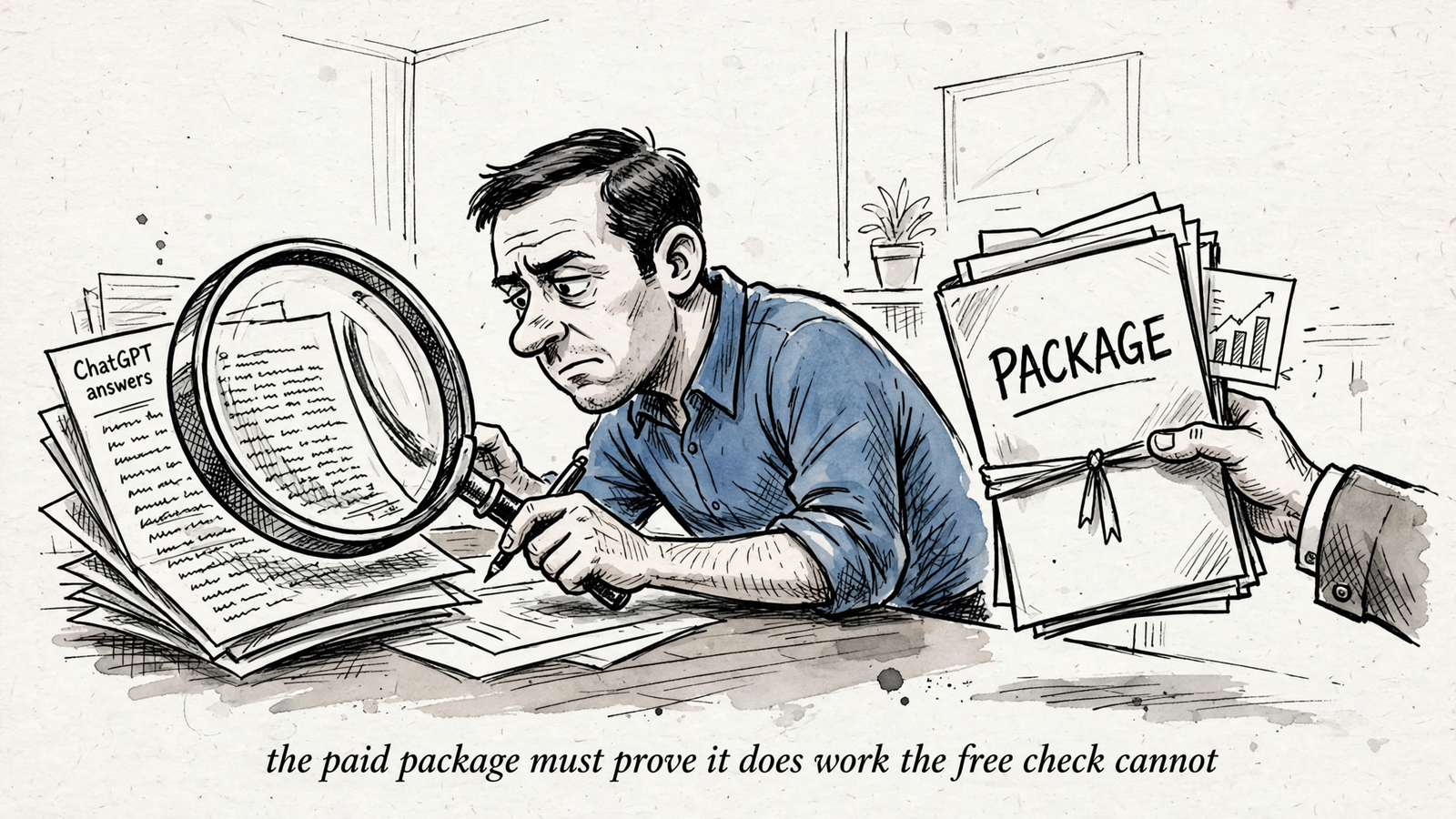
A free visibility checker can give you a snapshot of mentions by platform and top cited pages. For a paid package, I’d want to see what happens after the snapshot: can I get back to the answer, verify the source, and decide what to do next?
Use the demo to make the vendor show you the work:
- Collection: Which prompts and services does it check repeatedly? How does it group prompts by buyer intent?
- Evidence: Can you open the original answers and cited pages, export them, and reconstruct the denominators?
- Execution: Can you turn a finding into a proposed page change, approve it, and recheck it? Which of those steps does the package price cover?
If the vendor says “optimization,” ask to see the proposed edit. If you’re comparing tools on where their questions come from, read AI Visibility Tools Ranked: Where Do Their Prompts Come From?. For this demo, keep the prompts yours.
Put groas through the same test
If the sheet points to a real page fix, I’d look at groas before buying a tracker that stops at charts. groas puts AI search visibility alongside SEO data from Semrush and Ahrefs, plus competitor ads and funnels and Reddit mentions. Your own AI assistant can read the data and make changes through one connection. The reason to choose groas over a tracker is the path from evidence to an edit, not a nicer mention count. groas Unlimited is $19 a month flat for the team, with unlimited teammates, ad accounts, and websites and every feature included.
Put the same eight prompts on the demo agenda. Check which engines groas covers today, whether it can repeat your prompts with the market settings you need, and how its report defines mentions, recommendations, and share of voice. Ask to see traceable answers and exports, and confirm whether your chosen assistant needs its own paid tier. Don’t assume the coverage matches your manual ChatGPT and Perplexity run. If groas can’t show the evidence and the workflow you need, keep your $19.
End with one page and one decision
Put five things on the result page: the eight frozen prompts, counts by service and prompt type, the limits of the sample, one proposed action or no change yet, and the answers and sources behind that decision. Make it legible to someone who wasn’t there for the demo.
A finding might read: “Investigate a comparison page for retainer resource planning. ChatGPT recommended us in 2 of 18 non-branded answers; Perplexity recommended us in 0 of 18. Two named competitors were cited in 11 answers, with working URLs attached.” Then put the limit right under it: eight prompts, two services, three runs. Not market share. The competitor citations give you something to investigate; the counts alone don’t tell you to publish the page.
If an occasional manual check settles the question, keep doing it by hand. If the test shows you need repeat sampling, citation exports, or a way to fix a page and recheck it, pay for the package that demonstrates the missing step. If you ship a fix, use the follow-up citation test to check whether the page earns mentions in ChatGPT, Perplexity, and AI Overviews. Pay for reporting that changes what you publish, including when the right call is to leave the page alone.