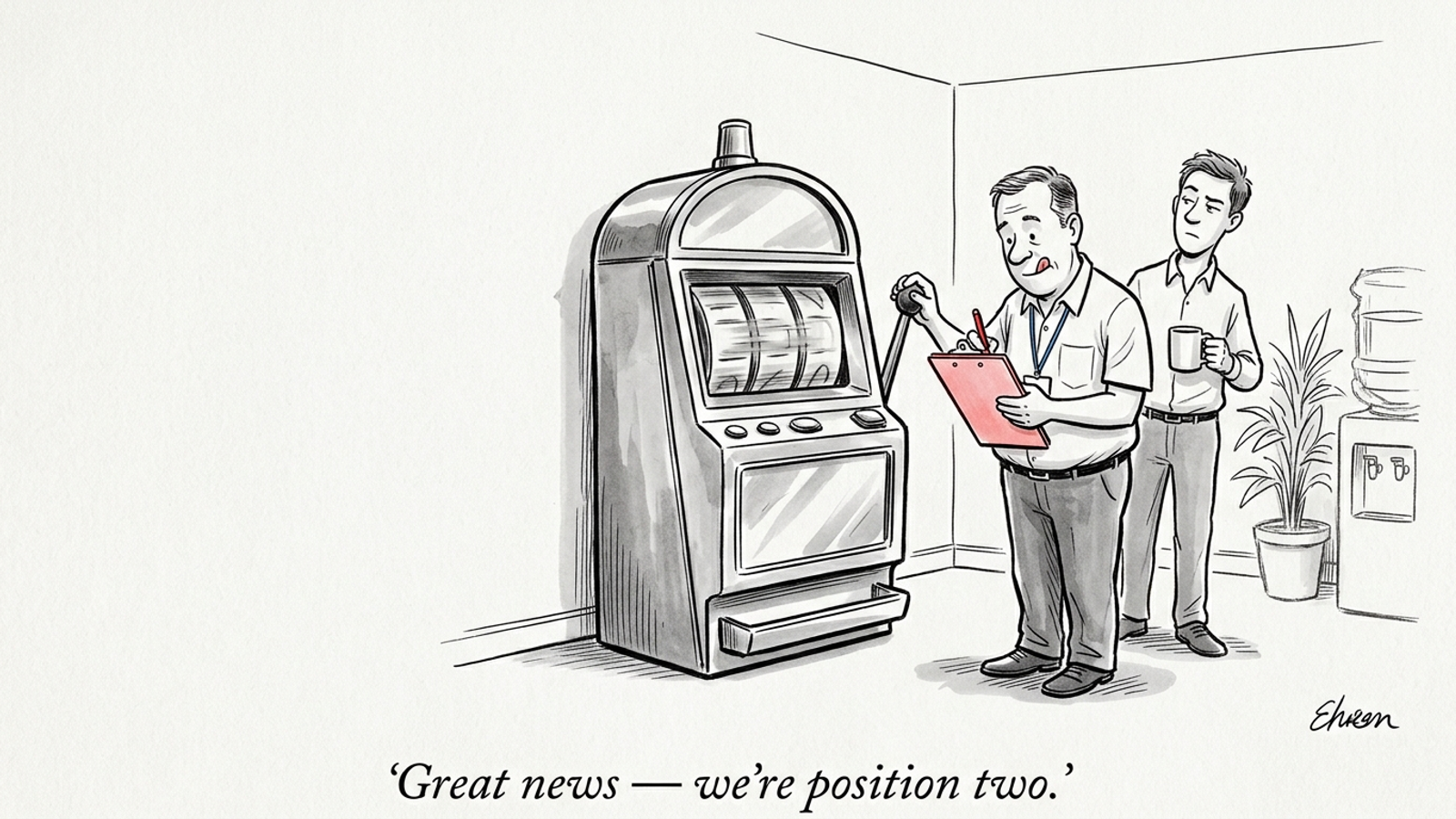

Google’s Smart Bidding, Performance Max, and native Optimization Score recommendations are structurally optimized to maximize Google’s advertising revenue, not your return on ad spend. That is not a conspiracy theory. It is an observable outcome of how Google’s AI is trained, what data it surfaces (and hides), and which recommendations it pushes hardest. Google’s advertising AI serves a platform whose primary obligation is to its shareholders, not your P&L. The conventional wisdom says you should “trust the algorithm” and let machine learning do its job. The reality is that trusting Google’s AI without strategic oversight is like asking your landlord to also set your rent budget. This article breaks down four specific mechanisms where Google’s goals diverge from yours, explains what happens when you give the algorithm full control, and lays out how to fix it without walking away from the most powerful advertising platform on earth.
What Most People Believe: Google’s AI Is Working For You
The standard narrative goes something like this: Google has more data than anyone. Its machine learning systems process billions of signals in real time. Smart Bidding can react to auction dynamics faster than any human. Performance Max automates creative and placement across every Google property. Optimization Score gives you a clear path to improving your account. Therefore, you should follow Google’s recommendations, adopt its latest automation features, and trust that the algorithm will find the most efficient path to your goals.
This narrative is not entirely wrong. Google does have an extraordinary data advantage. Its bidding systems do process signals that no human could evaluate manually. And for many advertisers, adopting Smart Bidding does improve performance compared to poorly managed manual campaigns.
But the narrative leaves out a critical detail: Google’s AI is not a neutral optimization engine working exclusively on your behalf. It is a revenue-maximizing system built by a company that earns more money when you spend more money. Google’s fiduciary duty is to Alphabet shareholders, not to your conversion targets. The AI is trained on objectives that correlate with your goals some of the time, but diverge from them at precisely the moments that matter most, when marginal spend stops producing marginal returns for you but continues producing revenue for Google.
The question is not whether Google’s AI is powerful. It is. The question is whether its power is always pointed in your direction.
Smart Bidding Pushes Volume Over Efficiency When It Benefits Impressions
Smart Bidding systems like Target CPA, Target ROAS, and Maximize Conversions are designed to hit an average target over time, not to optimize every individual auction. This distinction matters enormously.
When you set a Target CPA of $50, Google’s system does not refuse to bid on auctions where the projected CPA exceeds $50. It bids aggressively on cheaper auctions and expensive ones alike, as long as the blended average lands near your target. In practice, this means the algorithm routinely overpays for individual conversions when it has “budget” from cheaper wins earlier in the period.
Why The Average Masks The Problem
The averaging mechanism creates a structural incentive for Google. Higher bid volumes mean more auction participation, which means more revenue for Google, even when individual auctions within that volume are unprofitable for you. You see a CPA that looks acceptable. Google sees total spend that could have been lower if the system optimized for per-auction efficiency instead of aggregate averages.
This is not a bug. It is how the system is designed. Google’s own documentation explains that Smart Bidding “may set bids above your target” for individual auctions. The common mistakes advertisers make with Smart Bidding often come down to accepting this averaging without understanding what it costs at the margin.
The Ratchet Effect On Targets
There is also a ratchet effect. When your account performs well, Google’s system frequently suggests lowering your Target CPA or raising your Target ROAS threshold, which sounds like it is helping. But the result is often that the system bids into more competitive auctions, increasing your total spend while delivering diminishing marginal returns. Google frames this as “scaling.” What it really means is spending more per incremental conversion in a way that benefits Google’s revenue share of every auction.
Performance Max Hides Spend Attribution So You Cannot Reallocate
Performance Max is perhaps the clearest example of Google’s optimization tools working against advertiser interests. The campaign type consolidates Search, Display, YouTube, Discover, Gmail, and Maps into a single campaign and then refuses to show you meaningful performance breakdowns by channel.
The Black Box Is Not Accidental
Google positions this opacity as simplification. The real effect is that you cannot see where your money is going. If Performance Max is spending 60% of your budget on Display placements that generate impressions but few conversions, you have no way to know, and no lever to reallocate that spend to Search, where your ROAS is strongest.
This opacity directly benefits Google. Display and YouTube inventory is abundant and less competitive, which means lower CPCs for advertisers but also means Google can fill that inventory at prices it sets. By bundling everything together, Google ensures its less-premium inventory gets funded by your budget without you ever making a conscious decision to buy it.
Advertisers who have dissected Performance Max cannibalization consistently find that the campaign type absorbs branded search traffic (which would have converted anyway) and attributes those conversions to itself, making its reported performance look better than the incremental value it actually delivers.
Broad Match Expansion Serves Traffic That Helps Quality Scores, Not Conversions
Google increasingly pushes advertisers toward Broad Match keywords, arguing that Smart Bidding can handle the expanded traffic. In theory, the algorithm bids low on irrelevant queries and high on relevant ones.
In practice, Broad Match expansion floods your account with queries that are tangentially related to your business. Some of these queries generate clicks and even engagement metrics that improve your Quality Scores, but they do not convert at rates that justify their cost.
Google benefits from this in two ways. First, more queries mean more auctions mean more revenue. Second, the negative keyword strategies required to control Broad Match are complex enough that most advertisers either do not implement them rigorously or implement them incorrectly, leaving the floodgates open.
The irony is that Google simultaneously recommends Broad Match and makes it harder to see your search terms report in full. In 2020, Google restricted search terms reporting to only show “significant” queries. This means you are flying blind on exactly the data you need to control the expansion Google is recommending.
Google’s Optimization Score Recommendations Increase Spend, Not ROI
Google’s Optimization Score, the percentage you see in your account with a list of recommendations, is presented as a health check. Implementing its suggestions raises your score. But examine the recommendations closely and a pattern emerges.
The most heavily weighted suggestions almost always involve spending more money: adding new keywords, raising budgets, adopting automated bidding, enabling ad extensions, expanding to new campaign types. Recommendations that would reduce spend, like pausing underperforming keywords or tightening geographic targeting, are rarely featured and, when they appear, carry minimal score impact.
Google has tied Optimization Score to account rep conversations, partner badge requirements, and even auction eligibility signals. This creates institutional pressure to follow recommendations that increase spend regardless of whether they improve your actual returns. Your account manager at Google is, structurally, a salesperson whose success is measured by the revenue your account generates for Google.
This is why strategic oversight matters far more than native optimization tools. The recommendations are not neutral advice. They are a revenue growth mechanism for Google, packaged as account improvement for you.
The Proof: What Happens When You Give Google’s AI Full Control
Performance Max Budget Bleed In Practice
Advertisers who launch Performance Max campaigns with default settings and hands-off management consistently report a pattern: strong initial results followed by gradual performance decay. The campaign absorbs branded search traffic in the first few weeks, reports impressive ROAS numbers, and then slowly expands into lower-intent inventory as the algorithm “explores.”
This exploration phase is expensive. It is also, conveniently, revenue-generating for Google. By the time the advertiser notices declining returns, weeks of budget have been absorbed into placements they never would have chosen manually.
Why The Learning Phase Is Also Convenient For Google
Every time you make a significant change to a Smart Bidding campaign, the system enters a “learning phase” that typically lasts one to two weeks. During this period, performance is volatile and Google explicitly warns against making further changes.
The learning phase is real in the sense that the algorithm does need data to calibrate. But it is also a mechanism that encourages more spend during periods of peak uncertainty. Google’s recommendation during learning is to maintain or increase budgets. The result is that advertisers pay full rates for suboptimal performance while the algorithm recalibrates, and any attempt to course-correct triggers another learning phase. The system structurally resists the kind of rapid iteration that would benefit the advertiser but reduce Google’s revenue stability.
Google Ads Still Delivers Exceptional ROI At Scale
None of the above means you should stop running Google Ads. That would be the wrong conclusion. Google Ads remains the single most powerful intent-based advertising platform in existence. The search auction captures buyers at the moment of highest commercial intent. Done well, Google Ads produces returns that no other channel can match.
The Platform Is Powerful When Its AI Is Strategically Constrained
The key phrase is “done well.” Google’s AI is a powerful engine that needs to be pointed in the right direction and actively prevented from drifting toward Google’s objectives at the expense of yours. The advertisers who win are not the ones who fight the algorithm or the ones who blindly trust it. They are the ones who constrain it strategically: setting guardrails, monitoring for drift, overriding bad recommendations, and forcing transparency where Google provides opacity.
The Fix Is Not Less Spend, It Is Smarter Oversight
The answer to Google’s structural conflict of interest is not to spend less. It is to layer independent oversight and execution on top of Google’s native AI, so that the platform’s power works for your goals rather than defaulting to Google’s.
This is exactly where most advertisers, agencies, and in-house teams fall short. They either trust the algorithm completely (and bleed budget) or fight it constantly (and miss the genuine advantages of machine learning). The middle ground, strategic oversight with autonomous execution, is where the real returns live.
The Human Plus Engine Model: Aligning Google’s AI With Your Actual Goals
This is the problem groas was built to solve. A proprietary engine trained on over $500 billion in profitable ad spend runs execution around the clock, layered on top of Google’s native systems but optimized for your ROAS, not Google’s revenue. The engine catches the drift, overrides the bad recommendations, forces visibility into the black boxes, and reallocates spend based on actual incremental value.
For DIY Agencies: Why Layering Your Own Engine On Top Of Google’s Matters
If you run a PPC agency, you already know that Google’s native recommendations do not scale across a client book. Your media buyers are spending hours evaluating Optimization Score suggestions that mostly amount to “spend more.” The groas engine gives agencies direct access to autonomous execution that scales without adding headcount. Agencies keep their clients, their brand, and their margin. groas powers the execution underneath, running 24/7 against the kind of strategic guardrails that Google’s native AI simply does not respect. Start your 7-day free trial and see what changes across your client accounts in the first week.
For In-House Teams: The Oversight Layer Your Team Is Probably Missing
If you have someone in-house who knows Google Ads, you already have the strategic context that matters. What you probably lack is the execution capacity to monitor every campaign, every bid, and every placement recommendation around the clock. groas pairs the proprietary engine with a senior strategist who works alongside your team: you stay in control, you make the strategic calls, and the engine handles the volume of execution that no single person can physically get through in a week. A biweekly strategy call and weekly reporting keep everyone aligned. Get started today if your account qualifies for self-serve, or apply for large accounts.
For Fully Managed Accounts: What Real Alignment Between AI And Business Goals Looks Like
If you would rather not be involved in execution at all, groas operates as a fully managed service where a dedicated strategist owns your entire Google Ads function end to end. This is not a tool you log into. It is a partnership where groas rebuilds your campaigns, landing pages, and offers around your actual business goals, not Google’s revenue targets. The engine runs underneath while a senior strategist makes every decision. Nothing gets optimized toward Google’s objectives at the expense of yours, because the strategist’s incentive is your ROAS, full stop. Month to month, no long-term contract, $0 onboarding. Apply to get access today.
Trust Google’s AI Selectively, Override It Strategically
Google’s advertising AI is not your enemy, but it is not your ally either. It is a powerful system built by a company whose revenue grows when your spend grows, regardless of whether your returns grow proportionally. Smart Bidding averages away marginal inefficiency. Performance Max hides where your money goes. Broad Match floods your account with volume that benefits Google’s auction revenue. Optimization Score pressures you into spending more under the guise of account health.
The advertisers who win on Google Ads in 2026 are the ones who treat Google’s AI as a powerful but conflicted tool that requires constant strategic oversight and independent execution. They do not abandon the platform. They layer something smarter on top of it.
groas exists because this problem is structural, not fixable by hiring another media buyer or following another set of best practices. A proprietary engine trained on hundreds of billions in profitable ad spend, paired with senior human strategists, aligns your Google Ads execution with your revenue goals instead of Google’s. Whether you are an agency scaling clients, an in-house team looking for an edge, or a business that wants Google Ads fully handled, the answer is the same: stop letting Google’s AI run unchecked. Start running it through something built to optimize for you.