
The AI-Search Glossary: What AEO, GEO, Citations, and Visibility Actually Mean
A practitioner's glossary of AEO, GEO, prompt tracking, AI citations, and brand visibility—and the sales-deck spin that blurs them.
September 24, 2026
•
min read



You buy an AEO tool for five client domains, load the prompts you care about, and discover that the entry plan covers 15 of them. The rest of the bill lives in model add-ons, project limits and scan allowances.
I have seen this procurement mistake before in paid search: treating a monitoring subscription as though its sticker price covers the work you need it to do. In Answer Engine Optimization, the gap is particularly easy to miss. A prompt tracked in one market, on one engine, once a week is not the same purchase as that prompt tracked across four engines and several markets every day.
If you are looking for a flat monthly price per domain with no meaningful prompt cap, start with the unit being billed. Then ask the harder question: once the tool shows you where your brand is missing, who fixes it?
Traditional rank tracking and live AI-answer monitoring do different jobs. A tool can check a conventional search results page for far less operational effort than it takes to run prompts across conversational interfaces, collect the answers and repeat the process on a schedule. The more engines, markets and scans you add, the more work the monitoring system has to perform.
That is why I read uncapped as the start of a pricing conversation, not the end of one. SEO PowerSuite, for example, can offer unlimited keyword tracking for roughly $299 a year because its approach does not amount to running every keyword as a live conversation across ChatGPT, Claude, Perplexity and Gemini. It can detect whether an AI Overview appears on a standard Google results page. Useful, but not the same view.
The multiplication is simple. Track 100 buyer-intent prompts across five engines daily and you have 500 prompt-and-engine checks a day, or about 15,000 in a 30-day month. Add a second regional market at the same frequency and that count doubles. A vendor has to pay for or otherwise manage that workload, even if its sales page leads with a flat monthly number.
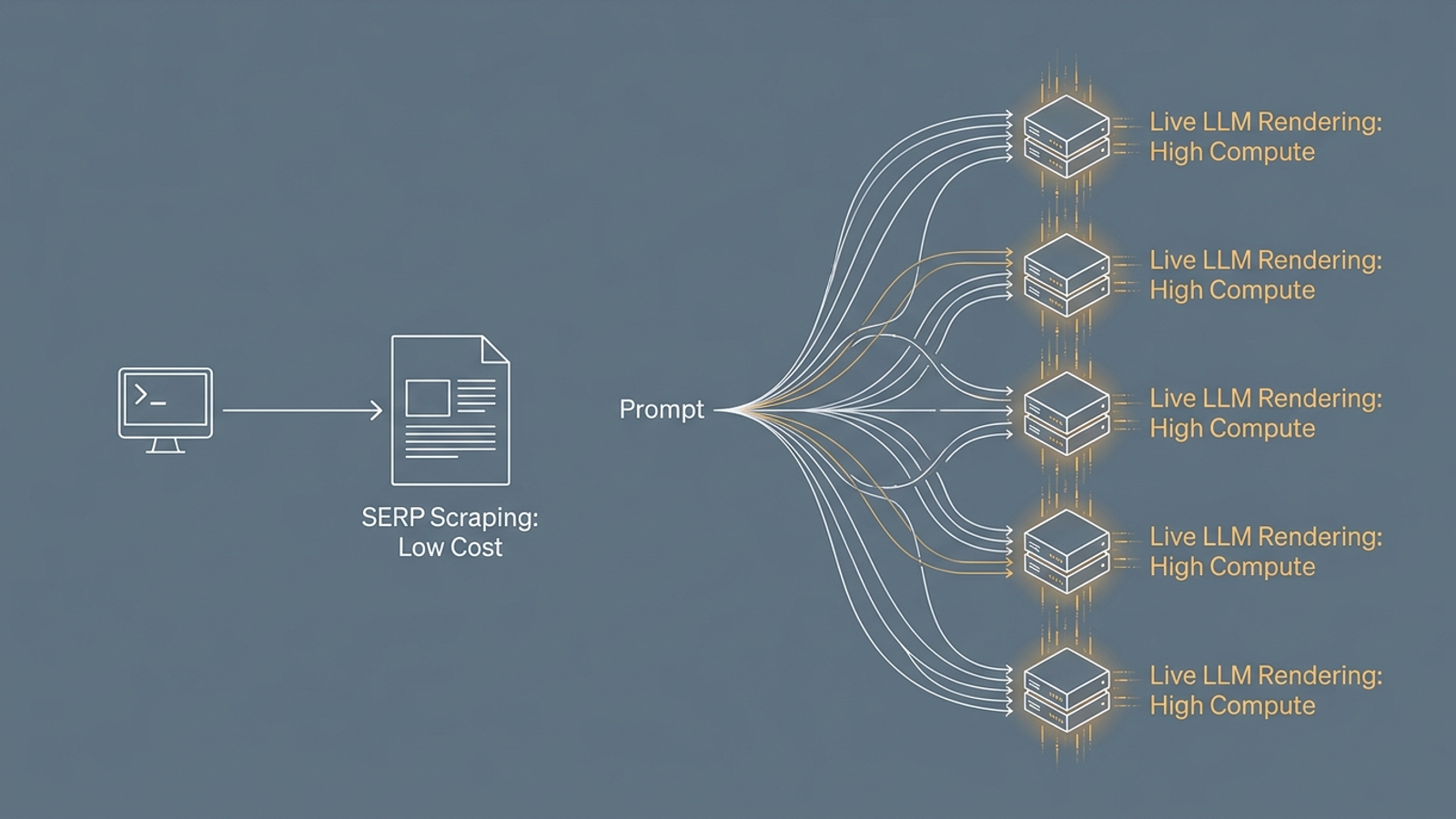
So inspect what the flat price actually fixes. It might fix the number of saved prompts while limiting scans. It might include several engines but reserve others for a higher tier. It might show results collected less often than your team expects. Do not assume any particular vendor uses cached answers or a cheaper substitute model; ask what was queried, when, and on which engine. That answer matters more than the word unlimited.
The published tiers in this draft show why a low starting price can be a poor planning number. The relevant purchase is the set of prompts, engines and projects your team will actually use.
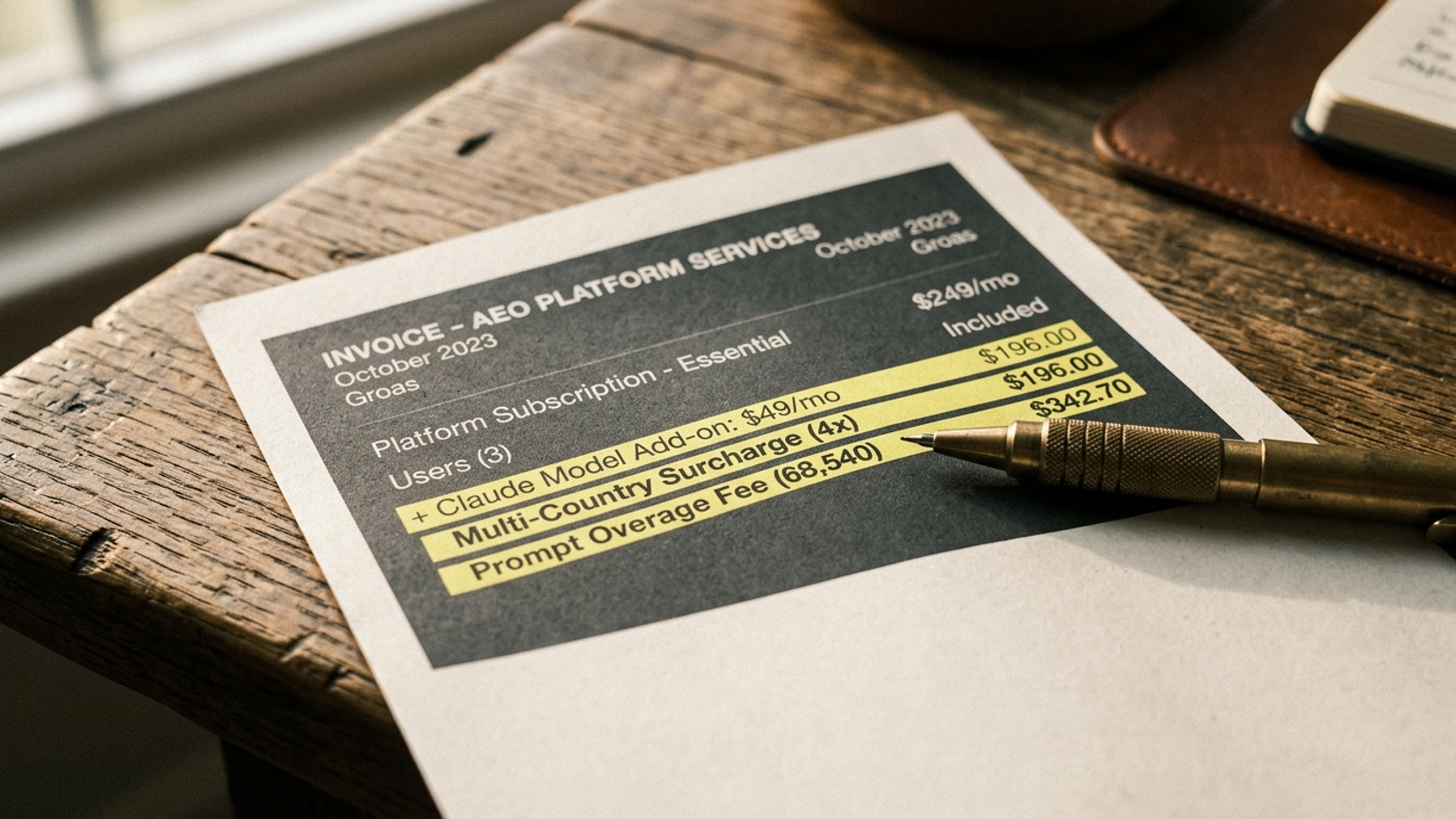
The domain can become a billing unit too. The Semrush AI Visibility Toolkit is described here as a $99-per-month add-on per domain, on top of a standard subscription starting at $139.95 per month. Its cited base allowance is 25 daily tracked prompts, and Claude or Microsoft Copilot access requires an enterprise package. For ten client domains, the add-ons alone come to $990 a month. That figure does not buy 100 prompts per client or every engine in the comparison.
I would not choose among these plans by dividing the headline price by the prompt cap. Price the coverage you intend to run, including the markets, engines and scan schedule. Otherwise, the cheapest column in the spreadsheet is just the column with the most work omitted.
Some tools address the obvious frustration with simpler pricing. Mentionable offers flat-rate access across eight generative engines without a separate charge for each model, starting around €79 per month on the entry tier cited here. That is a meaningful difference from paying engine by engine. But scan frequency still draws on a finite monthly credit budget. If you need daily checks across hundreds of queries, compare that budget with the proposed schedule before assuming the entry tier will hold; the agency tier cited here is €299.
Surva.ai takes another route, marketing unlimited keyword tracking starting near $49 per month while concentrating primarily on ChatGPT and Google AI Overviews. If Claude and Perplexity matter to your buying journey, an unlimited keyword count does not replace coverage of those engines. A tool that checks less often presents a different tradeoff: it may be enough for periodic reporting, but it will not tell you promptly when an important answer changes between scans.
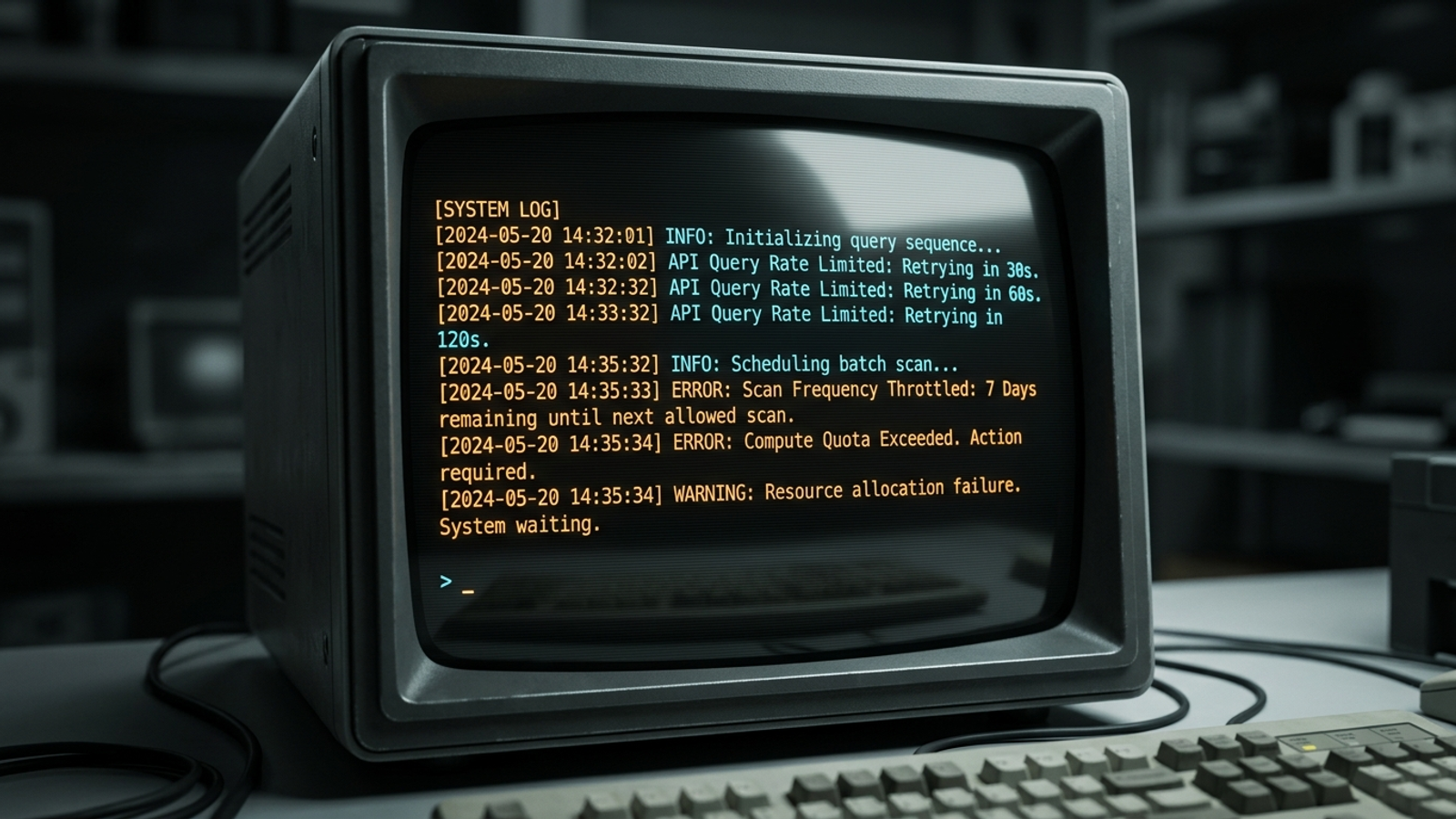
SEMAI positions its $199-per-month tier around unlimited users and projects for AEO and GEO workflows. It emphasizes query clustering, readiness audits and diagnostic scoring rather than promising brute-force daily checks of every prompt across every consumer interface. That can make multi-project planning simpler. It does not make a workflow audit interchangeable with continuous live monitoring.
None of those distinctions makes a tool useless. They tell you what you are buying. An unlimited slot is not an unlimited observation. Before signing, put the scan cadence, engine list, geographic scope and credit rules beside the monthly fee.
A single brand can absorb a $189 or $245 subscription as an ordinary software line item. An agency has to repeat the purchase, allocate shared capacity or move to a different plan. Regional markets can add another multiplier. That is where a flat-looking entry tier stops being a useful estimate.
Take five client brands, each needing 100 prompts across ChatGPT, Perplexity, Gemini and Claude. The figures below are planning starting points drawn from the cited tiers, not quotes for identical four-engine coverage. Where a tier falls short, the gap is part of the answer.
| Platform | Cited tier or fee | Five-domain starting point | What that figure does not settle |
|---|---|---|---|
| Otterly.ai | $189/mo for 100 prompts | $945/mo if each brand needs that tier | Add-on engine costs and regional prompt use |
| Peec AI | $245/mo for 150 prompts | $1,225/mo if each brand needs that tier | Additional model charges and agency credit allocation |
| Profound | $399/mo for 100 prompts across three engines | $1,995/mo if each brand needs that tier | The fourth engine and any multi-domain enterprise terms |
| Semrush AI Visibility Toolkit | $99/mo add-on per domain | $495/mo in add-ons, plus the base subscription | Only 25 daily prompts per domain on the cited allowance; enterprise access is needed for some engines |
| groas Earned Search | Flat monthly fee | Scope the five-brand engagement directly | It is an execution service, not a like-for-like prompt-seat quote |
Those numbers should stop an agency from presenting $29 or $99 as the cost of serving a client. They should not be used to claim that five subscriptions automatically buy the same engine coverage, or that separate subscriptions are the only way a vendor can bill a portfolio. Get the actual proposal.
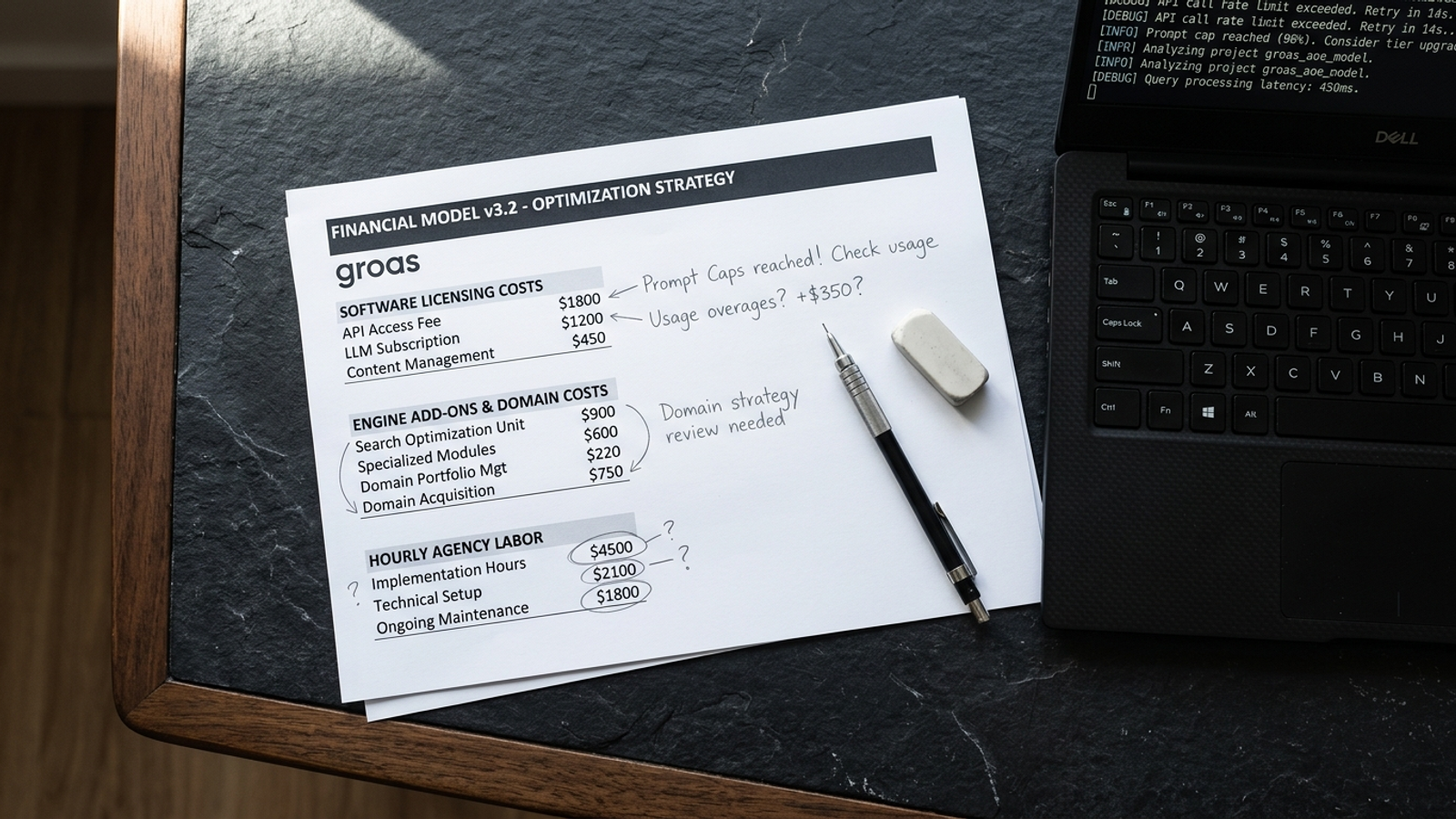
The margin question remains. At $1,500 to $2,000 a month for monitoring across five domains, you are spending roughly $300 to $400 per client to observe results. Against a $2,500 monthly retainer, that is about 12% to 16% of gross revenue before anyone edits a page, investigates a citation gap or publishes supporting content. You can pass the bill through or absorb it. Neither choice makes the work go away.
Visibility monitoring does zero optimization work. I do not mean it has zero value. I mean that a chart showing your brand missing from a Perplexity answer cannot change the answer by itself.
Paid search has the same divide. A warning about falling search impression share does not rewrite an ad or adjust a match type. In AEO, the path from diagnosis to action can be wider still. Suppose a tool shows three competitors in an answer to a valuable purchase query and leaves your brand out. An operator now has to establish why, decide what can be changed, and do the work.
That work may include:
The monitoring subscription pays to surface the gap. It does not pay for those three jobs unless the service explicitly includes them. I have spent enough time looking at diagnostic reports to know how easily actionable insight becomes another way to say “someone else has to do it.”
Add the monitoring fee to the labor required to investigate gaps, rewrite pages and pursue citations, and the subscription may be the smaller part of the AEO budget. That is familiar territory for anyone who managed paid search when software produced bid recommendations and a person still spent hours turning them into account changes. The dashboard looked efficient. The operating model was not.
For that reason, I would compare a monitoring-only quote with the full cost of getting changes made. groas Earned Search is built around both sides: specialized models track brand queries across consumer AI engines, audit crawlability, deploy entity-rich content and work on authoritative citations. A named human strategist sets the guardrails, checks tracking integrity and owns the business outcome. For teams serving multiple brands, groas for agencies offers that execution through a white-label model with a flat monthly fee rather than asking an agency to build its service around metered dashboard seats.
Do not mistake that for a claim that every possible prompt can be queried without limit. It is a different purchase decision. Stop comparing plans by which one offers fifty more prompt slots for ten fewer dollars. Compare what each arrangement lets you change. If your setup can only report that ChatGPT, Perplexity or Google AI Overviews left your brand out, you have bought a way to watch the problem, not a way to fix it.