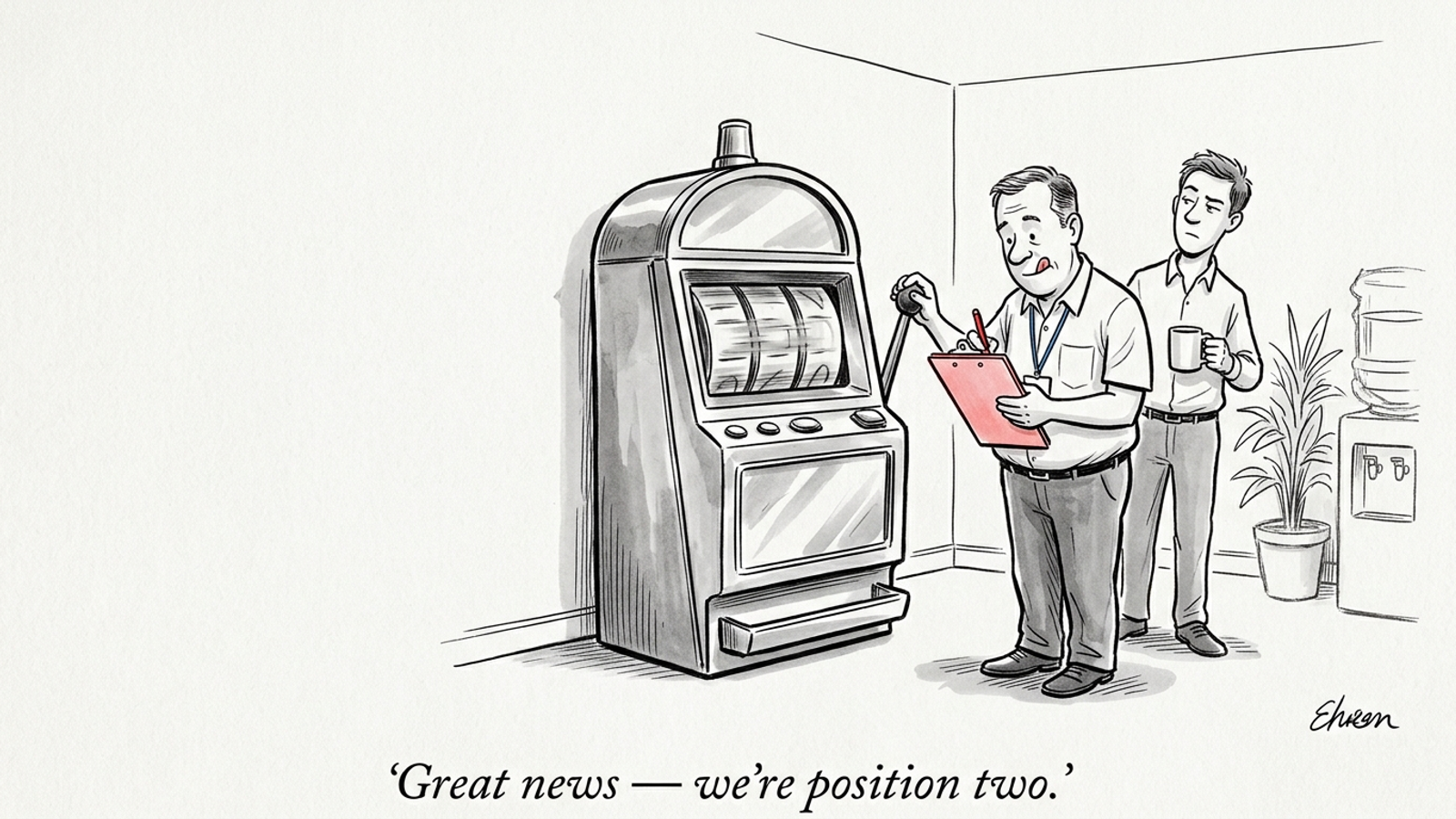

Google Ads graders are free diagnostic tools that promise to tell you how healthy your campaigns are, but their scores have little to no correlation with actual campaign profitability. A Google Ads performance grader measures surface-level metrics like Quality Score distributions, click-through rates, and impression share percentages. It does not, and structurally cannot, evaluate whether your campaigns are making money. That distinction matters more than most advertisers realize.
Every year, thousands of advertisers run their accounts through tools like WordStream’s Performance Grader, AdsGrader, or similar free audit products. They get a letter grade or a percentage score. They feel either validated or panicked. And in both cases, they are reacting to information that tells them almost nothing about whether their Google Ads investment is actually profitable.
This piece breaks down exactly why these graders miss what matters, what they structurally cannot evaluate, and what serious advertisers should measure instead.
What Most People Believe About Google Ads Graders
The conventional wisdom is straightforward: run your account through a grader, get a score, and use that score to identify problems. If the score is high, you are doing well. If it is low, you need to fix things.
This belief is reasonable on the surface. Graders pull real data from your Google Ads account. They compare your metrics against benchmarks. They flag areas where your numbers fall below average. The output looks authoritative: color-coded sections, percentage scores, detailed breakdowns by metric category.
WordStream’s Performance Grader, the most widely known tool in this category, evaluates Quality Score, click-through rate, impression share, account activity, and a handful of other metrics. AdsGrader and similar tools follow roughly the same pattern, pulling in slightly different metric combinations but arriving at the same kind of output: a scorecard that implies your account is either healthy or needs work.
And to be fair, these tools are not entirely useless. If your Quality Score across the board is 2 out of 10, something is genuinely wrong with your ad relevance or landing page experience. If your CTR is far below industry averages, your ad copy probably needs attention. Graders can surface obvious, glaring problems.
But “surfacing obvious problems” is a very different value proposition than “telling you whether your campaigns are profitable.” And the conflation of those two things is where advertisers get into trouble.
Why Grader Scores Do Not Predict Profitability
The fundamental issue is that every metric a grader can measure sits upstream of the only thing that actually matters: whether your ad spend generates more revenue than it costs. Graders measure inputs and intermediary signals. They do not, and cannot, measure outcomes.
Quality Score Is Not A Revenue Metric
Quality Score is Google’s internal relevance rating. It affects your cost per click and ad rank. A higher Quality Score generally means you pay less per click for the same position. That is useful information. But Quality Score tells you nothing about whether the clicks you are paying for convert into revenue.
An account can have perfect 10/10 Quality Scores across every keyword and still lose money on every conversion because the offer is wrong, the margins are thin, or the bidding strategy is optimizing for the wrong objective. Quality Score measures how well your ads match the queries they trigger. It does not measure whether those queries represent buyers, or whether those buyers are profitable.
Impression Share Is Not A Growth Metric
Graders frequently flag low impression share as a problem. The logic sounds reasonable: if you are only showing up for 40% of eligible auctions, you are “leaving money on the table.”
But impression share without context is meaningless. In many accounts, the highest-performing strategy deliberately sacrifices impression share to concentrate budget on the most profitable segments. Maximizing impression share across all keywords often means pouring budget into low-intent, high-volume terms that drive clicks but not revenue. A grader will penalize you for this. Your P&L will thank you.
This is exactly the kind of smart bidding misalignment that separates accounts optimized for vanity metrics from accounts optimized for profit.
CTR Without Conversion Context Is Meaningless
Click-through rate is the metric graders lean on hardest. A high CTR means your ads are compelling. But compelling to whom?
A high CTR on broad match keywords that attract unqualified traffic is a cost center, not an asset. A low CTR on a highly specific, high-intent exact match keyword that converts at 15% is worth far more than a flashy CTR number on a term that converts at 0.5%. Graders cannot distinguish between these scenarios because they do not evaluate what happens after the click.
The 6 Things Graders Structurally Cannot See
This is not a criticism of execution. Graders cannot evaluate these factors because of how they are built. They pull metric snapshots from the Google Ads API and compare them to benchmarks. The following elements require deeper access, business context, and strategic judgment that no automated scorecard can provide.
Bidding Strategy Alignment With Business Goals
A grader can see that you are using Target ROAS bidding. It cannot evaluate whether your target is set correctly, whether it aligns with your actual margins, or whether Target CPA would be a better fit for your business model. Bidding strategy is the single highest-leverage decision in most accounts. Graders treat it as a checkbox.
Conversion Tracking Quality And Attribution Accuracy
If your conversion tracking is broken, misconfigured, or counting the wrong actions, every other metric in your account is compromised. Graders assume your conversion data is accurate. In practice, a significant portion of Google Ads accounts have tracking issues that distort performance data. A grader will happily give you an “A” while your bidding algorithm optimizes toward garbage data.
Landing Page And Offer Relevance
Quality Score includes a “landing page experience” component, but it measures load speed and keyword presence, not whether the page actually converts visitors into customers. The gap between a page that satisfies Google’s relevance check and a page that generates revenue is enormous. Graders cannot evaluate your offer, your pricing, your page layout, or your conversion flow.
Account Structure Fit For The Business Model
There is no universal “correct” account structure. The right structure depends on your product catalog, your margins, your geographic targeting, your customer lifecycle, and a dozen other business-specific factors. Graders compare your structure to generic best practices. An account that looks “messy” by grader standards might be precisely structured for a complex business model. An account that looks “clean” might be over-consolidated in ways that destroy Performance Max performance.
Budget Pacing And Seasonality Context
Graders take a snapshot. They cannot evaluate whether your budget allocation makes sense given seasonal demand patterns, promotional calendars, or competitive dynamics that shift month to month. An account that looks underspent in June might be correctly conserving budget ahead of a Q4 push.
Competitive Landscape And Market Position
Your competitors’ strategies, bid levels, and market entries directly affect your performance. A sudden drop in impression share might mean a new competitor entered the auction, not that your account is poorly managed. Graders have no visibility into the competitive environment.
Why Graders Are Really Built For Lead Generation, Not You
The Business Model Behind Free Audit Tools
Here is the part that rarely gets discussed: Google Ads graders are not diagnostic tools. They are lead generation mechanisms.
WordStream’s grader exists to sell WordStream’s software. AdsGrader and similar tools exist to funnel you into an agency’s sales pipeline. The “grade” is designed to create urgency. A low score makes you anxious. A high score makes you curious about what you are “missing.” Either way, the next step is always the same: buy the product or book the call.
This does not make the tools malicious. But it means the scoring methodology is optimized for conversion, not accuracy. Metrics are chosen and weighted to produce results that drive action, not results that reflect account health.
If you want to understand why many optimization tools can actually hurt performance, this incentive misalignment is the root cause. The tool’s goal and your goal are not the same.
Why A High Grade Can Mask Serious Strategic Problems
A “good” grader score can be actively dangerous. It creates false confidence. An advertiser who receives an A-grade feels no urgency to investigate deeper problems: misattributed conversions, budget leaking into non-converting segments, or a bidding strategy that is stuck in learning phase because of constant manual interference.
The worst-performing accounts groas encounters are often the ones where the advertiser or their agency believed everything was fine because a surface-level audit said so.
What To Measure Instead
The 5 Metrics That Actually Tell You If Google Ads Is Working
-
Profit per conversion (not cost per conversion). Factor in your actual margins, fulfillment costs, and customer acquisition overhead. A $50 CPA is meaningless without knowing whether each conversion generates $40 or $400 in profit.
-
Return on ad spend by campaign segment. Blended ROAS hides underperformers. Break it down by campaign, product line, and customer type.
-
Conversion quality and close rate. For lead generation accounts, track which leads actually close. A high conversion volume with a 2% close rate is a different problem than a low volume with a 40% close rate.
-
Incrementality. How much of your attributed revenue would have happened anyway through organic or direct traffic? This is harder to measure but critical for understanding true ad impact.
-
Customer lifetime value by acquisition channel. Google Ads customers acquired through brand campaigns and those acquired through non-brand prospecting have very different lifetime values. Treat them differently.
How To Run A Real Account Review Without A Grader
A genuine account review starts with business context, not metric benchmarks. What are your margins? What is a qualified lead worth? Which products or services do you actually want to scale? Where are you losing money?
From there, the review should evaluate conversion tracking accuracy, bidding strategy alignment, search query relevance and negative keyword coverage, landing page conversion rates, and budget allocation by performance tier.
This kind of review requires someone who understands both the technical mechanics of Google Ads and the business model underneath. A grader provides neither.
What A Genuine Performance Review Looks Like With groas
This is where the structural limitations of graders become a practical problem. If you know your grader score is unreliable, who actually runs a real review?
For in-house teams that have Google Ads expertise but want deeper analysis, groas pairs a proprietary engine trained on over $500 billion in profitable ad spend with a senior strategist who works alongside your team. The engine handles the heavy analytical lifting around the clock while your team stays in control. That is the DWY (Done With You) model: you keep driving, but now you have an engine and a strategist sharpening every decision. Self-serve checkout is available for smaller accounts, or you can apply if your account is larger.
For businesses that do not want to manage Google Ads at all, groas offers DFY (Done For You): a dedicated strategist owns your entire account end-to-end, including landing pages and offers. No grader scores, no surface-level audits. Just a team that is accountable for actual revenue, reachable on Slack or email at any hour, with $0 onboarding, month-to-month commitment, and no long-term contracts. If you are interested, the process starts with an application.
For agencies managing client accounts, groas functions as an engine your media buyers operate directly, giving them the analytical firepower to run real performance reviews across every client without bottlenecking on headcount. Start with a 7-day free trial and connect unlimited client accounts.
In every case, the review is not a snapshot of vanity metrics. It is continuous, contextual, and tied to the numbers that matter: profit, revenue, and growth.
Final Take
Google Ads graders measure what is easy to measure, not what matters. They score click-through rates, Quality Scores, and impression share percentages because those data points are accessible through the API and produce clean, letter-grade outputs. They cannot evaluate bidding strategy, conversion tracking accuracy, landing page effectiveness, business model fit, or any of the factors that actually determine whether your Google Ads investment is profitable.
The scores they generate are more useful to the companies that built the graders than they are to the advertisers who use them.
If your current approach to evaluating Google Ads performance is running it through a free grader, you are making decisions based on incomplete and potentially misleading information. The advertisers who consistently scale profitably are the ones who measure profit per conversion, evaluate conversion quality, and subject their accounts to real strategic reviews, not automated scorecards.
Stop grading. Start measuring what actually drives your business forward.