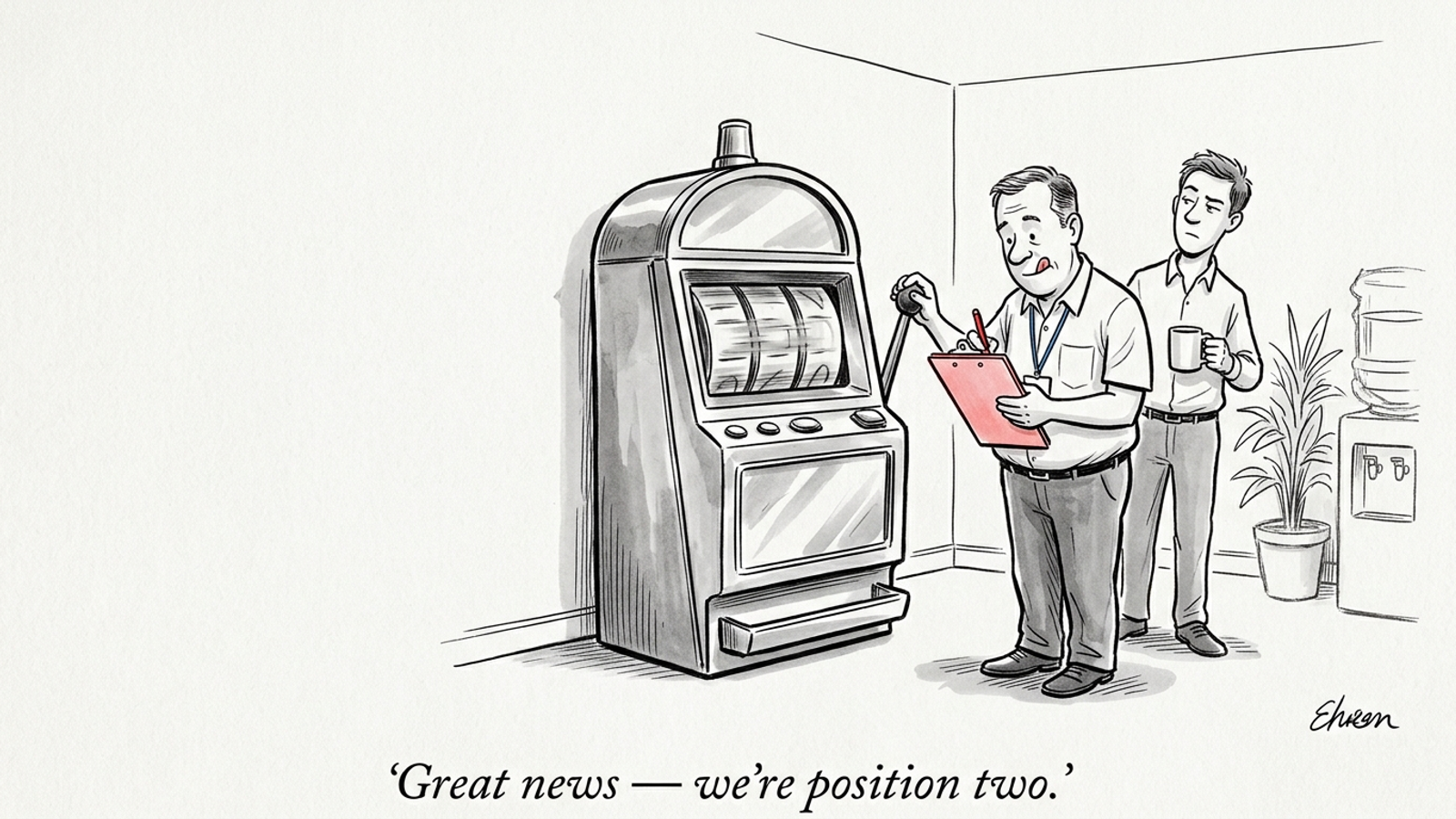

An agency can sell $30,000 a month in AEO retainers and still discover it bought itself a staffing problem. The mistake starts before client two signs: leadership buys software that measures visibility, then prices the service as though that software does the work.
The setup: a good offer built on the wrong purchase
This is an illustrative composite, not a report of one agency’s accounts. I’m using it to trace the version of the failure that agency teams can run into: a capable performance shop adds Answer Engine Optimization (AEO) to its SEO and Google Ads work, sells it to existing clients, and finds that delivery costs rise long before results become easy to demonstrate. The clients, conversations, and account figures below are parts of that scenario, not a claimed case study.
The twenty-person shop has steady retainers and experienced account managers. Its enterprise and mid-market clients are watching AI answers take up space that once sent them organic clicks. Leadership’s response makes sense: offer AEO and Generative Engine Optimization (GEO) as a $2,500-per-domain monthly add-on. Track whether clients appear in AI answers, then improve the signals that might help them appear more often.
The sales pitch is not the problem. Neither is the team’s SEO talent. The purchase underneath the pitch is the problem: a monitoring platform is treated as the delivery system for a service that also requires technical changes, content work, and off-site effort.
Month 1: the dashboard makes the pilot look easy
The first buyer is a longstanding B2B logistics client already paying $6,000 a month for organic search. The agency adds a $2,500 AEO retainer to track visibility across ChatGPT, Perplexity, and Google AI Overviews, examine the company’s entity information, and respond to category competitors.
An entry visibility platform costs roughly $99 a month. The agency sets up 50 core prompts and produces share-of-voice charts. In this illustrative account, the client appears in 12% of high-intent category queries while two large competitors account for 65%. The agency sends a branded audit. The client likes having a baseline.
On a spreadsheet that counts only the tracker, $2,500 in revenue less $99 in software looks like a roughly 96% contribution margin. That is the first seductive number. It leaves out the time spent choosing prompts, interpreting results, preparing the audit, and making changes. At pilot scale, that omission is easy to ignore. One client’s account manager can absorb the work without anyone naming it as a cost.
A clean chart proves the agency can see a gap. It does not prove the agency can close it.
Month 3: four clients meet the prompt cap
Sales adds three clients: a regional health network, a mid-market fintech tool, and an ecommerce furniture manufacturer. AEO revenue reaches $10,000 a month. Now four brands need separate projects, prompt sets, and reporting that reflects what each client actually sells.
The entry plan stops looking generous. Lower tiers on tools such as Otterly.AI and Peec AI can restrict prompt counts; adding pricing questions, feature comparisons, and alternate use cases consumes those allowances quickly. Multi-engine coverage pushes the agency toward plans in the $399–$499-a-month range, with other charges to consider as it adds clients and users. In this composite, software spend rises from $99 to $1,600 a month.

The team still has $8,400 between retainer revenue and that software bill, before labor and other costs. Nobody calls an emergency meeting. But the unit economics have changed: each new domain needs its own setup and each useful prompt variation takes room under a cap. The software bill grows with the roster. The work required to improve an answer has barely begun.
This is the point at which I would stop calling the purchase a bargain and start asking what it will cost to deliver the promise attached to it.
Month 5: the client asks what changed
The logistics client has now paid $12,500 in incremental AEO fees. Its visibility report looks polished. In this scenario, its ChatGPT citation share moves from 12% to 14%. At the review, the client asks the question the dashboard cannot answer: what did the agency actually change on the domain?
Very little.
The platform has identified a visibility gap. It has not edited a page, added structured data, fixed access to content, or done the work of earning outside mentions. The account director can explain the chart but cannot point to a corresponding body of execution. That is a hard call to survive when the client bought an optimization retainer, not a subscription to an interesting PDF.
A discussion of what buyers pay for in an AEO retainer reflects the question the team should have settled before selling: which work is monitoring, and which work will somebody deliver? In this composite, the agency never made that boundary operational. It sold the second and staffed the first.
If a review can show movement but no work behind it, the retainer is exposed.
Month 7: account managers become the production team
Leadership’s response is understandable. The clients expect changes, so two senior account managers start making them. They write comparison content, work through entity and schema tasks, and chase opportunities for external mentions. They also keep their existing Google Ads and SEO accounts moving.
This is where a cheap-looking software choice becomes an expensive staffing choice. A monitoring tool’s price does not include the work of acting on its findings. Every client has different pages, technical constraints, approval cycles, and category questions. The team cannot copy one finished deliverable across four domains and call it done.
The account managers spend more of their week on manual AEO tickets. Regular optimization on their other accounts slows. Clients who never bought AEO begin to feel the delay.
The wrong call was not trying to rescue the logistics account. The wrong call was asking existing staff to absorb an execution load the retainer model had never priced. Once that becomes normal, signing another client does not simply add revenue. It adds another set of prompts to monitor and another queue of changes to make.
Month 9: twelve domains, and a much thinner margin
Sales reaches twelve active domains at $2,500 each: $30,000 in monthly AEO revenue. In this composite, tracking software and seats now cost $4,200 a month. Delivery also needs a $4,500-a-month technical contractor and 120 hours of senior staff time valued at $7,200. Those three costs total $15,900 a month, before setup work and other overhead.
The logistics client cancels in the second week, dissatisfied with the measurable impact. The remaining eleven accounts represent $27,500 in monthly retainer revenue if they stay. That cancellation hurts, but it is important to name the damage accurately: these figures do not show a service line losing money on every domain. They show a margin far below the one implied by the $99 pilot, with more costs still outside the simple tally. Calling it a loss before counting those costs would be bad accounting, not a sharper postmortem.
Here is the fuller monthly model for twelve domains. It leads with the total: against $30,000 in revenue, the listed recurring delivery costs run from $16,088 to $22,488. That leaves $13,912 to $7,512 before other overhead. One-off setup adds $3,000–$6,000 during onboarding; it should not be quietly relabeled as a permanent monthly charge. The ranges below are budgeting assumptions for this composite, not measured costs from a real agency.
| Cost | Type | Illustrative amount for 12 domains | Basis and source |
|---|---|---|---|
| Multi-engine monitoring | Listed, recurring | $1,600–$2,400/month | Workspace or domain costs modeled around $399–$499 multi-engine plans. |
| Domain add-on licenses | Listed, recurring | $1,188/month | Twelve domains at the roughly $99-per-domain figure used in the draft model. |
| Prompt and engine limits | Potential overage, recurring | $1,200–$2,500/month | Composite allowance for usage limits and tier changes. Actual cost depends on prompts, engines, and query frequency. |
| Seats and workspaces | Potential add-on, recurring | $400–$800/month | Composite allowance for multi-client workspace and user pricing. Actual cost depends on access needs. |
| Senior account manager time | Delivery labor, recurring | $7,200–$9,600/month | Composite assumption: 120–160 hours at $60 per hour in internal cost. |
| Technical execution contractor | Delivery labor, recurring | $4,500–$6,000/month | Composite assumption for technical and content execution. |
| Schema and entity audits | One-off setup | $3,000–$6,000 total | Composite assumption: $250–$500 per domain at onboarding. |
The listed license price is only one part of the software decision. Ask what changes when client count, prompt volume, engine coverage, and manager access increase. A low entry tier can make a pilot affordable while leaving an agency with expensive choices at twelve domains. Nor is the top line profit: the table excludes the rest of the business overhead, and the one-off audit still needs paying for when those clients arrive.
The cheapest mistake is buying a $99 tracker without checking how it prices the second domain. The most expensive is budgeting as though that tracker also supplies execution, then paying staff and a contractor to supply it under pressure.
Root cause: observation was mistaken for delivery
The dashboard did what the agency bought it to do. It showed where brands appeared and where they did not. The failure was treating that observation as a substitute for the work a client expected next.
I’ve seen the same accounting instinct in paid search: put a person against each growing queue of tasks, call the retainer strategic, and hope nobody examines how much time goes into maintaining the queue. As I argued in our look at traditional Google Ads agency models, a service built around repeatable manual work becomes harder to defend as execution changes. AEO brings its own version of that pressure. Software meters what you watch; your team must still deal with what you find.
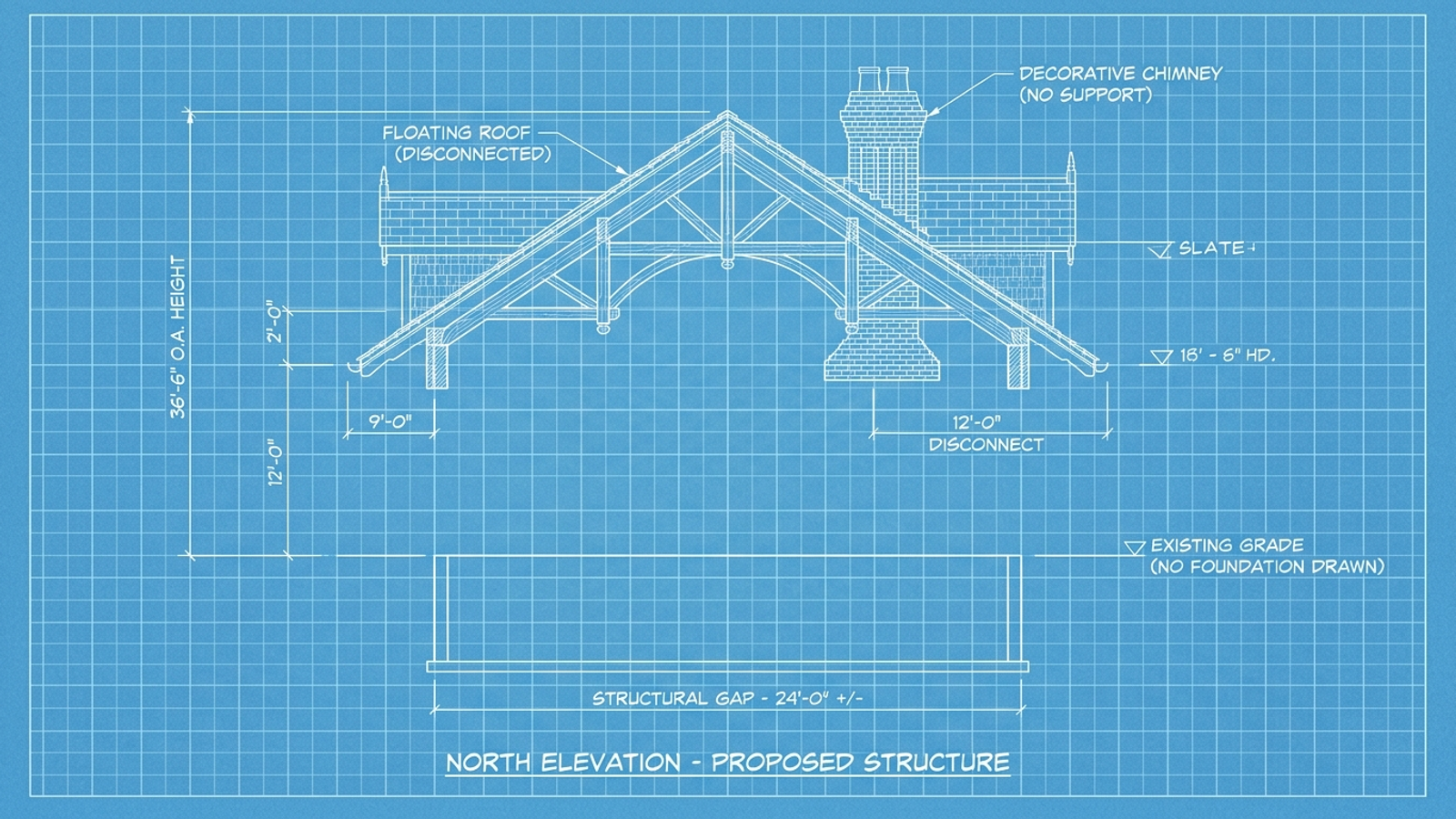
The agency could have sold monitoring as monitoring and priced any implementation separately. It could have chosen a delivery model with more of the execution built in. What it could not safely do was sell hands-on improvement, buy observation, and assume the gap would disappear inside its existing payroll.

The purchase decision that could have stopped it
Trace the cancellation backward. The account director’s awkward Month 5 review follows from the absent execution work. The Month 7 scramble follows from that review. The Month 9 contractor bill follows from the scramble. The decision point was the software purchase, when leadership still had one pilot and room to define what the service would actually deliver.
Before adding client two, I would put five questions to any AEO vendor. They are the operational version of the questions to ask before buying another dashboard:
- Execution or observation? Does the platform make and deploy changes, or does it produce tasks my team must complete?
- Prompt limits? What happens to the bill when twelve clients need conversational variations across several engines?
- Domain and seat costs? Which charges rise with client count, workspaces, and manager access?
- Off-site work? What does the vendor do, if anything, beyond identifying a need for third-party mentions?
- Accountability? Who owns the next action when visibility drops: a named strategist, my account manager, or a support queue?
That is also how I would assess groas for agencies: on the execution it takes off the team’s plate, the human strategist accountable for direction, and the full cost of serving another client. Its autonomous approach addresses the staffing problem this composite exposes. The buying decision still has to be made against the actual work in the retainer, not a slide headed AI-powered growth.
The single rule I now apply is this: never sell an execution retainer on the economics of a monitoring tool.